What if your boiler system could automatically switch between heat sources based on energy cost? A closer look at staging logic, relays and smarter system control.
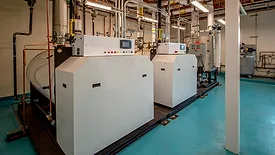
Figure 1 shows the piping layout for an actual installation. It uses two boilers, fired in stages, to supply three areas of a building. One of those areas is sub-divided into three zones. The other two areas are handled by individual zone circulators. The "primary circulator" operates whenever any load circuit is on. All circulators are fixed speed. There's a partially closed ball valve at the end of the "primary loop."
For boilers operating on natural gas or propane, flue gas condensation begins at inlet water temperatures below about 130 ºF. Boilers operating on low sulfur #2 fuel oil have lower dewpoint temperatures in the range of 110 ºF.
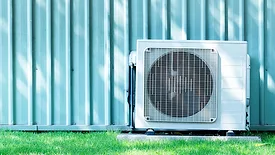
Many of the ratios used in the HVAC industry are just some “desirable output” quantity divided by the “necessary input” quantity. One example is the coefficient of performance (COP) of a heat pump. The desirable output quantity is Btu/hr of heat output. The necessary input quantity is the electrical input power needed to operate the heat pump. The latter is typically measured in watts or kilowatts.
Around 25 years ago, I developed a design that sends high-temperature water to a remote manifold for low-temperature floor heating, mixing it with returning water to achieve the optimal supply temperature, regulated by a variable speed pump. Can you identify a problem with this approach or propose a better one?
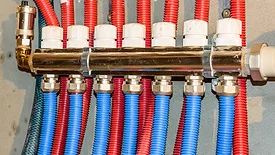
Zoning has always been a premier benefit of hydronic heating and cooling systems. There are many zoning configurations capable of delivering heat (or cooling effect) when and where it’s needed in a building, with minimal effect on the temperature in other parts of the building. Some methods use circulators to create flow in each zone; others use either motorized or thermostatic valves to regulate flow.
If a customer complains about an air conditioning odor, mention bacteria in condensate drain pans and lines, which is bacterial zoogloea. It thrives in dark, moist, warm settings and can infest the indoor evaporator coil in extreme neglect. The bacteria feed on dust and organic matter not caught by filters.
As radiant heating and cooling systems continue to grow in popularity for their superior comfort, energy efficiency, and quiet operation, the importance of proper system installation cannot be overstated. A poorly installed system—no matter how advanced its components—can fall short of expectations, leading to hot and cold spots, energy waste, or costly callbacks.
While I admit to not being fully informed on the latest things from Google, Apple, Chat GPT, or social media, I’m confident that I can still pass along advice to those who are new to the hydronic industry, especially those involved with designing systems