
search
cart
facebook instagram twitter linkedin youtube
  • Sign In
  • Create Account
  • Sign Out
  • My Account
  • NEWS
  • PRODUCTS
    • FEATURED PRODUCTS
  • CONTRACTORS
    • BATH & KITCHEN PRO
    • BUSINESS MANAGEMENT
    • HIGH EFFICIENCY HOMES
    • TECHNOLOGY
    • WATER TREATMENT
    • PMC COLUMNS
      • Dave Yates: Contractor’s Corner
      • John Siegenthaler: Hydronics Workshop
      • Kenny Chapman: The Blue Collar Coach
      • Matt Michel: Service Plumbing Pros
      • Scott Secor: Heating Perceptions
  • ENGINEERS
    • CONTINUING EDUCATION
    • DECARBONIZATION | ELECTRIFICATION
    • FIRE PROTECTION
    • GEOTHERMAL | SOLAR THERMAL
    • PIPING | PLUMBING | PVF
    • PME COLUMNS
      • Christoph Lohr: Strategic Plumbing Insights
      • David Dexter: Plumbing Talking Points
      • James Dipping: Engineer Viewpoints
      • John Seigenthaler: Renewable Heating Design
      • Lowell Manalo: Plumbing Essentials
      • Misty Guard: Guard on Compliance
  • RADIANT & HYDRONICS
    • RADIANT COMFORT REPORT
    • THE GLITCH & THE FIX
  • INSIGHTS
    • CODES
    • GREEN PLUMBING & MECHANICAL
    • PROJECT PROFILES
    • COLUMNS
      • Codes Corner
      • Natalie Forster: Editorial Opinion
      • Guest Editorial
  • MEDIA
    • EBOOKS
    • PODCASTS
    • VIDEOS
    • WEBINARS
  • RESOURCES
    • INDUSTRY CALENDAR
    • DIRECTORIES
    • PM BOOKSTORE
    • CE CENTER
    • MARKET RESEARCH
    • CLASSIFIEDS
  • EMAGAZINE
    • EMAGAZINE
    • ARCHIVE ISSUES
    • CONTACT
    • ADVERTISE
    • PME EMAGAZINE ARCHIVES
  • SIGN UP!
Plumbing & Mechanical Engineer Radiant & HydronicsJohn Seigenthaler: Renewable Heating Design

Renewable Heating Design | John Siegenthaler

Versatility in direct-to-load systems, part two

Going direct.
By John Siegenthaler, P.E.
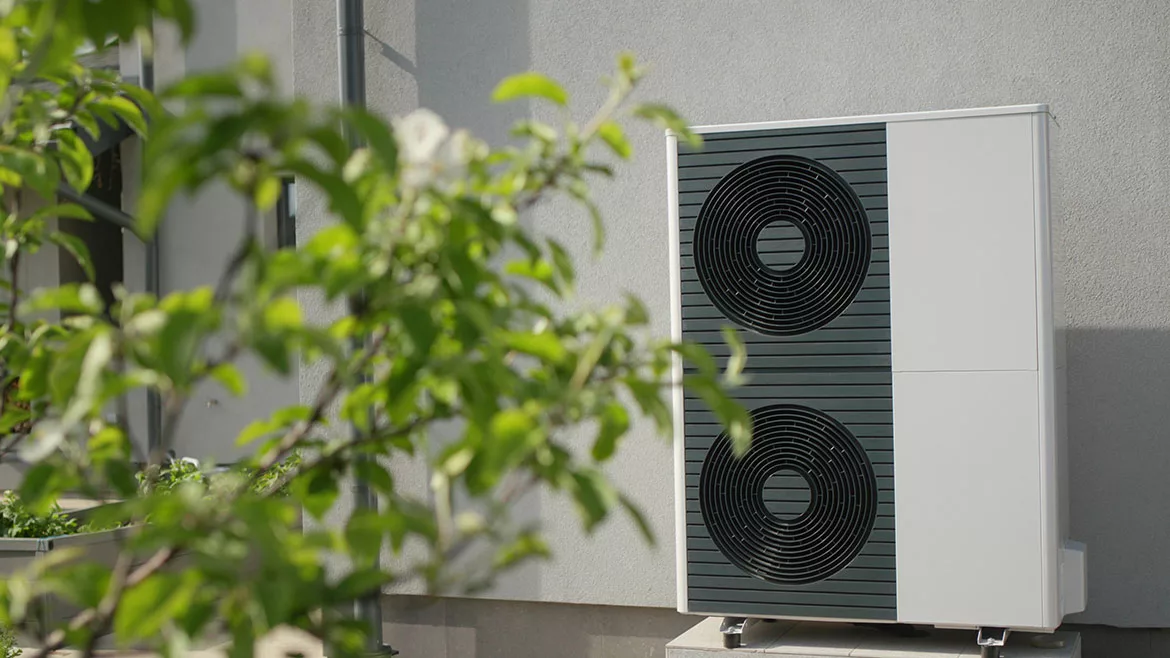
Powerful heat pump for heating and air conditioning of a modern private house installed outside on the side of the house.

Image courtesy of StockSeller_ukr / iStock / Getty Images Plus

April 8, 2025
✕
Image in modal.

Last month we began discussing direct-to-load hydronic heat pump systems. They combine a variable speed compressor with variable speed circulator to modulate both heat output and flow to match the needs of a distribution system without need of a buffer tank or hydraulic separator.

Adding a boiler

Both air-to-water and water-to-water heat pumps are often combined with a boiler to serve as a supplemental and backup heat source. In a direct-to-load system the boiler can be tied into the system using a pair of closely spaced tees as shown in figure 1.

FIGURE 1

Figure 1: Boiler tied to system using a pair of closely spaced tees
Drawing courtesy of John Siegenthaler

This arrangement is appropriate for use with an air-to-water heat pump when that heat pump is located close to the building it serves. This minimizes heat loss from the exposed exterior piping and heat pump heat exchanger, both of which should be well insulated.  

If the heat pump is located more than a few feet from the building, a 3-way valve should be installed to divert flow around the heat pump when it is not operating, but the distribution system is operating.  

If the circulator inside the heat pump shuts down, such as on a fault code, there also needs to be a bypass circulator to provide system flow. This circulator would also be used if the design intent is to provide continuous circulation through a heated floor slab when neither heat source is operating. These details are shown in figure 2.

FIGURE 2

Figure 2: Air-to-water heat pump w/internal circulator off.
Drawing courtesy of John Siegenthaler

Some heat pumps have internal controls that can automatically call for the auxiliary boiler to operate. In some cases the heat pump provides a simple contact closure to “call” for boiler operation. This would be used to operate a conventional “on/off” boiler. Some heat pumps can also generate a 0-10 VDC output that can directly control the firing rate of a  mod/ con boiler equipped with a 0-10 VDC input.  As such it can operate the boiler at the same time as its compressor and circulator, and at a firing rate that’s just enough to achieve the target supply water temperature to the distribution system.  The latter would be based on outdoor reset control.

Simple layouts

 Direct-to-load systems are ideal in situation where a single heat pump supplies floor heating in winter and an air handler for cooling. Figure 3 shows a conceptual system.

FIGURE 3

Figure 3: Conceptual system of direct-to-load system
Drawing courtesy of John Siegenthaler

The modulation of the heat pump combined with the thermal mass of the floor slab makes for an excellent match, and simple piping. Be sure that the circulator in the heat pump has sufficient flow and head to provide proper operation of the distribution systems for both heating and cooling. See last month’s column for more discussion on this.

Exceptions

There are situations where I still think a small buffer tank is a good idea. One example is a system containing several panel radiators, each of which is individually controlled by a thermostatic radiator valve  such as shown in figure 4.  

FIGURE 4

Figure 4: System containing several panel radiators
Drawing courtesy of John Siegenthaler

The heat pump (and possibly the aux boiler if used) will “see” the buffer tank as the load. A variable-speed pressure-regulated circulator on the load side of the buffer tank changes speed to match the flow requirement of the panel radiators. The heat pump can monitor the temperature of the buffer tank and maintain that temperature based on either setpoint with differential or outdoor reset.

Double duty

Figure 5 shows a configuration that’s not strictly direct-to-load, but still provides a simple way to achieve space heating with micro-zoned panel radiators combined with domestic water heating and chilled water cooling.

FIGURE 5

Figure 5
Drawing courtesy of John Siegenthaler

This system uses a reverse indirect tank as both a buffer for a micro-zoned space heating distribution system, and as a domestic water heater. In heating mode the heat pump simply maintains the temperature of the tank suitably high for domestic water heating (typically in the range of 120 to 130 ºF). The panel radiators “sip” heat from the tank based on the setting of their thermostat radiator valves. This arrangement would be ideal for a well insulated “net zero” house in which space heating, domestic hot water, and cooling are all required.

In cooling mode flow is routed through the diverter valve to the coil in the air handler and directly back to the heat pump. Controls, either within the heat pump or external, would establish which load (domestic water heating or cooling) takes priority.


KEYWORDS: heat pumps heating systems hydronics

Share This Story

Looking for a reprint of this article?
From high-res PDFs to custom plaques, order your copy today!

John siegenthaler 200x200

John Siegenthaler, P.E., is a consulting engineer and principal of Appropriate Designs in Holland Patent, New York. In partnership with HeatSpring, he has developed several online courses that provide in-depth, design-level training in modern hydronics systems, air-to-water heat pumps and biomass boiler systems. Additional information and resources for hydronic system design are available on Siegenthaler’s website,  www.hydronicpros.com.

Recommended Content

JOIN TODAY
to unlock your recommendations.

Already have an account? Sign In

  • 2025 Next Gen ALL-STARS hero 1440

    2025 Next Gen All Stars: Top 20 Under 40 Plumbing Professionals

    This year’s group of NextGen All-Stars is full of young...
    Plumbing & Mechanical Engineer
    By: Kristen R. Bayles
  • Worker using the Milwaukee Tool SWITCH PACK drain cleaner

    Pipeline profits: Drain cleaning, pipe inspection create opportunities

    Drain cleaning and inspection services offer lucrative...
    Green Plumbing and Mechanical
    By: Nicole Krawcke
  • Uponor employee, Arturo Moreno

    The reinvestment in American manufacturing and training

    Plumbing & Mechanical Chief Editor Nicole Krawcke and...
    Plumbing News
    By: Nicole Krawcke and Natalie Forster
Manage My Account
  • eNewsletters
  • Online Registration
  • Subscription Customer Service
  • eMagazine
  • Manage My Preferences

More Videos

Popular Stories

Hot water pipes

Campus shutdown at Oakland University exposes hidden risks of aging hot-water infrastructure

Floor heating manifold cabinet with flowmeter and PEX pipe.

Elegance extended: How to use the homerun system of connecting heat emitters

Industrial pressure gauge on a tank.

From cutting edge to classic: How to modernize outdated pneumatic control systems

Poll

Will business be up or down in 2025?

Do you anticipate business in 2025 to be up or down in comparison to 2024?
View Results Poll Archive

Products

The Water Came To A Stop

The Water Came To A Stop

See More Products
eBook | 2025 Radiant & Hydronics All Stars

Related Articles

  • A heat pump is situated outside a modern home with wood siding. The unit is white with two fans and is positioned next to a window. Lush green grass covers the ground in front of the home.

    Versatility in direct-to-load systems, part one

    See More
  • PME0123-Siggy-slide1.jpg

    John Siegenthaler: Modifying high-temperature distribution systems for lower-temperature operation — part two

    See More
  • Air conditioning compressor outside on the floor, surrounded by concrete walls.

    When one heat pump isn’t enough — part two

    See More

Related Products

See More Products
  • Classic Hydronics - How To Get The Most From Those Older Hot-Water Heating Systems

  • Greening Steam: How to Bring 19th-Century Heating Systems into the 21st Century (and save lots of green!)

  • Lessons Learned in a Boiler Room: A common sense approach to servicing and installing commercial boilers

See More Products

Events

View AllSubmit An Event
  • August 26, 2014

    Free Webinar: Low Temperature Heat Emitter Options in Hydronic Systems

    With proper design, you can create systems that require supply water temperatures no higher than 120° F under design load conditions.
  • July 15, 2014

    Free Webinar: Achieving Hydraulic Separation in Hydronic Systems

    This webinar will show you four different methods for providing hydraulic separation, some of which may reduce the installation and operating cost of a system.
View AllSubmit An Event
×

Keep your content unclogged with our newsletters!

Stay in the know on the latest plumbing & piping industry trends.

JOIN TODAY!
  • RESOURCES
    • Advertise
    • Contact Us
    • Directories
    • Store
    • Want More
    • Supply House Times
  • SIGN UP TODAY
    • Create Account
    • eMagazine
    • eNewsletter
    • Customer Service
    • Manage Preferences
  • SERVICES
    • Marketing Services
    • Reprints
    • Market Research
    • List Rental
    • Survey/Respondent Access
  • STAY CONNECTED
    • LinkedIn
    • Facebook
    • Instagram
    • YouTube
    • X (Twitter)
  • PRIVACY
    • PRIVACY POLICY
    • TERMS & CONDITIONS
    • DO NOT SELL MY PERSONAL INFORMATION
    • PRIVACY REQUEST
    • ACCESSIBILITY

Copyright ©2025. All Rights Reserved BNP Media.

Design, CMS, Hosting & Web Development :: ePublishing