Upcoming DOE regulations and rising energy costs are creating new opportunities to improve hydronic distribution efficiency through smarter circulator strategies.
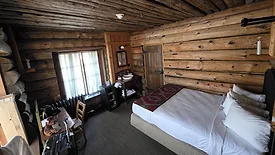
What happens when a heating contractor spends three nights in one of America's most iconic historic hotels? Scott Secor shares observations on the Old Faithful Inn's hydronic heating system, from ornate cast-iron radiators to noisy TRVs and the questions they raised.
For boilers operating on natural gas or propane, flue gas condensation begins at inlet water temperatures below about 130 ºF. Boilers operating on low sulfur #2 fuel oil have lower dewpoint temperatures in the range of 110 ºF.
At a supply water temperature of 103 ºF, the heating capacity of the heat pump is the same as the total heat dissipation ability of the distribution system. That’s where this system achieves thermal equilibrium. The floor heating zone is fine at this condition, but the output of the air handler is significantly lower than what was planned for based on the assumption that 120 ºF supply water would be available.
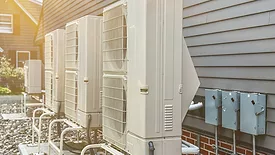
A building with slab-on-grade heating from a cast iron boiler plans to expand. A monobloc air-to-water heat pump will provide heating and cooling for the new space via a fan-coil unit, with the existing boiler serving as backup.