

Remarcable is intelligent procurement and material operations software for specialty contractors and suppliers, with AI built into everyday workfl ows. The platform processes over $1 billion in gross material value every month.


Why Mechanical Contractors' CFOs See Job Costs Weeks Too Late
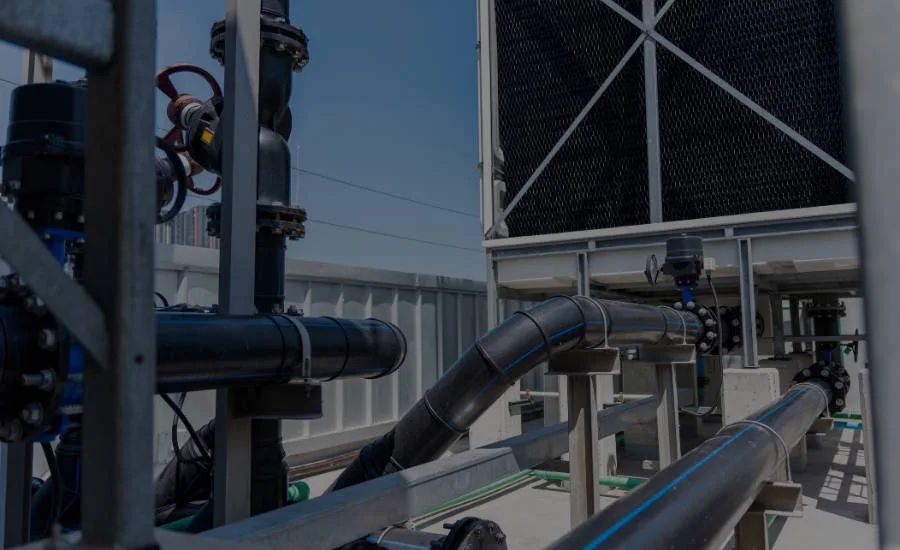
A 200-ton chiller for an October start gets ordered in January. The purchase order goes out before the general contractor has finalized a schedule of costs, sometimes before the mechanical contractor even has a signed contract. The commitment is real, often six figures on one piece of equipment, and for months it lives nowhere a CFO can see it. No phase code carries it yet, because the job doesn't have one.
Nothing about that signals a job that's already going wrong. It's the ordinary condition on a mechanical job. The distance between committing a cost and recording it runs to months. By the time that cost shows up on a job cost report, it describes a decision the CFO already made, sometimes a year earlier, at pricing that no longer applies.
The Chain From Commitment to Invoice
Four records carry a mechanical job's cost, and they don't start in the same place. Fabricated scope enters through a bill of materials the shop builds off the drawings. Service work, change orders, and anything stick-built enter through a field request (a call or a text from whoever needs the part). Both paths lead to the same purchase order, the same phase code, and the same supplier invoice. Two entrances, one exit, and the exit is where the lag lives.
Money moves before the exit. A supplier locks in pricing and reserves production capacity the day the PO goes out. The accounting system only sees the transaction once someone keys it in, at whatever phase code they happen to pick, and the invoice can land weeks or months after that. A purchasing manager buys a rooftop unit at bid pricing, it gets invoiced later in three progress payments, and in the meantime it sits coded to a general mechanical bucket because nobody has assigned it anywhere more specific. The job's phase code has to be carried by hand across that whole distance, usually by whoever is closing the loop that week and rarely by whoever placed the order.
What the Connection Is Worth
Most mechanical contractors have already tried to close that gap with software. About 70% have connected their BIM or fabrication tools to their ERP or project management system, according to Dodge Construction Network's survey of mechanical contractors. Just 35% of the contractors who have that connection describe it as working seamlessly or very well.
Connection is common. A connection that carries something meaningful across it, reliably, without a person checking it in the middle, is rare, and that difference decides whether any of this pays off. The survey measures the model and fabrication side of the wiring, a different link than the buy itself. Even so, the pattern generalizes. A link between two systems versus a connection that moves the right information at the right moment are two different achievements. Most mechanical shops have built the first. About a third have the second. The same Dodge research finds that fabrication itself is already close to universal, and most owners and general contractors require it.. The ERP connection is the piece still catching up, and it's the one that decides whether the CFO's numbers are current or stale.
Three Things That Stretch the Gap on Mechanical Work
Commitment happens furthest in advance. Long-lead equipment (chillers, air handlers, rooftop units, boilers) gets ordered months ahead of install and sometimes before the job has a phase structure ready to receive it. The gap is wide before anything else happens to it.
The job has two entrances and one exit, as above, and the exit doesn't sort them. A field request coded on the fly and a fabricated assembly coded off a BOM land in the same phase code field, filled in by whoever happens to be closing the loop.
Mechanical equipment also bills in stages. A deposit, progress payments tied to fabrication milestones, and a final payment at delivery or startup arrive on their own separate schedules. The commitment lands as one number on day one. The actuals arrive in batches over months, so reported margin moves for reasons that have nothing to do with how the job is actually running. On the service side of mechanical work, 20% of contractors now take more than 15 days to bill once a job is complete, up from 15% in 2022, according to MCAA's mechanical service benchmark survey. The billing lag MSCA measures runs from job completion to invoice. On project work, the lag runs from commitment to record, and it starts much earlier.
The Price Moved While the Gap SAT Open
A gap measured in months matters more when prices move within it. The goods and services priced into nonresidential construction rose 8.4% in the year to May 2026, the largest jump since the pandemic, according to the Associated General Contractors of America. Copper, priced separately, is up roughly 28% over the same stretch, as reported by the Bureau of Labor Statistics data.
A chiller bought against a budget number set before that move and invoiced after it doesn't just arrive late. It arrives priced differently than the estimate assumed, and the difference surfaces as a margin swing with no obvious cause once it's buried in a monthly close months after the buy.
What Closes the Gap
Closing the gap means moving where the coding happens. A change made at the buy shows up on next month's WIP report. A change that depends on someone downstream remembering to make it has to survive a busy week, over and over, before it ever shows up at all, and most weeks it doesn't survive. Committed costs get recorded the moment the purchase order goes out, before any invoice arrives. The phase code gets assigned at the buy, when someone still knows what the equipment is for. Invoices get matched back to the purchase order they were issued against instead of re-coded from a blank field.
In a truly connected system, that same move removes a second cost. Nobody has to work out afterward which invoice belongs to which PO, or dig through old emails at month close, once the phase code is already on the record from the day of the buy. The hours a purchasing manager used to spend on that reconstruction go into negotiating the next buy and catching a supplier's slipping lead time before it becomes a schedule problem. A controller who isn't reclassifying at close has the hours back for the forecast.
None of this is new accounting theory. It's the same three-state model, budget, committed, actual, that every WIP report already runs on, applied at the point where mechanical work actually creates the cost. What changes is that the job's exposure reaches the CFO while there's still time to act on it. An invoice arriving months later only confirms a decision that was already made. Finding that out for the first time when the invoice lands means finding it out after it's unchangeable.
Last month's WIP report already has phase codes on it. The open question is how many days sit between the purchase order and the number, on your jobs, and whether anyone has measured it.
Looking for a reprint of this article?
From high-res PDFs to custom plaques, order your copy today!


