Old Faithful Inn, Yellowstone National Park
Historic charm, noisy pipes and hydronic curiosity at Yellowstone's Old Faithful Inn.
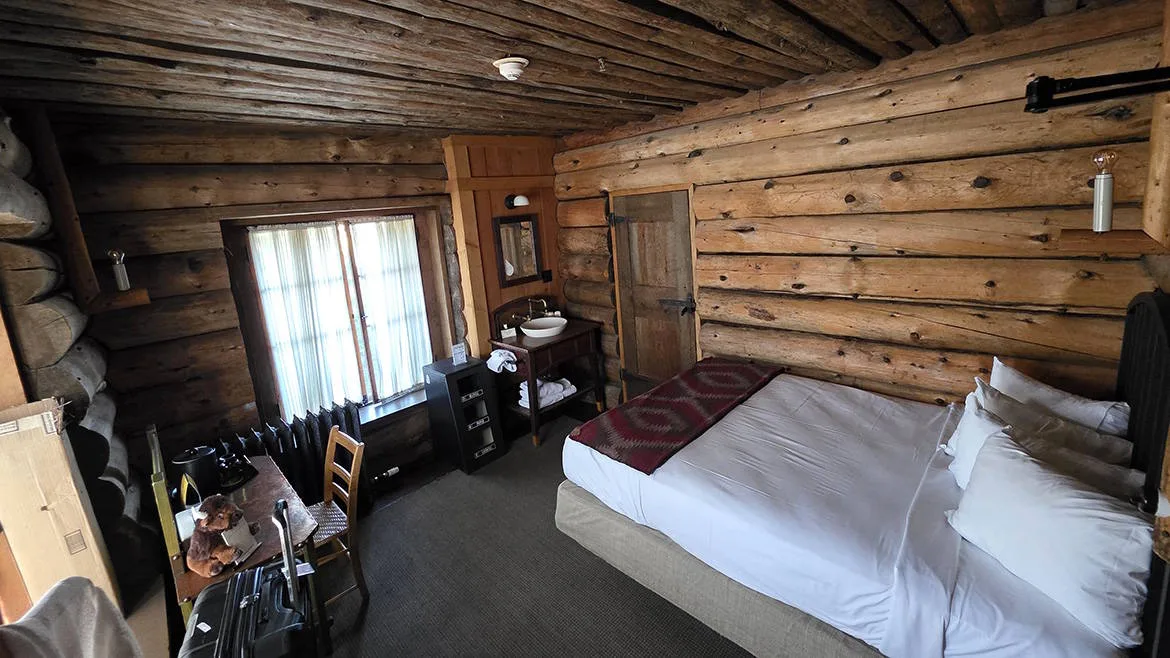
Scott Secor's room in the historic Old Faithful Inn featured hand-hewn log walls, original woodwork and a view of Old Faithful - along with a century-old hydronic heating system still hard at work.
Here’s the backstory. My wife’s parents have wanted to visit America’s West since they watched cowboy movies as children in the 1940’s and 1050’s. Approximately thirty-five years ago, they watched the movie Dances with Wolves. I have been listening to them for years talking about how cool it would be to visit someday. Back in February we were at my grandson’s christening and my in-laws mentioned they thought they wanted to go to Yellowstone. The next day I booked the rooms and the flights for the three of us. Our trip was planned for the middle of May.
I booked a room for the two of them with a full bath in the “new” addition at the Old Faithful Inn. My wife is a teacher and could not take off. I decided to save a few bucks and book a room in the original building with a queen bed and a shared bathroom.
When we arrived, I made sure the in-laws were comfortable and their room met their needs. Afterwards, I went to my room while admiring the mostly original architecture of the building. Like most people in the heating business, I spent a little too much time noticing some of the ornate cast iron radiators throughout the original section of the building. I realized that most of them were hooked up and operational. However some of them were just for decoration, this annoyed me, but I eventually got over it.
When I stuck the key in my door and entered my room, I immediately felt like I was going back in time. It had log cabin walls that had gaps filled with what looked like jute or some sort of fabric. Two light bulbs, one on the ceiling and one above the sink. My corner room had windows on two walls, and one faced the Old Faithful Geyser. The side-by-side single pane windows opened into the room. The ceiling appeared to be cedar planks, fitted with a smoke detector and a sprinkler head that were hidden well. The wood plank flooring appeared to be original but was mostly covered with thin carpet.
The temperature outside was about 50°F the first night. The large cast iron radiator had embossed designs on it. Back east, the larger more expensive homes and buildings have the embossed radiators, the regular homes had the plain jane version we see more often. Each radiator was fitted with a thermostatic valve. I noticed a few different brands of valves. The radiators were fed with hot water, not steam. The single radiator in my room was fitted with a Taco brand thermostatic valve. The room was about 75°F, and since I like it cool when I sleep, I decided to throttle the thermostatic valve all the way to snow (closed).
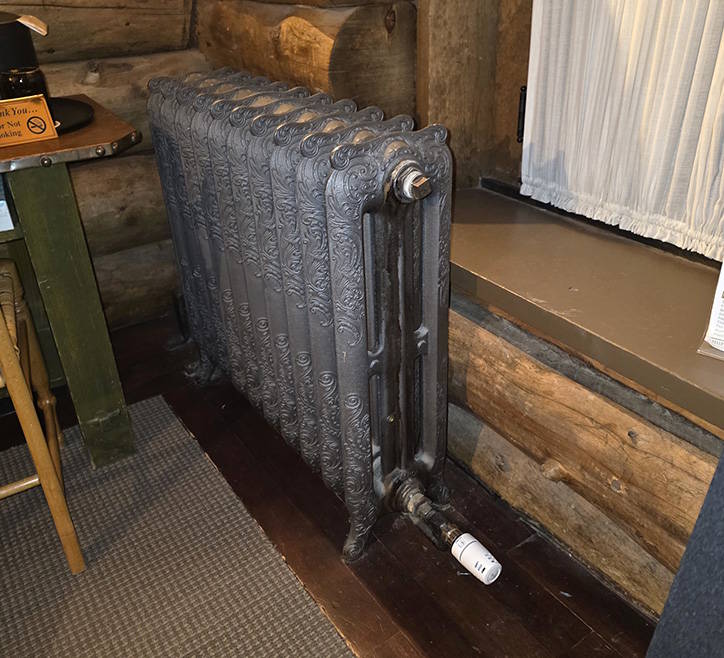
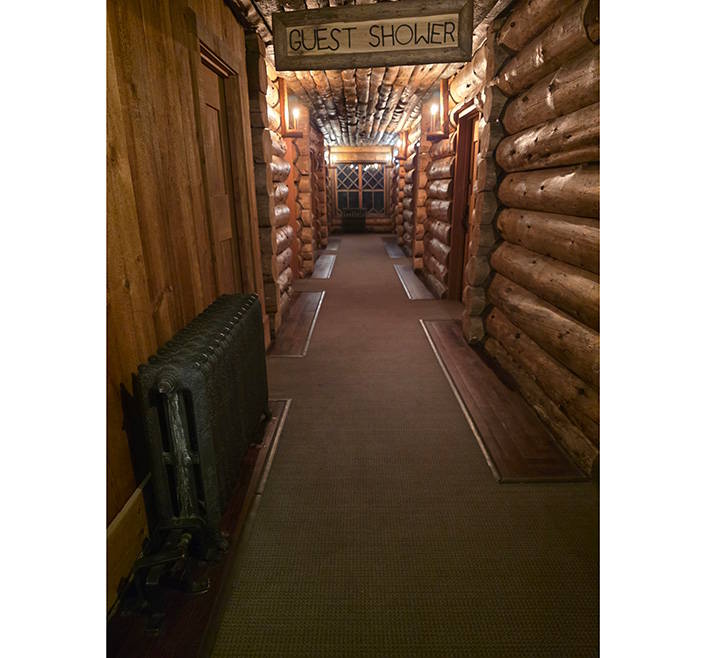
While most guests admired the rustic architecture, Scott couldn't stop studying the embossed cast-iron radiators and their modern TRVs. Photos courtesy of Scott Secor
Despite closing the thermostatic valve, I noticed the sound of water moving fast through the valve. After some fiddling, I decided to give up on stopping the flow and just crack the windows. This worked great and I immediately noticed the temperature in the room (and the radiator) started to drop. I climbed into bed and laid there thinking about the dead men (and women) that may have slept in this very same room before me. There were presidents, foreign dignitaries, leaders of the industrial revelation, Hollywood stars, and others. I shut my eyes but had trouble sleeping, not because of the temperature, but due to the noise. The thermostatic valve was screaming, most likely due to very high-head pump(s) in the boiler room. I suspect the thermostatic valve could not fully close. I also heard a different pipe swooshing away, most likely the DHW return pipe. I suspect someone oversized the domestic hot water return pump, too.
How could the largest wood framed building in the world in America’s first national park be pumped or piped wrong? I have designed and worked on many systems with Danfoss type thermostatic valves. I have not slept in many places with thermostatic valves and cast-iron radiators. Maybe the loud sound of water racing through pipes, valves, and heat emitters was normal? After about an hour of playing detective while lying in the dark I finally fell asleep. (Sorry to the neighboring rooms as I woke myself up a few times while snoring.)
The next morning, I stopped by the front desk and asked the kid from Alabama working there for the summer if I could visit the boiler room. She looked at me funny and went and got the assistant manager. I asked the assistant manager the same question and got the same puzzled look. I am not very convincing nor am I good at being pushy.
The assistant manager took me to the manager’s office where I asked again if I could visit the boiler room. The manager politely asked why, and I explained that I am a heating contractor back in New Jersey and I write a small column for a magazine called Plumbing and Mechanical. She looks at me above her reading glasses and gently says, “I don’t think that’s possible.” It was as if I asked if I could have permission to ride a buffalo (bison) or install a plug of some sort inside the Old Faithful Geyser. The manager then asked, “How are we doing, could you give me a brief review?” I followed with, “The room is great as is the hotel, but your piping may be too small or more likely your over-pumping on the heating side and perhaps the domestic water return.” She replied, “Oh, okay.” At that moment, the conversation was over and I left in a hurry before they called security on me.
How could the largest wood-framed building in the world, in America's first national park, be pumped or piped wrong?
The second night was cooler, about 35°F with a chance of snow. The TRV was still closed. I decided to play it safe and latch the loose-fitting windows. I then set the thermostatic valve to “one.” As a result, the heating pipes got a little less noisy. I jumped in bed after a long day of playing tour guide and began making more mental notes for this article. I have an app on my phone with a decibel meter that I use often at family gatherings to see which relative is the loudest. I considered firing up the app for the noise levels in the hotel room but fell asleep instead.
I woke up in the middle of the night for two reasons. One was I was shivering and the second reason was the person in the next room was snoring in my ear. I guess some of the insulation between the logs was missing or they were paying me back for me sounding like a grizzly bear when I was snoring. I was too lazy to get out of bed and just dealt with it. We did get about an inch of snow that night. The temperature around sunrise was twenty-six degrees.
The third and final night was cold. When I got back to the room after getting my in-laws into their room I headed back to my room. It was about 50°F inside my room and wind was howling. I could barely hear the windows rattling over the noisy pipes. I decided to go ahead and raise the setting on the Taco TRV from number one to number two. I wish I remembered to bring my thermal imaging camera and a temperature gun on vacation, maybe next time. It would have helped me understand what was going on better and maybe I would have slept better. When I woke in the morning, the water container I left on the windowsill had ice crystals on the surface.
Despite the strange sounds in my old hotel room, I slept pretty good and thoroughly enjoyed the entire trip. I would certainly want to stay there again. Maybe next time I’ll bring my tool bag instead of camera bag. I was honored to assist in checking off an item on my wife’s parents desire to finally see the wild west.Looking for a reprint of this article?
From high-res PDFs to custom plaques, order your copy today!