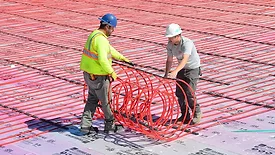
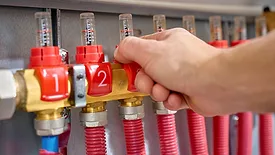
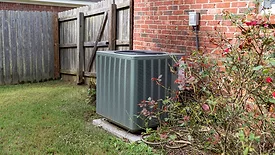
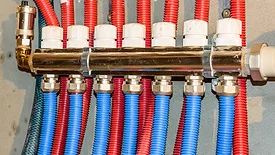
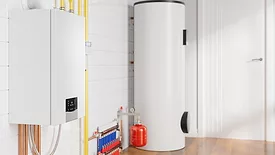
An installer is planning a multi-zone floor heating system supplied from a single stage non-modulating geothermal heat pump. Can you identify at least four design flaws or operational issues that are likely to develop if the system is installed as shown?
Figure 1 shows a hydronic system that’s intended to supply four panel radiators, each with their own thermostatic radiator valve and an indirect water heater from a gas-fired sectional cast-iron boiler. The system is designed using primary/secondary piping. The primary circulator operates whenever the space heating load or the indirect water heater call for heat.
The upward pricing trend that carried into the new year is continuing through February and into March, with a steady stream of plumbing, hydronic, HVAC and PVF manufacturers announcing increases. While many adjustments are landing in the low- to mid-single-digit range, several manufacturers are implementing category-specific or “various” increases, with select product lines moving higher.
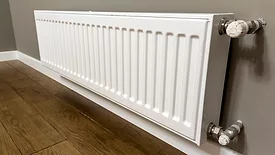
Panel radiators operated at low water temperatures, and with minimal fins attached to the rear of the water plate, can emit upwards of 50% of their total output as radiant heat.
AHR Expo 2026 made it clear that hybrid systems are no longer an emerging idea; they are the answer to the ongoing balancing act of meeting decarbonization goals while remaining realistic about the grid's capacity for electrification. Manufacturers emphasized systems that combine electric technologies, gas-fired equipment, and advanced controls.
In hydronic systems, the circuit usually passes through the boiler, which adds heat. When using a block heater and the boiler is off, it dissipates heat from the circuit. This heat loss must be considered when measuring the circuit's true "net" heating output.
Figure 1 shows the piping layout for an actual installation. It uses two boilers, fired in stages, to supply three areas of a building. One of those areas is sub-divided into three zones. The other two areas are handled by individual zone circulators. The "primary circulator" operates whenever any load circuit is on. All circulators are fixed speed. There's a partially closed ball valve at the end of the "primary loop."

 RSS
RSS