Valuation begins with the owner's own books and operating data to establish what the company is worth today. Its agentic analysis then identifies the factors driving that value, benchmarks the business against peers and highlights the levers with the greatest potential impact.
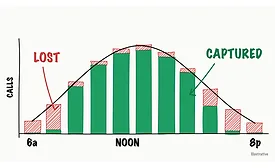
How much revenue disappears when no one answers the phone? Missed calls, especially before opening, after hours and on weekends, can mean more than a lost order. See how contractors and distributors can measure the gap, improve answer rates and turn more calls into long-term customer relationships.
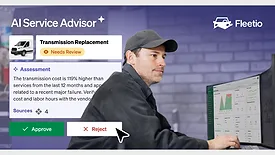
AI Service Advisor assessed $1.4 billion in maintenance spend during open beta, aiming to help fleets reduce time in the shop and avoid unnecessary costs.
Wint's platform uses AI algorithms to analyze water data in commercial and industrial buildings in real time, giving facilities and risk teams precise visibility into where water is being used, wasted, or lost before damage occurs.
As utilities prepare for large-scale retirements, Nyad is building an AI tool to preserve operator knowledge and deliver guidance when newer workers need it most.
For Nyad, success is not measured by removing operators from the process. It is measured by giving more operators access to the kind of guidance that has traditionally depended on who happened to be on shift.
Plumbing is one of the largest and most essential specialty trades in construction, with the U.S. plumbing industry projected to reach $191.4 billion in 2026 and include roughly 129,000 businesses nationwide, according to IBISWorld. At the same time, the construction industry continues to face a major labor shortage, putting more pressure on contractors to do more with their existing teams.
From AI-powered leak detection to smart faucets, water heaters, and bottle filling stations, connected plumbing is reshaping how water systems are managed. Learn how intelligent plumbing technology is reducing maintenance costs, conserving resources, improving hygiene, and creating new opportunities for contractors and distributors.
Access to realistic and location-specific information about professional service and installation pricing is critical as residential customers rely on next-gen AI search platforms to compare options.



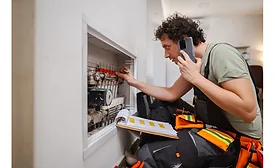


.webp?height=168&t=1785446753&width=275 "Bobyard Launches AI Takeoff and Estimating for Commercial Plumbing Contractors")