How heating systems began
I was having a conversation the other day with Mr. Ara Marcus Daniels.

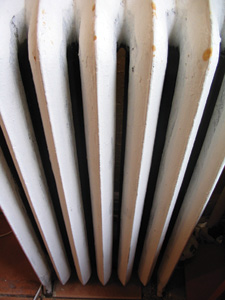
|
| Photo credit: ©istockphoto.com/strayarts |
I was having a conversation the other day with Mr. Ara Marcus Daniels, author of many plumbing books, who is quite dead. I do such things because I have time on my hands and not much of a life.
We were talking about early heating systems, Ara and I. I had questions and he had answers. When you want to know stuff about how things began, it pays to ask someone who has been dead for a while. Guys like that were there at the start and saw most of it for themselves. Or they heard the really good stories. And then they went and wrote it all down in books and magazines, which is how I get to chat with them.
Here’s how it went:
Dan: Nice to finally get a chance to chat, Ara. I’ve been reading your stuff for years and you’ve taught me a lot. I’m not sure you’d like the way the HVAC business has gone since you left the building. There are more furnaces than boilers in America these days. In some parts of the country, they think radiators are ugly and cart them away to the junkyard. What do you think about that?
Ara: Well, it’s 1930 where I am right now, and always will remain, and radiators have been around for at least 75 years. These days, comparatively few appreciate them and the opportunity to improve and enhance them is perhaps as great today as at any time in their history.
Dan: You got that right. It’s a constant struggle. Hey, I’m wondering who the first person in the United States to use radiators was. You have any idea?
Ara: Who can say when the first so-called “radiator” was used in this country? I’ve searched the records of the United States Patent Office and found not less than 750 patents during the last 87 years. That’s an average of more than eight claims per year.
Dan: That’s a lot. Which came first, the steam- or the hot-water radiator?
Ara: It was hot water. In 1837, Joseph Nason, who established the Nason Manufacturing Co. in 1841, went to England and identified himself with a Mr. Perkins, the inventor of the Perkins hot-water system of heating, which at that time was well-known and recognized throughout England. Mr. Nason superintended the erection and installation work of this unusual system in London and elsewhere.
Dan: Tell me about that system. What made it unusual?
Ara: It was a closed system constructed almost exclusively of 3/4-in. pipe. The boilers were of the box-coil type, made in one continuous length without fittings, other than couplings. The radiators were of similar coils with no fittings or valves. There was an expansion tank near the top of the system but no safety valve.
Dan: Yikes! No safety valve. That must have made life interesting. So you’re saying the earliest radiators were just pipe coils?
Ara: Yes and they carried about the sides of the rooms, probably first in greenhouses. The coils were continuous from the boiler through the rooms and back to the boiler. The water would cool down along the way.
Dan: Pipe that small must have slowed the water. I mean the system had mostly 3/4-in. pipe. Imagine the friction in runs that long. And there were no circulators at the time to help out.
Ara: Yes, they soon found they needed pipe with larger diameters, which were bulky and not nice to look at. This made it difficult to sell. They also realized the radiation surface had to be large enough to dissipate all the heat that came out of the boiler. The radiators were the safety valve.
Dan: That must have been pretty risky. You have to keep everything running full-blast all the time. Were there any valves?
Ara: After a time, they started to use a three-way valve that could divert the water from a main line into the radiating coils. They used one of these valves on the supply and another on the return to each radiating coil. They’d direct the flow from the main into the coil and on the return side of the coil they’d use the second three-way valve to send the water back into the main.
Dan: So it was a one-pipe system with the radiator coils positioned off the single main. It must have been difficult to keep track of all those opening and closing valves, especially since this was a manual operation.
Ara: It was. They had to open and close the valves in a certain order. If they didn’t, everything went awry. So they eventually got around this by using just one three-way valve on the supply to the coil and then piping the return from the coil to a separate return pipe.
Dan: So that was the beginning of two-pipe, hot-water heating. I’ve often wondered how it came to be. Did they change the size of the pipe as they moved away from the boiler and shed load?
Ara: Strangely, no. They thought they had to keep all the pipe the same size so that there would be less resistance to flow. The water, of course, wants to flow to the highest point and that was presenting problems with heating the lower floors. After a while, they solved this problem by feeding the vertical main into the bullhead of a tee and taking the coil off the run side of that tee. The other side of the run extended a foot or so horizontally before turning vertically again to get to the next floor up.
Dan: So the rising hot water would sort of slam into the bullhead tee and be forced to go both left and right rather than straight up to the top floor?
Ara: Exactly.
Dan: Such a simple solution. Do you know where the first hot-water system in the United States was?
Ara: I do. I mentioned earlier Mr. Nason. When he returned from England, he installed a closed system with radiating pipe coils in the counting room of the Middlesex Mill in Lowell, Mass. This was in 1841. He imported all the pipe from England.
Dan: So here we have our very first heating contractor!
Ara: Indeed. It’s interesting to observe as the art progresses that the hot-water circuits, in these better and improved systems, were treated in much the same way as plumbers treated circuits for domestic water supply in their best work. Each flow and return line was valved at the bottom with a small draw-off line for emptying the circuit.
Dan: And how about steam heat?
Ara: Steam-heating apparatus, in all its detail as used in America, is peculiarly American and its origin is credited, so far as I’m informed, to Joseph Nason.
Dan: And the radiator as we know it today? Well, I mean in 1930 — which is where you are right now and forever will be.
Ara: The radiator probably owes its birth to the use of tapered thread on the ends of pipe. The original radiator, possessing characteristics resembling today’s radiators, consisted of a row of wrought-iron pipe screwed into a cast-iron base, with the upper end of the pipe closed by welding a metal button onto it.
Dan: I still see those in old buildings. We call them Nason radiators. Speaking of which, any idea who came up with the name “radiator”?
Ara: To Mr. Nason, credit is given by some to the coining of that word as it’s used today to design that part of the hot-water and steam-heating system by which structures are warmed through standing radiation. Unquestionably, Mr. Nason is the father, if not the grandfather, of our present systems of warming buildings as the art is practiced today.
Much of his time was spent also in the development of fittings, valves, etc., for he took out patents for cast-iron fittings, malleable fittings, tapered joints, screwed and flanged valves, the angle valve, globe valve, stop cock, as well as much of the machinery needed for their manufacturing.
Dan: Well, that certainly makes me feel as if I haven’t done much with my time in this business.
Ara: Well, someone has to tell the stories.
Dan: And somebody has to remember. Thanks, Ara.
HELPFUL LINKS:
Looking for a reprint of this article?
From high-res PDFs to custom plaques, order your copy today!