Guest Editorial | Mike Prencavage Jr. & Chris Lollini
Building a profitable plumbing business in an uncertain market
Why efficiency, community trust and disciplined leadership are becoming the real growth levers for contractors.
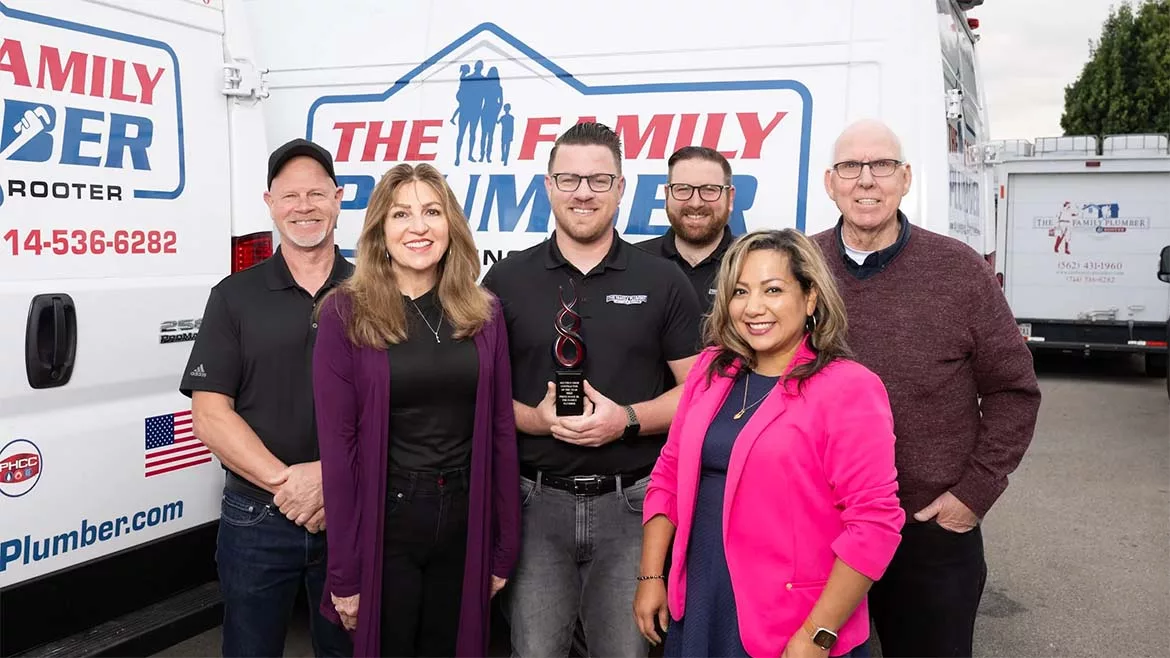
For many plumbing and HVAC owners, growth doesn’t arrive quietly. It shows up as longer days, higher payroll, constant phone calls, and a creeping sense that the business is running you instead of the other way around. That tension becomes even sharper in uncertain economic cycles; those periods when customers hesitate, labor costs rise, and marketing feels less predictable than ever.
Mike Prencavage Jr., owner of The Family Plumber in Orange County, California, knows this phase well. As a second-generation operator leading a nearly 40-year-old business in the $5–$10 million range, Mike isn’t chasing novelty. He’s focused on sustainability. Over the last two years, that focus has forced some hard decisions, such as rethinking compensation, tightening financial discipline, and rediscovering the power of community presence.
The result hasn’t been flashy growth headlines. Instead, it’s been something more durable: more substantial margins, a more motivated team, and a customer base that keeps coming back.
Why efficiency, not effort, became the breakthrough
For years, The Family Plumber operated under a familiar model where technicians sold their own work and completed their own jobs. On paper, it looked efficient. In reality, it put enormous pressure on the owner and inflated direct labor costs beyond what the business could comfortably sustain.
Mike’s wake-up call came from the numbers. “Our direct labor percentage was consistently above 40%,” he explains. Cutting wages wasn’t an option. Instead, the solution was structural.
The company shifted to a team-based install model led by project managers. Each project manager oversees three to five installers, supported by an apprentice. Compensation was rebuilt around efficiency (specifically, sold hours per day) rather than time spent on-site.
The goal wasn’t to rush jobs. It was to eliminate wasted time. “If an eight-hour job can be done in six, and it’s done right, our guys should work less and make more,” Mike says.
The impact was immediate. Installers became more focused. Owners stopped fielding constant questions about pricing and scope. Most importantly, the business had gained the ability to scale in a meaningful way, something it had lacked before.
How disciplined budgeting stabilized a volatile year
If efficiency fixed the operational side, budgeting fixed the emotional side of the business.
January turned out to be the slowest month The Family Plumber had ever experienced. With an election year looming and customers holding onto their wallets, uncertainty was everywhere. Instead of reacting with panic spending, Mike doubled down on a fully rebuilt budget.
This wasn’t a top-line exercise. Every category, from office supplies and internet to software and utilities, was line-itemed and tracked. Variances were flagged immediately. “If something moved by even a small amount, we knew it right away,” Mike explains.
That level of visibility created flexibility. When marketing needed more investment, something else had to give. When revenue softened, expenses didn’t spiral out of control. The budget became a tool rather than a constraint.
In a year when many contractors felt blindfolded, financial clarity became a competitive advantage.
Why there’s no such thing as an overnight success
Ask Mike what he believes differently now than earlier in his career, and his answer is blunt: there’s no shortcut.
Social media may suggest otherwise, but sustainable success in the trades still comes from fundamentals, namely systems, relationships, and time. That’s especially true as private equity (PE) reshapes the competitive landscape.
“For smaller operators or newer companies, you have to go back to grassroots,” Mike says. “Boots on the ground. Community involvement. Trust.”
Even at his current size, The Family Plumber has shifted its marketing mix back toward those roots. Roughly 60% of their effort now goes into guerrilla marketing, including opportunities such as local sponsorships, community events, and relationships built through the Chamber of Commerce. The remaining 40% supports digital channels like PPC, LSAs, and review generation.
Competing purely online against PE-backed brands with massive budgets isn’t realistic for most independents. Competing on trust still is.
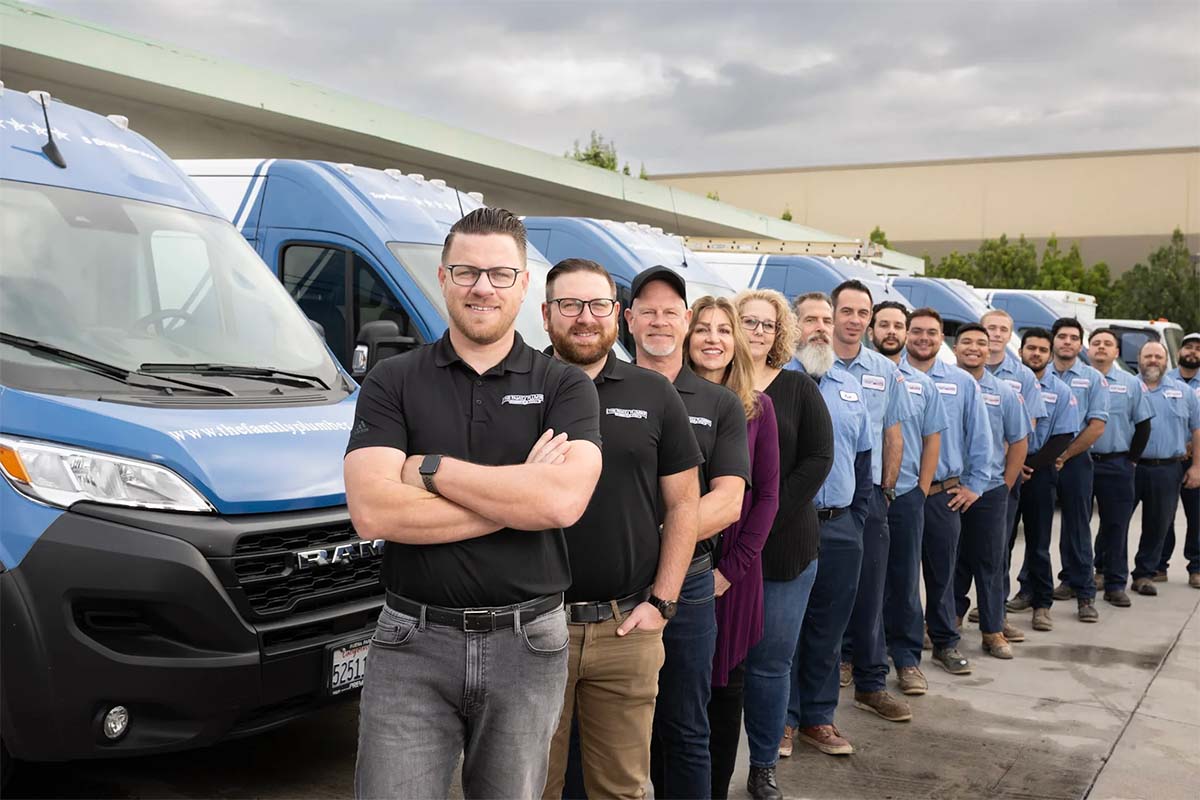
The Family Plumber Team. Image courtesy of Chris Lollini
Community presence as a trust multiplier
For Mike, community involvement isn’t about logos on banners. It’s about being known.
Joining and actively participating in local Chambers of Commerce opened doors he didn’t even know existed. Some examples include charity events, school sponsorships, nonprofit fundraisers, and civic programs. These aren’t one-off lead sources. They’re reputation builders.
“People see you show up,” Mike says. “They recognize the name. And when something goes wrong in their home, they already trust you.”
That trust shows up in retention. The Family Plumber maintains a customer retention rate above 85%, driven mainly by relationships formed at the doorstep. Customers request specific technicians. Reviews reflect familiarity, not just satisfaction. Internally, those reviews are celebrated weekly, reinforcing the behaviors that earned them.
In a market where many brands feel transactional, consistency and presence stand out.
Practical Ways Contractors Can Adopt Mike’s Approach
- Re-evaluate how your team is incentivized. If compensation rewards time instead of results, efficiency will always lag. Align pay with outcomes that matter.
- Separate selling from installing. Clear roles reduce friction, improve quality, and free owners from constant decision-making.
- Build a real budget, not a rough outline. Track every category closely enough that surprises disappear.
- Rebalance marketing toward trust. Community involvement won’t replace digital overnight, but it compounds faster than ads alone.
- Use reviews internally, not just externally. Public praise tied to real customer feedback builds culture and accountability.
Why disciplined operators will win the next decade
The next era of the trades won’t be dominated solely by the most prominent brands or the loudest marketers. It will be shaped by operators who understand efficiency, protect their margins, and invest in genuine relationships.
Mike Prencavage Jr.’s experience is a reminder that professionalism still matters and that businesses built on clarity and trust don’t just survive uncertain markets. They earn the right to grow through them.
In an industry hungry for credibility, that may be the most scalable advantage of all.
Looking for a reprint of this article?
From high-res PDFs to custom plaques, order your copy today!