
Ground-source heat pumps gain traction in high-performance building design
Efficiency gains, code alignment and long-term ROI are driving renewed interest among engineers and contractors.
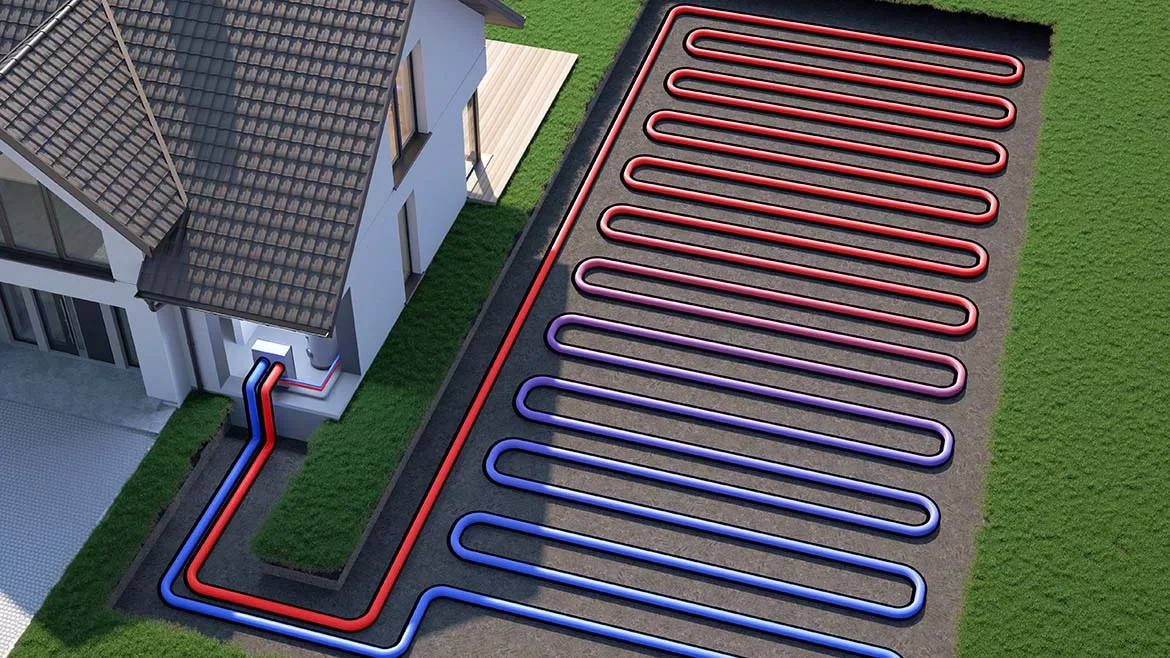
As electrification efforts accelerate and building performance standards tighten, ground-source heat pumps (GSHPs) are gaining renewed attention across the plumbing and mechanical landscape. Long viewed as a niche solution, these systems are increasingly being considered for both residential and commercial applications where efficiency, lifecycle cost, and sustainability goals intersect.
According to the U.S. Department of Energy, geothermal heat pumps are among the most efficient HVAC technologies available, capable of significantly reducing building energy consumption. That efficiency, paired with incentives tied to the Inflation Reduction Act, is driving broader adoption as owners look for long-term solutions that hedge against rising energy costs.
At the core of GSHP performance is a simple but powerful concept: using the earth as a heat exchanger. Unlike ambient air, ground temperatures remain relatively stable throughout the year, typically ranging between 45°F and 75°F depending on geography. That stability allows GSHP systems to operate with far greater efficiency than traditional air-source systems, particularly in extreme climates.
The mechanism behind GSHP performance
Ground-source heat pumps transfer heat to and from the earth depending on seasonal demand. In heating mode, the system extracts heat from the ground and transfers it indoors. In cooling mode, the process reverses, rejecting heat from the building back into the ground.
Closed-loop systems, the most common configuration, circulate a water-based or antifreeze solution through a network of buried piping. As the fluid moves through the loop field, it absorbs or dissipates heat before returning to the heat pump unit for exchange. Because the system is sealed and recirculating, water consumption is minimal compared to evaporative cooling systems.
From a design standpoint, GSHP systems can be configured in several ways. Horizontal loop systems are typically installed in trenches and are often used in residential applications where land is available. Vertical loop systems, which involve drilling boreholes hundreds of feet deep, are more common in commercial projects or urban environments where space is limited. Pond or lake loops provide another option when a suitable water body is available, offering strong performance with reduced excavation costs.
Each configuration carries its own design considerations, including soil conditions, thermal conductivity, available land, and drilling costs. For engineers and contractors, proper loop field design is critical to long-term system performance.
Efficiency gains and energy performance
The efficiency of GSHP systems is one of their most compelling advantages. These systems routinely achieve coefficients of performance (COPs) well above those of conventional HVAC equipment. In many cases, GSHPs can deliver efficiency levels exceeding 400%, meaning four units of heating or cooling are produced for every unit of electricity consumed.
The U.S. Environmental Protection Agency reports that geothermal systems can reduce energy use by 25% to 50% compared to conventional heating and cooling systems. Similarly, the U.S. Department of Energy notes that GSHPs can provide three to five times more energy than they consume, depending on system design and site conditions.
For contractors, this level of performance translates into systems that not only meet increasingly stringent energy codes but also deliver measurable operating cost savings to building owners. In applications such as schools, multifamily housing, and commercial buildings with consistent loads, the efficiency gains can be particularly impactful.
Cost considerations and long-term ROI
Despite their performance advantages, GSHP systems come with higher upfront costs than traditional HVAC systems. Residential installations typically range from $10,000 to $30,000 or more, while commercial systems can scale significantly higher depending on loop field requirements and building size.
However, focusing solely on first cost often overlooks the broader lifecycle economics. Lower operating costs, reduced maintenance requirements, and longer equipment lifespans all contribute to a favorable total cost of ownership.
The U.S. Department of Energy estimates that many GSHP systems achieve payback within five to 10 years, particularly when federal and state incentives are applied. The 30% federal tax credit available through the Inflation Reduction Act has further improved project feasibility, making geothermal systems more accessible across a wider range of applications.
For contractors and engineers, the conversation is increasingly shifting from upfront cost to lifecycle value, especially as clients prioritize energy stability and long-term savings.
Water use and infrastructure implications
In addition to energy efficiency, GSHP systems offer advantages in water conservation. Closed-loop geothermal systems recirculate fluid within a sealed piping network, minimizing water loss compared to cooling towers or other water-intensive HVAC systems.
This aligns with broader concerns around water infrastructure and resource management. Research from Bluefield Research points to growing investment in water-efficient technologies as utilities and municipalities contend with aging infrastructure and increasing demand. Technologies that reduce both energy and water intensity are expected to play a larger role in future building design.
For plumbing engineers, this dual benefit presents an opportunity to integrate HVAC and water efficiency strategies into a more holistic system design approach.
Codes, standards, and installation requirements
The successful implementation of GSHP systems depends heavily on adherence to established codes and standards. Key guidance is found in the International Energy Conservation Code (IECC), the International Green Construction Code (IgCC), and the International Mechanical Code (IMC).
Within the IMC, Chapter 12, Section 1210 specifically addresses plastic pipe ground-source heat pump loop systems. This section outlines requirements for piping materials, fittings, joints, and system installation, helping ensure durability and long-term performance.
These codes do more than establish minimum requirements. They provide consistency across jurisdictions and help reduce risk for contractors and engineers. Given the long lifecycle of geothermal systems, proper installation is critical, as errors in loop field design or piping installation can be difficult and costly to correct once the system is in place.
Organizations such as the International Code Council and the International Ground Source Heat Pump Association play a central role in advancing standards and training. IGSHPA, in particular, offers design manuals, installer certification programs, and access to standards such as CSA/ANSI/IGSHPA C448, which provides detailed guidance for system design and installation.
Barriers to adoption and workforce considerations
While interest in GSHP systems is growing, adoption is not without challenges. Higher upfront costs, site limitations, and a limited pool of experienced installers in some regions can slow project development.
Workforce development remains a key factor. Proper system design and installation require specialized knowledge, particularly when it comes to loop field sizing, soil conditions, and thermal performance. As demand increases, training and certification programs will play an important role in expanding the industry’s capabilities.
For contractors willing to invest in training, geothermal represents an opportunity to differentiate and expand service offerings in a competitive market.
Looking ahead
As the industry continues to move toward electrification and high-performance building design, ground-source heat pumps are well positioned for broader adoption. Their ability to deliver consistent, high-efficiency heating and cooling while reducing both energy and water use aligns with the direction of modern codes, standards, and owner expectations.
For plumbing and mechanical professionals, GSHP systems are no longer just a specialty solution. They are becoming a viable option in a growing number of applications, particularly where lifecycle performance and sustainability are priorities.
With the right design approach, adherence to codes and standards, and access to training resources, contractors and engineers can leverage geothermal technology to deliver long-term value to clients while positioning themselves at the forefront of an evolving HVAC landscape.
Looking for a reprint of this article?
From high-res PDFs to custom plaques, order your copy today!


