Leaks Happen. Here’s the ‘Why’ When They Do
May 4, 2026
Leaks Happen. Here’s the ‘Why’ When They Do
May 4, 2026Leaks happen, and no piping material is immune. Just like the human body experiences different types of injuries over a lifetime, piping systems are vulnerable to different types of failures depending on where they are in their service life. Understanding when and why leaks occur is critical for contractors, engineers and building owners alike.
Too often, leaks are viewed as random or unavoidable events. In reality, they are usually the result of specific conditions tied to installation practices, system design or ongoing maintenance. The consequences can be significant — from water damage and system downtime to costly callbacks and reputational risk for contractors. By recognizing the most common leak risks at each phase of a pipe’s lifecycle, professionals can take steps to reduce failures and improve long-term system performance.
Let’s take a closer look at the most common causes of leaks — especially in plastic piping systems — during installation, service and maintenance.
When: During maintenance
Why: Accidents
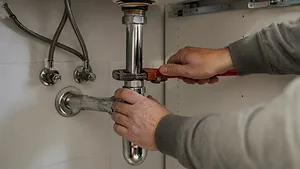
In some ways, installation is easier than maintenance. Installation typically occurs in a more controlled environment, before walls are closed and systems are fully operational. Maintenance, on the other hand, must be performed in situ, often under less-than-ideal conditions. Contractors may have to work around existing equipment, navigate tight spaces or reach awkward angles, all while minimizing disruption to building occupants.
Under these conditions, accidents are almost inevitable. A tool slips and strikes a pipe, a ladder bumps into a fitting. Even a minor impact can create a scratch, nick or small crack that weakens the pipe wall. While the damage may not cause an immediate failure, it can compromise the integrity of the system and increase the likelihood of a leak over time.
Chemical exposure is another risk during maintenance. A technician may unknowingly apply incompatible insulation, coatings or cleaning agents that react with the piping material. Over time, these interactions can degrade the pipe, making it more susceptible to cracking or failure.
Plastic piping systems often have an advantage in this phase. When properly specified and installed, they typically require less maintenance than metal systems. Their smooth interior surfaces reduce the likelihood of biofilm buildup, and their inherent resistance to corrosion minimizes issues like pitting and scaling. This can simplify long-term upkeep and reduce the frequency of invasive maintenance work.
When maintenance is required, plastics can also be easier to repair. Chlorinated polyvinyl chloride (CPVC), for example, can be joined using solvent cement, eliminating the need for hot work. In tight mechanical rooms or retrofit scenarios, this can be a significant advantage. Contractors can isolate a section of pipe, remove the damaged portion using a simple cutting tool, and solvent-weld a new section into place without introducing open flames or specialized welding equipment.
Looking for a reprint of this article?
From high-res PDFs to custom plaques, order your copy today!
Still, ease of maintenance does not eliminate risk. Even durable materials can be compromised by physical damage or improper handling. Recognizing the potential for accidental damage — and taking precautions to avoid it — is key to minimizing leaks during this phase.
When: During service
Why: Specification and design errors
No piping material is perfect. Every option comes with tradeoffs, and selecting the right material for a given application is critical to long-term performance. Errors made during specification and design may not become apparent immediately, but they can lead to leaks months or even years after installation.
Two of the most common issues are chemical incompatibility, and inadequate accommodation for thermal expansion.
In potable water systems, for example, pipes and fittings must withstand exposure to disinfectants such as chlorine or chloramines. Some plastic materials rely on sacrificial antioxidants to resist these chemicals. Over time, these protective elements can be depleted, leaving the material vulnerable to oxidation. As degradation progresses, the pipe can become brittle and prone to cracking.
A designer who understands local water chemistry — such as areas with higher chloramine levels — may instead specify a material like CPVC, which inherently resists chlorine due to its molecular structure. This type of informed decision-making can significantly extend system life and reduce the likelihood of leaks.
Thermal expansion presents another common challenge. All piping materials expand and contract with temperature changes, but plastics tend to do so more than metals. Contractors who are accustomed to working with copper may underestimate how much movement materials like PEX or CPVC will experience.
If a plastic pipe is rigidly fastened to a structure without room to move, repeated expansion and contraction can create stress within the system. Over time, this stress may lead to cracks, joint failures or other forms of leakage. A well-designed system accounts for this movement through the use of loops, offsets, expansion joints and properly spaced hangers.
These types of design considerations are often overlooked because they do not cause immediate problems. However, as the system operates over time, the effects become more pronounced. What begins as a minor oversight can eventually result in significant failure
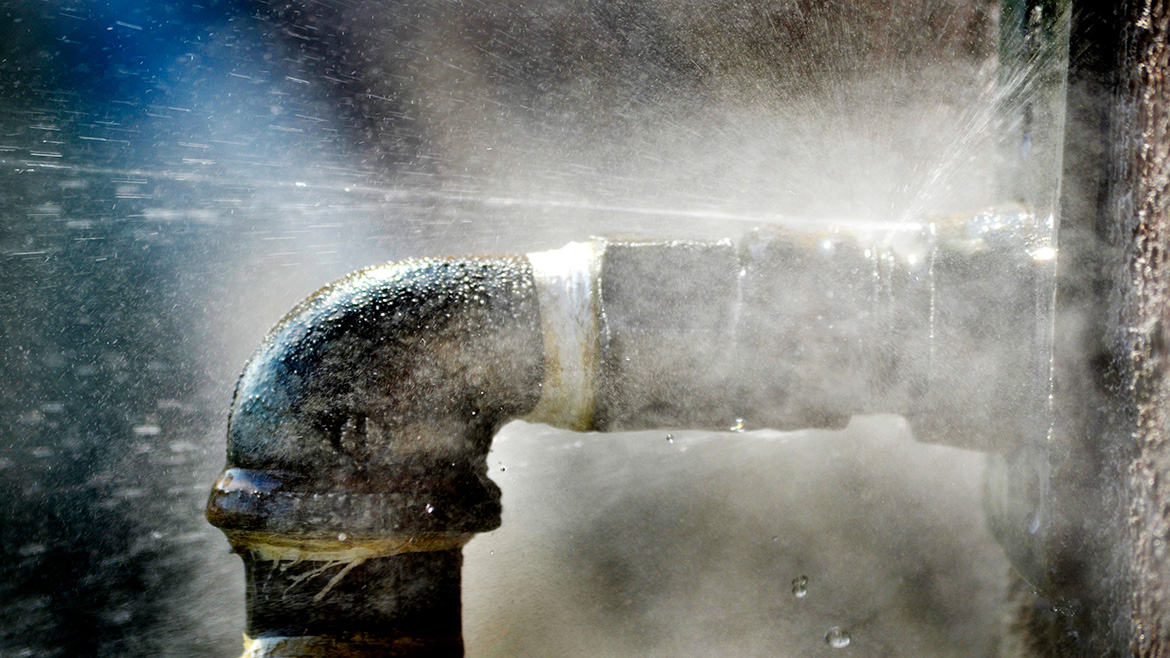
Most piping leaks aren’t random. eric1513 / iStock / Getty Images Plus
When: During installation
Why: Wrong tools or timing
The most common source of leaks — particularly in plastic piping systems — can be traced back to installation errors. Even high-quality materials can fail if they are not installed correctly.
Take solvent welding, for example. When done properly, a solvent-welded CPVC joint becomes a single, continuous piece of material. The process chemically fuses the pipe and fitting together, creating a joint that is actually thicker and stronger than the surrounding pipe wall. However, this level of performance depends entirely on proper technique.
A wide range of installation errors can compromise the integrity of a joint. Using glue instead of solvent cement, selecting the wrong type or viscosity of cement, or applying it to dirty or damp surfaces can all prevent a proper bond from forming. Similarly, using makeshift tools like rags or fingers instead of a proper applicator can result in uneven coverage.
Using too-little solvent cement is a particularly common issue. A dry or interference fit may feel secure during installation, creating a false sense of confidence. However, without a proper chemical bond, the joint is vulnerable. As the system experiences normal movement from pressure changes or thermal expansion, the connection can gradually loosen and eventually fail.
Cutting tools also play a role. Improper tools can leave jagged edges, compress the pipe or even cause microfractures. These imperfections can interfere with proper joint formation and create weak points in the system.
Timing is equally critical. After applying solvent cement, the joint must be held in place during the initial setting phase. It must then be allowed to cure undisturbed, giving the chemical bond time to fully develop. Rushing this process — whether due to schedule pressures or lack of awareness — can result in a weakened joint that may not fail immediately, but is far more likely to leak during service.
Environmental conditions also affect curing. Temperature and humidity can influence how quickly the solvent evaporates and how effectively the bond forms. Ignoring these factors can further increase the risk of failure.
In many cases, installation-related leaks are preventable. They stem not from material limitations, but from deviations in process. Proper training, adherence to manufacturer guidelines and attention to detail can significantly reduce these risks.
Reducing leak risk across the lifecycle
While leaks can occur at any stage, they are rarely unavoidable. A proactive approach that considers the entire lifecycle of a piping system can dramatically improve performance and reliability.
During design, this means selecting materials that are compatible with the intended application and local conditions. It also involves accounting for factors like thermal expansion, pressure fluctuations and long-term chemical exposure.
During installation, it requires following best practices and manufacturer instructions closely. Using the correct tools, materials and techniques — and allowing adequate time for processes like curing — helps ensure that the system starts its service life on solid footing.
During maintenance, awareness and care are essential. Protecting piping from accidental damage, avoiding incompatible materials and conducting routine inspections can help identify potential issues before they become serious problems.
Training also plays a critical role. As materials and technologies evolve, staying informed about proper installation and maintenance techniques is key to reducing errors and improving outcomes.
Looking ahead
Leaks may be a fact of life in piping systems, but they are far from random. Each phase of a pipe’s lifecycle presents its own set of risks, shaped by the decisions and actions of those who design, install and maintain the system.
By understanding these risks — and the conditions that lead to them — industry professionals can take a more proactive approach. The result is not only fewer leaks, but also more durable systems, lower long-term costs and greater confidence in performance.