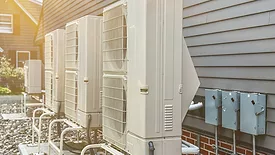
At a supply water temperature of 103 ºF, the heating capacity of the heat pump is the same as the total heat dissipation ability of the distribution system. That’s where this system achieves thermal equilibrium. The floor heating zone is fine at this condition, but the output of the air handler is significantly lower than what was planned for based on the assumption that 120 ºF supply water would be available.
Millinocket is near utility-scale wind turbine farms where strong winter winds can lead to over-generation of electricity, surpassing local grid demand. While it might seem intuitive to shut down some generation equipment during such times, the process is not as simple as flipping a switch.
One concept that’s getting increasing attention among HVAC engineers is “resilient design.” It refers to approaches that - ideally - allow systems to remain operational under very abnormal conditions, or minimize effects that could cause major damage to systems when and if they are otherwise rendered inoperative.
A building with slab-on-grade heating from a cast iron boiler plans to expand. A monobloc air-to-water heat pump will provide heating and cooling for the new space via a fan-coil unit, with the existing boiler serving as backup.
As air-to-water heat pumps replace boilers in North American hydronic systems, designers must rethink traditional approaches to heat transfer, or risk costly and inefficient installations.
Air-to-water heat pumps are gaining popularity in North American hydronic systems, but many practitioners are discovering that they operate differently from boilers.
As electrification reshapes the HVAC market, hydronic-based heating and cooling systems stand ready to offer many design and performance benefits. One of them is the potential for thermal storage. After all, water is one of the best materials on earth for storing sensible heat.
The availability of heat pumps allows designers and installers of hydronic heating to include cooling. A simple method involves using a single air handler with a chilled water coil for a ducted distribution system, providing single zone cooling that can complement multi-zone hydronic heating in average houses.
Most heat pumps in North America extract heat from outside air to warm interiors, which is why we call them "air-to-air" heat pumps. However, this term is incomplete, as heat pumps can also provide comfort without relying on forced air delivery.
Last month, we started with an air-to-water heat pump for space heating and added an auxiliary heat source and chilled water cooling. This month, we’re adding domestic water heating, similar to last month’s setup.
Standardized piping layouts for air-to-water heat pumps can improve acceptance by facilitating a basic heating system that uses a monobloc heat pump with a 30% propylene glycol solution for freeze protection.

 RSS
RSS