
From Firehouse to Jobsite: A Contractor's Approach to Water Heater Replacement
Firefighter Jesse Correira applies the same calm, methodical approach to plumbing as he does emergency response while upgrading residential hydronic systems.
.webp?t=1782919193)
Jesse Correira follows an interesting path to his career as a contractor. His vision for projects is also unique.
Correira, a 23-year employee of the Taunton Fire Department in Massachusetts, balances his public service work with his career as an independent plumbing contractor, which has been in business for more than two decades.
With consecutive 24-hour shifts as a firefighter, Correira specializes in water heater replacements and small remodeling jobs. In a recent project, he and an assistant replaced a water heater in a 2-bedroom, 1,000 square foot home. The existing indirect unit failed, and was undersized for both the current and future hot water demands for the residence.
“The homeowner is going to be upgrading a current bathroom with fixtures of a higher hot water demand, as well as adding an additional 60-gallon soaking tub and walk-in shower,’’ Correira said. “These additions required the larger storage tank size and faster recovery rate.”
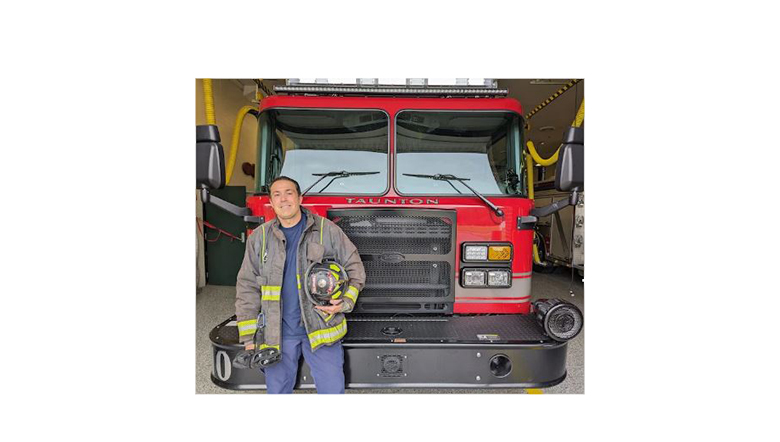 Photo courtesy of Jesse Correira
Photo courtesy of Jesse Correira Out with the Old
Built in 1955, the home has seen its share of mechanical equipment in its 71-year history in Taunton, which was founded in 1637 by members of the Plymouth Colony. It is one of the oldest towns in the state and is situated along the 37-mile Taunton River.
Correira reported that the existing 14-year-old water heater produced hot water inconsistently. “I believe the age and likelihood of scale buildup to the tank walls and coils were contributing factors to the limited supply of hot water being produced,’’ he said. “There was also heavy corrosion at the connection ports and the exterior tank wall, hinting at a possible future failure.”
Scale buildup is a frequent enemy of water heaters. It occurs when the calcium in water separates and begins to accumulate. The built-up scale makes heat transfer more difficult, and the unit needs to work harder to reach the desired temperature.
Buildup can also cause corrosion, which is the enemy of any water heating or heating system. Over time, corrosion can lead to leaks, reduced water quality and even complete system failure.
Water softening systems can help prevent building and corrosion inhibitors and anode rods also promote system longevity. Flushing the water heater at least once a year is recommended, but areas with hard water might need the process to be scheduled more frequently. Without regular flushing, the anticipated lifespan of a water heater decreases dramatically.
Dependable Replacement
Correira and his assistant swapped out the existing unit and replaced it with an HTP SuperStor Ultra Evo 80-gallon unit in a quick one-day job. The unit is known for its dependability – HTP offers a limited lifetime warranty for residential jobs – and the 316L stainless steel tank supports high temperatures and offers strong corrosion resistance.
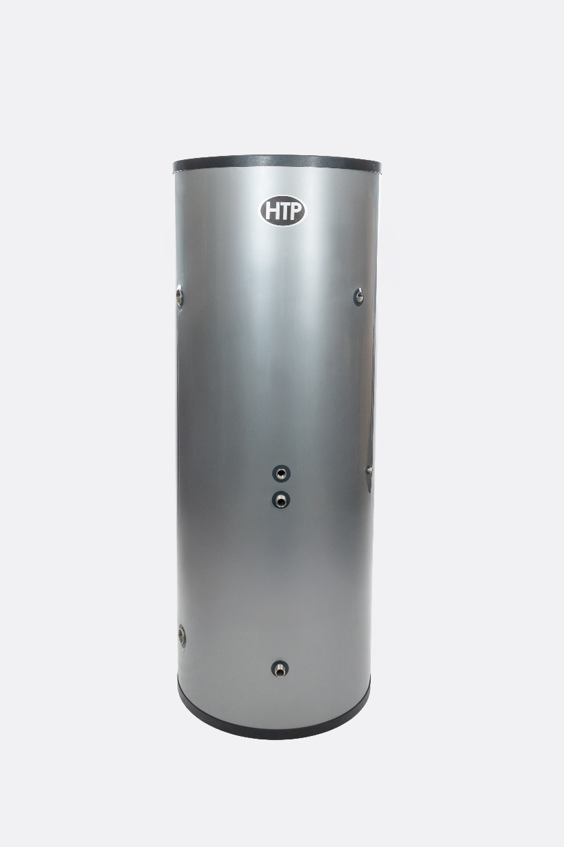 Jesse Correira installed an HTP SuperStor Ultra Evo 80-gallon unit in a recent project home remodeling project. The HTP unit comes with a limited lifetime warranty and the 316L stainless steel tank supports high temperatures and offers corrosion resistance. (Photo courtesy of Ariston Group)
The stainless steel internal bent hot water outlet tube extracts 5-7 percent more hot water at the top of the tank dome and boasts 3-5 times more recovery than conventional gas-fired or electric water heaters.
“This model was the right choice for this application, considering both the current and future demands of the home and having the known reliability of HTP products,’’ Correira said.
A mixing valve manufactured by Caleffi will boost hot water capacity by 30 percent without the need for a larger tank. “By cranking the tank temperature to 140°F and installing a mixing valve to temper it back down to a safe 120°F before it hits your taps, the thermal differential allows you to stretch your supply into significantly more usable gallons,’’ Correira explained. “Additionally, setting the water temperature at 140 degrees is high enough to prevent the growth of Legionella bacteria in the unit and water supply system.”
The new water heater was the first stage in replacing multiple components in the home’s hydronic system. Correira also included a Grundfos circulator, which ensures hot water is always available as close to the consumption post as possible. It will help reduce water waste and increase comfort.
“The next stage will consist of replacement of the heating unit itself and how the boiler water is distributed,’’ Correira said. “When that takes place, the new distribution manifold will allow for larger size supply and return lines to the HTP unit installed so as to maximize the amount of boiler water heated passing through the storage unit and increasing its recovery time.”
Managing Careers
Correira balances his projects with his role as a firefighter, a position he has held for more than 20 years. His schedule is demanding, with back-to-back 24-hour fire shifts followed by plumbing jobs. His assistant also works a second job, leaving both with little time to rest.
“I’m able to be pretty flexible,’’ Correira said. “I don’t take on an extreme number of large projects. I’ll work on a couple of brand-new houses a year. I have the flexibility to do that without having to commit to anything long term.”
While many people work multiple jobs, in most instances the tasks require adjacent skills. There are hardly any similarities between firefighting and plumbing, but Correira says remaining cool under pressure is critical in both careers.
“As a firefighter or a plumber, we can’t panic in an emergency response,’’ Correira said. “The volume on the emergencies gets turned down a little bit because we know the norm. A lot of people in emergency response careers feel the same thing. You’re able to handle it a little bit easier because we’ve seen similar situations hundreds of times.”
Correira’s HVAC career also supports his work as a firefighter in discovering where equipment is located. “Our fire prevention team can walk through a building with contractors and go over a lot of the things that we won’t know,’’ he explains. “There could be things we might not recognize or we’re unfamiliar with. It’s the same when we get calls for gas leaks with houses. I’m a little more educated on the systems, knowing where the shutoffs will be and what to expect. There are certainly transitions between both careers.”
His career has been interesting, starting with training at the Fire Academy in 1998, working on an ambulance crew in Boston, and then joining the fire department. He also served his plumbing apprenticeship but put his contractor’s career on hold for five years before getting back into it.
“I tried to kind of embrace the career as a firefighter,’’ Correira said. “I figured out that I could do both. The flexibility of the different time frames works out. There are plenty of calls for people who need work, and I can’t take them. They either need it right away or it’s going to take more time than I have available. I have to say no to some projects, and that’s part of being a smaller guy.”
Looking for a reprint of this article?
From high-res PDFs to custom plaques, order your copy today!


