Rethinking upselling: guide, don't sell
What contractors get wrong about upselling, and how to fix it.

For many contractors, the word “upselling” raises red flags.
For years, the term has been associated with your typical pushy salesman persona. Not taking no for an answer, uncomfortable conversations – the antithesis of what drew many people into working in the trades. Ask a technician if he sees himself as a salesperson, and the answer is usually a resounding, “no.”
However, in today’s service environment, a lot has changed.
In the age of technology, customers expect options. They want to understand what’s possible in their homes, not just what’s broken. At the same time, contractors are under increasing pressure to grow revenue, improve job profitability, and deliver a better overall customer experience. Somewhere in the middle of those expectations sits the concept of upselling; often misunderstood, and frequently mishandled.
According to Blake Turner, a trainer at Nexstar Network who works with contractors all over the U.S., the issue isn’t really upselling – rather, it’s how the industry defines it.
That perception of upselling can lead technicians to avoid offering additional options altogether, sticking strictly to the immediate repair. While that may feel more comfortable, it can also leave value on the table for both the business and the homeowner.
The reality is, when done correctly, upselling isn’t about convincing someone to buy something they don’t need. It’s actually about helping customers make informed decisions by showing them what’s available and allowing them to choose what’s right for their home.
Or, as Turner puts it: “How good are you at letting people buy things?”
That subtle shift — from selling to guiding — changes everything.
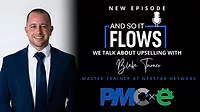
I interviewed Blake for our podcast, And So It Flows, to discuss all things upselling: the misconceptions, the truth and how to successfully incorporate it into your company culture.
Why “selling” feels uncomfortable in the trades
In my time in the industry, I’ve asked many people what first drew them into the trades. Typically, the answers have been pretty consistent: a passion for discovering how systems work and keeping communities safe. On the other hand, I’ve never spoken to someone who claimed that their favorite part of the job was the selling – or upselling – aspect.
The trades have long been rooted in craftsmanship, problem-solving and technical expertise. Most professionals entered the field to fix what’s broken, build something tangible or solve complex mechanical challenges, not to persuade someone to make a purchase. That creates a natural disconnect when the conversation shifts from service to sales.
“Most people didn’t grow up wanting to be salespeople,” Blake explains. “So when we hear that word, it creates resistance.”

When done correctly, upselling isn’t about convincing someone to buy something they don’t need. stevecoleimages / E+ / Getty Images
That resistance shows up in a lot of ways; in the technician rushing through a conversation, avoiding any mention of additional options in fear of sounding “like a salesman.” It can show up as them failing to mention a product that does more than fix the immediate problem, but makes their lives easier in the long run.
According to Turner, the issue isn’t really the act itself. Rather, it’s how it’s framed.
He asks a simple question: “How good are you at letting people buy things?”
Rather than pushing products or services, look at it this way: you’re giving them every available option. You’re making them aware of products that they might not even know are available; ones that could improve their life in ways they hadn’t thought possible.
That sort of thinking aligns much closer to what draws people into the trades to begin with. It’s less about sales and more about service; ensuring the homeowner has all the information they need to choose what’s best for their home, both now and in the future. For many technicians, that distinction makes all the difference.
Another major misconception: going into a job with a specific product in mind. Going in and thinking, “Today, I’m going to sell this person a faucet.” That, according to Turner, is missing the point.
He relates it to walking into a store like Best Buy. “You would walk into the store, and it's got all these electronics. Maybe you're just there for an HDMI cable, but it didn't mean that they went in and covered the big 75 inch plasma TVs up just because you were there for an HDMI cable … Everything is still on display, you decide what you want to buy.”
That “shelf” analogy is very important. It’s true: when you go into a store, no matter what you have in mind, the shelves are still full of other products. When you or your employees don’t share options with homeowners, what are you not putting on the shelf? Give them their options, and let them decide what works for them. That can be the real beauty of upselling.
The knowledge gap
One of the biggest challenges – and opportunities! – is that most homeowners don’t have the same knowledge of products and services that a contractor does. They don’t really know what’s possible.
While technicians work in these systems every day, the majority of homeowners only think about their plumbing or HVAC systems when something goes wrong. Their understanding of those systems are typically quite limited to what they’ve experienced personally, not what’s available on the market.
That gap in awareness can be significant.
“I grew up in a house that had a hot water hose bib outside,” Blake says. “I thought everyone had that. Then I moved into a house that didn’t, and when I asked a plumber about it, he told me no one had ever asked for that before.”
It’s a simple example, but it highlights a larger truth: what feels obvious to a technician is often completely unknown to a homeowner.
Plumbers know about recirculation pumps, leak detection systems, smart shutoff valves and high-end fixture upgrades. Homeowners, on the other hand, aren’t sitting around discussing these options at the dinner table. They don’t know what questions to ask because they don’t know what exists in the first place.
This is where many service calls fall short.
If a technician focuses only on the immediate problem—fixing a leak, replacing a valve, clearing a drain—the customer leaves with exactly what they asked for, but nothing more. Not because they didn’t want additional improvements, but because they were never made aware of them.
To put it simply: trades knowledge is not customer knowledge.
And that creates a responsibility for the contractor: not to sell, but to inform.
The goal isn’t to overwhelm the homeowner with options or push unnecessary upgrades. Instead, it’s about thoughtfully introducing possibilities in a way that feels natural and helpful. It’s the difference between saying, “You should buy this,” and saying, “Here’s something a lot of homeowners in your situation choose to do.”
When done correctly, this approach empowers the customer. It gives them visibility into solutions they didn’t know existed and allows them to decide what fits their needs, budget and priorities.
In that sense, bridging the knowledge gap isn’t about increasing the ticket. Instead, it’s about improving the service experience. The contractor becomes not just a technician, but a trusted advisor: someone who helps the homeowner see the full picture, not just the immediate problem in front of them.
When upselling meets customer value
One of the biggest misconceptions about upselling is that it’s about moving more products. In reality, when done well, it has very little to do with the product itself — and everything to do with the outcome it creates for the customer.
Technicians are trained to think in terms of parts, systems and specifications. Homeowners, on the other hand, think in terms of experience. They don’t care about the technical details of a valve, a pump or a fixture; they care about what those things do for their daily lives.
Blake simplifies this idea with a straightforward analogy: customers don’t want drill bits. They want the hole it creates.
As mechanically-inclined people, contractors understand the differences between whether a bit is diamond-plated or not, and what that means for the job. As long as that drill bit – diamond plated or not – creates a quarter inch hole, they’re happy. The value isn’t in what’s being installed, but rather, what it delivers. When contractors focus on the outcome rather than the product, upselling seems less like selling, and more like service.
Typically, that service shows up in few ways:
- Comfort: consistent hot water, better temperature control
- Convenience: faster systems, less waiting, easier routines
- Safety: protection from leaks, water damage or system failures
- Peace of mind: confidence that the home is operating reliably
Understanding buyer psychology makes all of the difference.
Customers don’t get excited about buying things they need. They get excited about buying things they want. A repair might solve a problem, but an upgrade improves their lifestyle. One is reactive, the other is aspirational.
It’s the difference between replacing a failing component and installing something that makes a homeowner say, “You’ve got to come see this.”
Take leak detection systems as an example. From a technical standpoint, it’s a preventative device. But from the homeowner’s perspective, it’s protection against a nightmare scenario; flooding, damage and costly repairs. That’s so much more than a product; it’s peace of mind.
Recirculation pumps offer another perspective. While they solve the practical issue of waiting for hot water, the real value is convenience—instant comfort in everyday routines that homeowners didn’t realize could be improved.
Then there are visible upgrades like high-end faucets or pot fillers. These go beyond function; they’re experiential. They’re the kinds of features homeowners notice, use frequently and often show off to others. They create an emotional connection in a way that behind-the-wall repairs simply don’t.
That distinction matters.
Repairs are necessary, but they’re rarely exciting. Improvements, on the other hand, tap into how people want to live in their homes. They align with comfort, pride and convenience: factors that drive real buying decisions.
For contractors, the takeaway is clear: the conversation shouldn’t center on the product, or even the problem alone. It should focus on the outcome.
When options are framed around lifestyle improvements rather than just technical fixes, customers are far more likely to engage, understand the value and ultimately choose what’s right for them.
The real skills: communication & culture
For many contractors, one of the biggest barriers to upselling isn’t technical, it’s emotional.
Turner and I discussed that dreaded feeling of sounding like a used-car salesman (said with love, as the daughter of a former used-car saleswoman!). According to Turner, there are two keys to avoiding that feeling. The first: good communication. The second: building your company’s culture around upselling.
According to Blake, avoiding that feeling comes down to two things. The first is communication: arguably the most overlooked skill in the trades.
“Especially in the service world, the first half of your job is communication,” Blake explained. “The second half is the trade. Because if you can’t communicate with people, your tools are just going to stay in your truck.”
That idea reframes what it means to be a professional in today’s service environment. Technical expertise is essential, but it’s only part of the job. The ability to ask good questions, listen actively and guide a conversation is what allows technicians to uncover opportunities, build trust and ultimately help customers make informed decisions.
In fact, Blake cautions against “recommending” too quickly. Instead, he emphasizes the importance of asking thoughtful questions that help the homeowner articulate their own needs and concerns.
Rather than feeling like they’re being sold to, customers feel like they’ve arrived at the solution themselves. The technician simply helps connect the dots. Everyone loves to feel like they’ve helped solve the problem!
But, communication alone isn’t enough. The second piece — company culture — is what determines whether those conversations happen consistently across a team.
“When we talk about culture, a lot of times we tend to pay attention to the scoreboard more than we pay attention to the play,” Blake told me. In other words, many companies focus heavily on results — average ticket size, close rates, upsell numbers — without paying equal attention to the behaviors that actually drive those outcomes.
Upselling, Blake argues, is a lagging indicator. It’s the result of doing the right things well, not something that can be forced through pressure or incentives alone. That’s where many contractors run into trouble.
Sales competitions, for example, are a common tactic used to boost performance, but they can often backfire. While they may create short-term gains, they can also foster internal competition, reduce collaboration and create a sense of scarcity among team members.

How good are you at letting people buy things? eyecrave productions / iStock / Getty Images Plus
“If we’re competing against each other, I’m not going to tell you how to beat me,” Blake noted. “So, it separates your team.”
Instead, he advocates for building a culture centered on communication, consistency and trust, where the focus is on “running the play” at a high level, rather than obsessing over the scoreboard.
Another simple litmus test he shared: would you be comfortable letting a customer sit in on your training? If the answer is no, it may be a sign that the culture is too focused on selling rather than serving.
At its best, a strong culture doesn’t push technicians to sell more; it equips them to communicate better. And when communication improves, the results tend to follow naturally!
Advice for contractors
When I asked Blake what advice he would give to technicians who still feel hesitant about recommending additional services, his answer was surprisingly simple:
“Don’t recommend.”
At first glance, that might sound counterintuitive; after all, much of the conversation around upselling centers on what to suggest or how to present options. But, Blake’s point cuts deeper than that. The issue isn’t what you recommend, it’s how you get there.
Instead of leading with solutions, he encourages technicians to lead with questions.
“A mentor of mine used to tell me, ‘Blake, the quality of your life is directly related to the quality of the questions that you ask,’” he said.
When a technician walks into a home and immediately starts recommending products or upgrades, it can unintentionally put the customer in a defensive position. Now, the homeowner has to evaluate — or even push back against — what the “expert” is telling them. That dynamic can feel uncomfortable, even if the recommendation is valid. But, when the conversation starts with thoughtful, well-placed questions, something different happens.
Instead of being told what they need, customers begin to articulate their own frustrations, preferences and priorities. They might mention how long it takes to get hot water, concerns about leaks while they’re away, or small inconveniences they’ve simply learned to live with.
Those insights are where the real opportunities lie.
By the time the technician presents options, the conversation no longer feels like a pitch. It feels like a continuation of what the homeowner already expressed. In many cases, the customer feels like they’ve arrived at the solution themselves. As Blake puts it, the goal is to reach a point where the homeowner looks at the options and thinks, “I did a pretty good job here.”
That sense of ownership is powerful. It removes resistance, builds trust and creates a more collaborative dynamic between contractor and customer. It also reinforces a key idea: upselling isn’t about convincing, it’s about uncovering.
The most effective way to guide customers toward better solutions isn’t to perfect a sales pitch, it’s to improve the quality of the conversation. Ask better questions, listen closely and let the customer lead you to the answer.
Upselling doesn’t have to feel uncomfortable, and it certainly doesn’t have to feel like selling. At its best, it’s simply an extension of good service.
When contractors shift their mindset from pushing products to providing options, from recommending to asking, and from focusing on the transaction to focusing on the outcome, the entire dynamic changes. The conversation becomes less about closing a sale, and more about helping a homeowner fully understand what’s possible in their home.
That is where real value is created.
By bridging the knowledge gap, focusing on lifestyle improvements and building a culture rooted in communication and trust, contractors position themselves as more than technicians. They become advisors: partners in helping homeowners make better, more informed decisions.
In an industry built on trust, that distinction matters. Because at the end of the day, the goal isn’t to sell more, it’s to serve better.
Looking for a reprint of this article?
From high-res PDFs to custom plaques, order your copy today!