Rethinking tankless: fact over fiction
Debunking misconceptions about cost, cold climates, and high-demand performance.
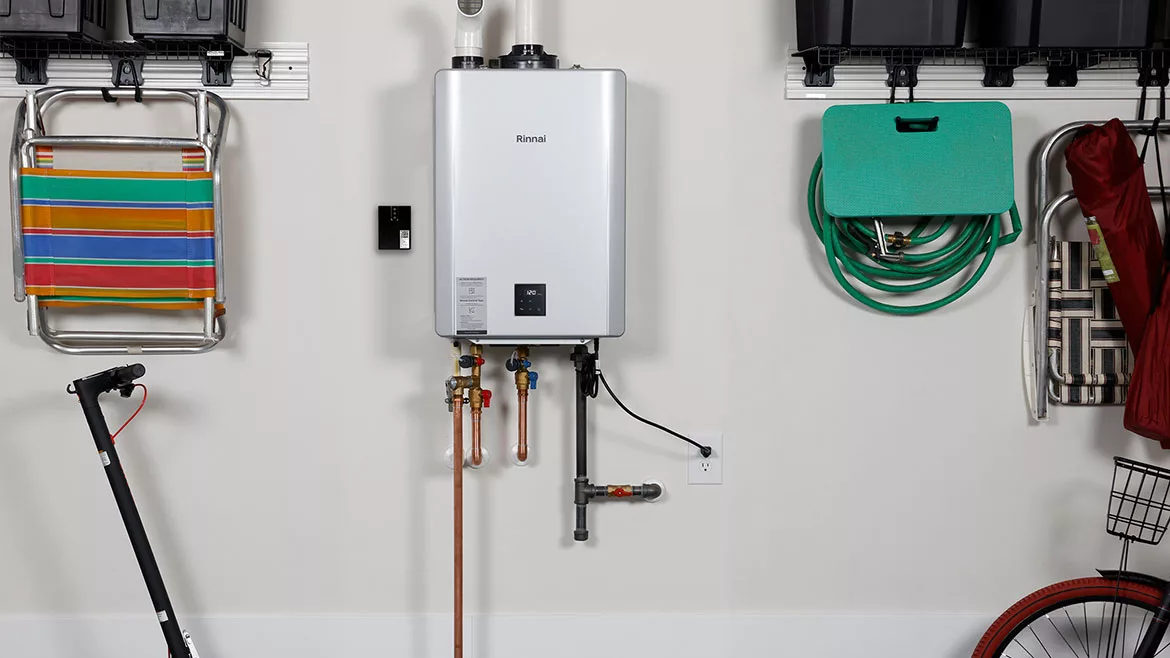
Tankless water heaters have steadily gained ground in both residential and commercial markets; yet, they remain surrounded by several myths about their cost, effectiveness and worth. For many homeowners, building owners and even contractors, these systems are seen as costly luxuries or niche products best suited for specific climates or applications. However, in truth, today’s tankless technology is far more versatile than many realize; capable of handling everything from cold-climate homes to high-demand commercial kitchens.
Part of the confusion comes from outdated information. Early-generation models had limitations, and some negative perceptions have stuck around long after the technology advanced. Others stem from misunderstandings about how tankless systems work compared to traditional storage tanks. As a result, decision-makers often dismiss tankless options without considering the full picture: the efficiency gains, the evolving technology and the built-in flexibility that make these systems a serious contender for nearly any project.
Let’s set the record straight.
Common misconceptions
Many people still hesitate when they hear the phrase “tankless water heater.” The myths run deep: they won’t work in cold climates, they’re too expensive, they can’t keep up with demand. These misconceptions are fueled by early limitations in the technology and years of hearsay passed along between homeowners – and even some tradespeople.
But, they can’t keep up with demand!
One of the most persistent misconceptions about tankless water heaters is that they simply can’t keep up when multiple fixtures or appliances are running at the same time. Many homeowners picture a nightmare scenario where someone starts a shower, and suddenly the dishwasher or washing machine gets lukewarm water — or worse, the second shower goes cold entirely.
In reality, this concern is largely a matter of proper sizing and system design. According to Rheem’s Product Manager of Tankless Gas and Hydronic Systems, Sagar Rotithor, “A properly sized tankless gas water heater can provide continuous hot water. It can maintain a consistent output temperature even under varying load conditions, making it well-suited for families across a range of hot water needs.”
A lot has changed in the years since tankless systems were introduced; manufacturers have upgraded their models, and contractors understand them better.
David Federico, Sr. Director of Marketing at Rinnai America Corporation, echoes that sentiment, “When properly sized, tankless units provide continuous hot water for multiple showers, laundry, and dishwashing — all at the same time.” Modern tankless systems can even handle high-demand scenarios in larger homes or multi-bathroom setups through cascading or multi-unit configurations, where multiple units work in tandem to deliver consistent temperature and volume.
In other words, the days of worrying about “running out” of hot water are largely over. With the right planning and professional installation, tankless water heaters can outperform traditional storage tanks in both efficiency and reliability; ensuring that every member of the household can enjoy their hot shower without compromise.
But, they don’t work in cold climates!
Another common myth is that tankless water heaters struggle in colder climates or with extremely cold incoming water. Many homeowners assume that if the water entering the unit is too cold, the system won’t be able to heat it fast enough to provide consistent hot water.
In reality, modern tankless water heaters are designed to handle a wide range of incoming water temperatures. Kyle Jason, A. O. Smith's senior product manager, notes, “Tankless technology has come a long way since its introduction to the market, and many tankless water heaters run at incredibly efficient rates, ensuring optimal performance in a variety of climates.”
A lot has changed in the years since tankless systems were introduced; manufacturers have upgraded their models, and contractors understand them better. “To combat extended wait periods for hot water, contractors often recommend condensing tankless units that have an integrated recirculation pump to provide hot water more quickly to even the farthest tap.”
Manufacturers have also introduced features like boost modes and preheat recirculation loops that improve performance in extremely cold environments. In regions where groundwater temperatures are particularly low, professionals may recommend larger-capacity units or multi-unit configurations to maintain peak performance.
Jared Mead, product trainer at Noritz America, notes that how much hot water a tankless water heater can produce depends on how cold the incoming water is.“The difference between the incoming groundwater temperature and the set output temperature influences modern and older tankless units.” He stated. “The larger the difference, the less hot water the system can produce at one time. In colder climates, especially during winter, achieving a high volume of hot water may be more difficult.” To account for this, Noritz allows plumbers to pair two water heaters together. In extreme cases, this can double the demand. “A skilled plumber will account for this during installation to ensure the unit is properly sized to meet the household’s demand.”
Ultimately, the idea that tankless systems falter in cold weather is outdated. With the right planning and equipment, homeowners in northern states or mountainous regions can enjoy the same hot water reliability as those in milder climates—without sacrificing efficiency or energy savings.
But, they’re too expensive!
Too often, home and business owners balk at the price tag on a tankless water heater system. But, they’re not looking at the big picture.
“While it is true that the initial cost of installing a typical tankless system may be higher than that of a traditional tank, the long-term and sometimes overall savings may be more for a tankless water heater,” Chia Lin, product manager - water heaters, for Navien said. “Tankless systems are often more efficient and do not have “stand-by loss”; thus, over time this can add up to over hundreds in savings.
“In addition, there are rebates and tax credits available for tankless water heaters which may essentially reduce the cost difference between tank versus tankless down to nil.” Indeed, many homeowners can take advantage of rebates, tax incentives or utility programs that specifically reward energy-efficient upgrades, which can significantly reduce the initial investment. Beyond energy savings, tankless water heaters tend to last longer than conventional tank systems—often 20 years or more with proper maintenance—compared with 10–15 years for traditional water heaters.
Lin continued, “New tankless water heaters often have advanced built-in features, such as built-in recirculation pumps, on-demand buttons, and the ability to dial-in set temperature, which all contribute to higher gas and overall energy savings.”
A household that currently spends $600 per year on energy to heat water with a conventional tank system could see a 30% reduction in annual costs by switching to a properly sized tankless unit—saving around $180 per year.
For example, a household that currently spends $600 per year on energy to heat water with a conventional tank system could see a 30% reduction in annual costs by switching to a properly sized tankless unit—saving around $180 per year. Over 15–20 years, these savings add up, potentially covering the higher initial cost of the tankless system while providing continuous hot water and reducing the need for early replacement.
Design is key, especially for larger homes. Clay Saliba, a contractor at George Plumbing, notes that educating the homeowner is key. The team starts by asking detailed lifestyle questions: How many people live in the home? Do they shower at the same time? Are there large tubs or body sprays? These factors help determine whether a single unit is sufficient or whether multiple units should be installed in parallel to meet simultaneous demand, or in tandem to boost temperature. From there, technical considerations—gas line sizing, ventilation, water treatment and recirculation—are addressed to ensure performance matches expectations.
Cost concerns also arise frequently, he notes, but often come down to perceived value rather than actual expense. Tankless systems can reduce energy waste, eliminate the wait for a tank to reheat, and provide uninterrupted hot water for multiple showers, laundry, or a soaking tub. “They can last twice as long as a traditional tank,” he adds. “For many families, the lifestyle upgrade is worth every penny.”
When you factor in reduced operating costs, longer lifespan, and potential incentives, tankless water heaters often prove to be a smarter financial choice over the long term.
Smarter, smaller, faster
The first tankless electric water heater was invented by Stiebel Eltron in 1929—just a year after sliced bread hit the shelves! Suffice to say, a lot has changed since these units first emerged. From bulky, complicated appliances to sleek, highly efficient systems, tankless water heaters have undergone decades of innovation.
Jared Mead with Noritz emphasizes how modern design has streamlined usability, ensuring a smoother experience for both homeowners and contractors. “Now, instead of having to go through a special button sequence on the front panel, know passwords, or create an account, all you have to do is use the app. You connect to it through your phone. No cellular reception is needed, which makes it more accessible in areas with poor connection.”
Today’s tankless units often include Wi-Fi connectivity, Bluetooth capabilities, and smartphone control, allowing homeowners to manage their hot water with unprecedented convenience. “Connectivity and intelligence are reshaping hot water,” Rinnai’s Federico told us. He highlighted some of Rinnai’s advanced capabilities: “Smart-Circ learns household patterns to deliver hot water exactly when it’s needed. With Rinnai Central, homeowners can schedule recirculation, adjust temperature, and receive alerts—all from their phone.”
A.O. Smith has also prioritized customer needs with their latest upgrades. Ease of installation became a primary focus for the Adapt+ tankless water heaters, which offer two- and three-inch dual pipe venting, ½- and ¾-inch gas line options, and universal indoor/outdoor installation. “We then added a recirculation pump to make sure our customers are provided with hot water quickly, eliminating the time homeowners typically spend waiting at their fixtures for the water to heat up,” Kyle Jason explained. These systems also include Wi-Fi compatibility, enabling remote monitoring and ensuring homeowners can manage their hot water efficiently and confidently.
From the early days of cumbersome electric heaters to today’s smart, connected systems, tankless water heaters have evolved to deliver not only efficiency and reliability but also convenience and peace of mind for modern households.
On-demand and always ready
Hot water isn’t just a convenience; it’s a critical resource that families and businesses rely on every day. In residential settings, a busy household can easily put multiple showers, laundry loads and dishwashing cycles back-to-back. Tankless water heaters, when properly sized, ensure that everyone gets the hot water they need, exactly when they need it, without disruption.
Multi-unit or cascaded tankless systems can keep water flowing even if one unit experiences an issue, ensuring uninterrupted service and peace of mind. By designing with both capacity and backup in mind, plumbing professionals can transform hot water delivery into a predictable, secure resource—no matter how demanding the environment.
The stakes are even higher in commercial and institutional environments. Restaurants, healthcare facilities and hotels cannot afford downtime, where a lack of hot water can impact operations, safety and customer satisfaction. For these high-demand settings, tankless systems offer efficiency and reliability, providing continuous supply even during peak usage.
“We’ve seen significant improvements, especially in commercial settings. For example, if a restaurant relies on a single, 100-gallon commercial tank and fails, the business immediately loses all access to hot water, making it impossible to operate.” Mead noted. “With a tankless system, multiple units work together to provide hot water. If one unit malfunctions, the others continue running, ensuring the restaurant has enough hot water to operate without interruption — an absolute must for this type of operation. This gives contractors more response flexibility; they don’t have to drop everything immediately, since the system can maintain service until they can make the necessary repairs.”
Redundancy plays a key role in managing this risk. Multi-unit or cascaded tankless systems can keep water flowing even if one unit experiences an issue, ensuring uninterrupted service and peace of mind. By designing with both capacity and backup in mind, plumbing professionals can transform hot water delivery into a predictable, secure resource—no matter how demanding the environment.
“In a commercial cascade system, redundancy and risk management are critical to ensure the continuous hot water supply and operational safety of the facility.” Chia Lin noted. “Having a system of independent units and the ability to stage and sequence firing reduces downtime and ensures continual operation.
“All of these systems are equipped with multiple temperature sensors throughout. If a malfunction occurs, such as the unit attempting to deliver water that is too hot, the system will detect the issue, trigger an error code, and shut down until a technician can inspect and resolve the problem. This prevents overheated water from reaching the home or commercial system.”
The truth about tankless
Tankless water heaters are not a one-size-fits-all solution, and they may not be ideal for every household or business. Larger homes with very low hot water demand, or users looking for the lowest upfront cost, might find traditional tank systems more practical.
Yet many of the common concerns (like cost, performance in cold climates or the ability to keep up with simultaneous demand) are rooted in misconceptions rather than reality. When properly sized, designed and installed, modern tankless systems can deliver endless hot water, energy efficiency, and long-term reliability, while offering advanced features like recirculation, smart controls, and hybrid or cascade setups for higher-demand scenarios. Clay Saliba notes, “Personally, I love mine. We’re a busy family and often run multiple showers at once, fill up the tub, do laundry, wash dishes, and never run out of hot water. That’s what I value, and to me, the benefits far outweigh the cost.”
The key is understanding your household or business needs and working with a knowledgeable contractor to design a system that matches them. For those who do, tankless water heaters offer more than just hot water; they offer convenience, efficiency and peace of mind, turning what was once considered a luxury into a practical, everyday solution.
Looking for a reprint of this article?
From high-res PDFs to custom plaques, order your copy today!