
Is the Industry Ready for Heat Pump Water Heaters?
The 2029 water heater transition is closer than you think.
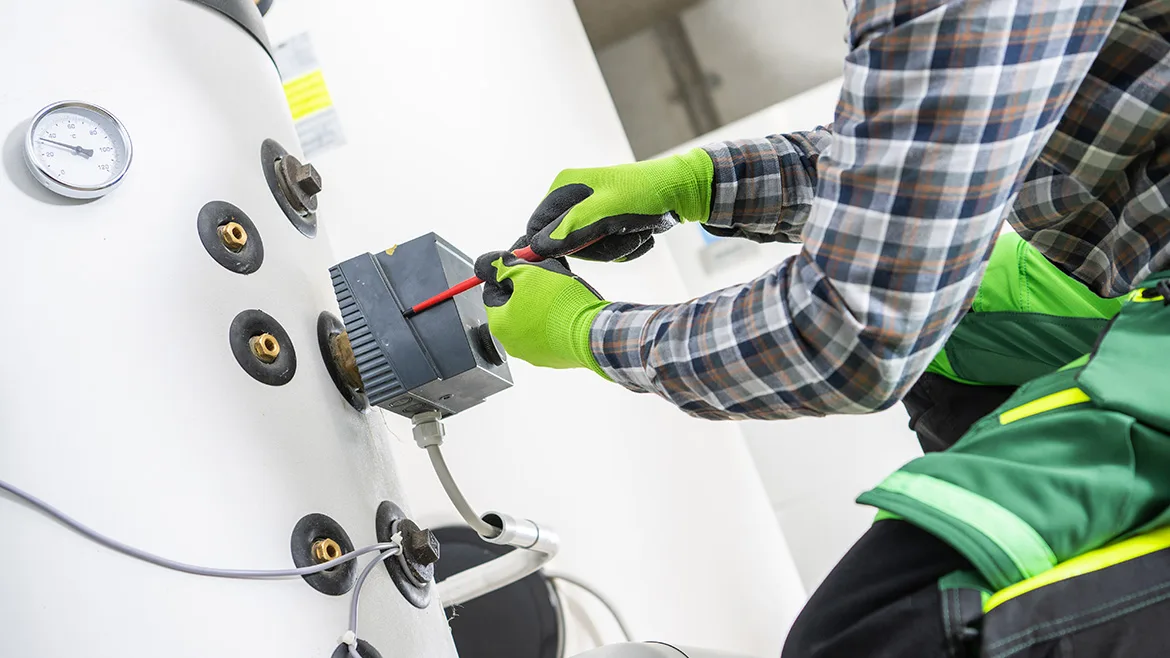
The contractors who succeed over the next several years will likely be the ones who view heat pump water heaters not as a disruption, but as an opportunity.
For many contractors, heat pump water heaters still feel like a niche product; something tied more closely to rebates, energy programs or high-efficiency upgrades than to everyday water heater replacement work. But, according to Gregg Holladay of Bradford White, that perception is about to change quickly.
Over the next several years, a combination of federal efficiency standards, electrification initiatives and utility incentive programs is expected to accelerate adoption of heat pump water heaters across the residential market. While many contractors are already encountering the technology more frequently in the field, a large portion of the industry is still approaching these systems with the mindset used for traditional electric water heaters. That disconnect is, unfortunately, creating challenges.
“Contractors are used to putting an electric water heater in, pushing it against the wall, and focusing only on front access,” Holladay explained during a recent episode of And So It Flows. “But, heat pump water heaters are different. They need air.”
Holladay has spent nearly two decades working with heat pump water heater technology, beginning with the launch of the first Energy Star-rated heat pump water heater in 2009. Today, as business development manager for specialty markets at Bradford White, he works closely with contractors, utilities and industry stakeholders across the country to help prepare the market for what he believes is an inevitable industry shift.
And, according to him, that shift is coming sooner than many realize!
Under upcoming Department of Energy regulations set to take effect in 2029, manufacturers will no longer be permitted to produce standard residential electric water heaters above 35 gallons. For a significant portion of the market, heat pump technology will effectively become the default option.
For contractors, that means installation practices, homeowner conversations and service expectations will all need to evolve alongside the equipment itself.
The challenge, Holladay says, is not that the technology is overly complicated; it is that many contractors and homeowners still do not fully understand how it works, how it should be installed, or how to properly communicate its value.
Why Heat Pump Water Heaters Matter Now
For years, heat pump water heaters occupied a relatively narrow corner of the residential plumbing market: often viewed as specialty products tied to utility rebate programs or high-efficiency home upgrades. Today, a lot has changed.
A combination of federal efficiency standards, electrification initiatives, rising energy costs and utility incentives is pushing heat pump water heaters closer to the center of the residential replacement market. What was once considered optional, is increasingly becoming part of the industry’s long-term direction.
According to Holladay, many contractors still underestimate how significant that transition will be.
That energy performance is one of the technology’s strongest selling points. Traditional electric resistance water heaters typically operate at roughly 90–93% efficiency, meaning a portion of the energy consumed is lost during the heating process. Heat pump water heaters function differently. Rather than generating heat directly, they transfer heat from the surrounding air into the water tank using refrigeration technology, similar to how a refrigerator operates in reverse.
“Heat pump water heaters absolutely work,” Holladay said. “They deliver on two promises: same volume of water, same recovery, but about a 70% reduction in the cost of operation.”
The result is dramatically improved efficiency. Holladay noted that some heat pump models can achieve efficiency levels exceeding 400%.
“That means you spend one dollar to heat water and get more than four dollars’ worth of hot water energy back,” he explained.
For homeowners, that translates into meaningful long-term savings. “A heat pump water heater can save roughly $400 per year,” he said. “Over the life of the unit, that becomes real money for homeowners.”
The financial equation is even more compelling when rebates and incentives are added into the mix. In many regions, utilities continue offering aggressive rebate programs aimed at accelerating adoption. Holladay pointed to examples where incentives have exceeded $1,000, significantly reducing the upfront cost difference between conventional and heat pump models.
At the same time, broader electrification trends are also influencing the market. As states and municipalities continue exploring ways to reduce emissions and transition away from fossil fuels, electric technologies are receiving increased attention across the built environment, including domestic hot water systems.
But, perhaps the most significant driver is the regulatory shift already on the horizon.
Under upcoming Department of Energy standards set to take effect in 2029, manufacturers will no longer be permitted to produce standard residential electric water heaters larger than 35 gallons. For a substantial portion of the market, heat pump technology will effectively replace conventional electric resistance systems as the primary option moving forward. For contractors, that means the learning curve can no longer be delayed.
“There are contractors out there saying, ‘I don’t want to learn about that,’” Holladay said. “But, eventually, they’re going to walk up to the counter, and that’s going to be the only option available.”
As the industry moves toward that transition, contractors who understand the technology, installation requirements and homeowner value proposition now will likely be far better positioned than those waiting until the shift becomes unavoidable.

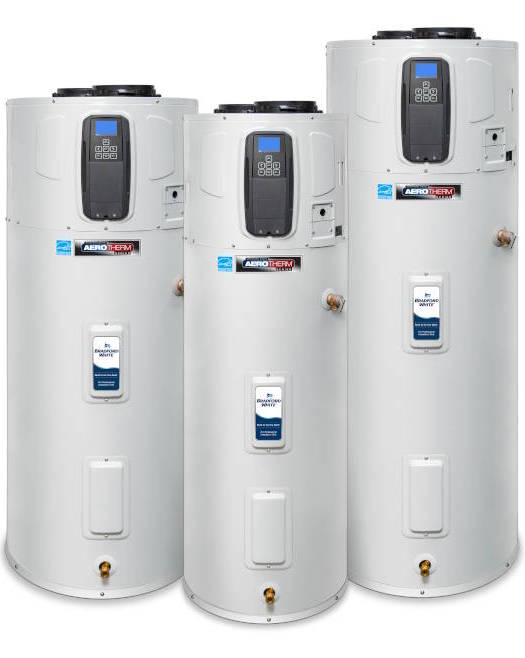
LEFT: Holladay has spent nearly two decades working with heat pump water heater technology, beginning with the launch of the first Energy Star-rated heat pump water heater in 2009. RIGHT: Rather than generating heat directly, heat pump water heaters transfer heat from the surrounding air into the water tank using refrigeration technology, similar to how a refrigerator operates in reverse. Images courtesy of Bradford White
The Biggest Mistakes Contractors Make
One of the biggest challenges surrounding heat pump water heater adoption is not the technology itself, it is the assumption that these systems can be installed exactly like standard electric water heaters. According to Holladay, that mindset is where many installation problems begin.
“Contractors are used to putting an electric water heater in, pushing it against the wall, and focusing only on front access,” Holladay said. “But, heat pump water heaters are different. They need air.”
That airflow requirement is one of the most important distinctions between conventional electric water heaters and heat pump models. While a standard electric unit simply generates heat internally through resistance elements, a heat pump water heater transfers heat from the surrounding air into the tank. Without adequate airflow and surrounding air volume, the system cannot operate efficiently.
“If you don’t account for that, performance and serviceability suffer,” Holladay explained.
Most manufacturers specify minimum air volume and clearance requirements to ensure proper operation. Holladay noted that many systems require approximately 700 cubic feet of air space to function effectively, though requirements vary depending on the model and manufacturer.
That variation is another issue contractors often overlook.
“No two manufacturers install them exactly the same,” Holladay said. “You have to read the installation instructions and understand what the space requirements are.”
As more brands enter the heat pump water heater market, installation differences are becoming increasingly important. Clearance recommendations, venting strategies, condensate handling, operating modes, service access … These factors can all vary significantly from one manufacturer to another. Treating all units as interchangeable can lead to performance issues and frustration for both contractors and homeowners.
Clearance considerations are especially important in retrofit applications, where water heaters are frequently installed in closets, utility rooms or other tight spaces originally designed for conventional electric units. Contractors may instinctively position the heater tightly against a wall to maximize surrounding space, but that can create problems later, particularly if service access is restricted or airflow becomes limited.
Holladay emphasized that proper installation is not just about passing inspection, it’s about understanding how the system actually operates over time.
“Don’t just shove it against the wall because you can,” he said.
Beyond the physical installation itself, Holladay believes one of the industry’s biggest weaknesses is a reluctance to slow down and fully understand the product before installing it.
“Read the installation instructions: every page, and become a product expert,” he said.
As adoption accelerates and more contractors begin encountering heat pump water heaters regularly, the difference between a successful installation and a problematic one may come down to whether the installer approached the system as a new technology, or simply another electric tank replacement.
Trust me, I get it; who likes to read the instructions? But, as adoption accelerates and more contractors begin encountering heat pump water heaters regularly, the difference between a successful installation and a problematic one may come down to whether the installer approached the system as a new technology, or simply another electric tank replacement.
As the market continues moving toward higher-efficiency water heating, contractors who understand installation requirements now will likely face fewer callbacks, fewer service issues and far less frustration as heat pump systems become increasingly common in the field.
Hybrid Modes, Controls, and Common Misunderstandings
While installation is one side of the learning curve surrounding heat pump water heaters, operation and homeowner education may be the other.
According to Holladay, many contractors are still not fully utilizing the built-in controls and operating modes available on modern heat pump systems. In many cases, units are installed, left in the factory default setting, and never discussed with the homeowner beyond basic operation.
“Most leave the system in default mode, which is actually the most efficient setting,” Holladay said.
For many systems, that default is hybrid mode, a setting designed to balance efficiency and recovery performance by allowing the heat pump and electric heating elements to work together when necessary. Under normal conditions, the system prioritizes the heat pump because it consumes significantly less energy than traditional resistance heating. However, during periods of high demand, such as multiple showers or heavy household use, the electric elements can activate to maintain recovery performance.
That distinction is important because many homeowners — and even some contractors — assume “heat pump only” mode must automatically be the most efficient choice.
In reality, Holladay says the difference in savings is often relatively small, while the tradeoff in recovery performance can become noticeable during heavy usage periods.
“People always ask me how much more they’ll save in heat-pump-only mode,” Holladay said. “And honestly, it’s not much.”
Instead, hybrid mode is designed to optimize efficiency while still delivering the same hot water experience homeowners are accustomed to with conventional systems.
That homeowner experience is critical. One of the most common mistakes contractors make, according to Holladay, is failing to match the operating conditions of the previous water heater before leaving the jobsite. Most heat pump water heaters ship from the factory set at 120°F because that is the Department of Energy’s required default setting. But, many existing water heaters in homes are already operating at significantly higher temperatures, often without the homeowner realizing it.
“Dad probably bumped that old water heater up to 135 degrees years ago and forgot about it,” Holladay said.
If a contractor installs a new heat pump water heater and leaves it at the default 120°F setting without discussing previous usage patterns, homeowners may perceive the new system as underperforming, even if it is operating exactly as designed.
To avoid that disconnect, Holladay encourages contractors to check the actual operating temperature of the old water heater before replacement and discuss those findings with the homeowner.
“You want it to be an apples-to-apples comparison,” he explained.
That’s even more important in larger households or homes with high hot water demand, where slight differences in stored water temperature can significantly affect perceived performance.
Modern heat pump water heaters also offer a level of operational flexibility that many homeowners are unfamiliar with. Unlike traditional electric tanks, where adjustments often require removing access panels and manually changing thermostat settings, newer systems include digital controls that allow users to adjust temperature settings and operating modes easily.
Many systems also include vacation modes, high-demand settings, and intelligent algorithms that monitor room conditions, water usage patterns and recovery behavior in real time.
“They’re smart water heaters,” Holladay said. “The system is making decisions constantly.”
For contractors, that means the installation process increasingly includes a homeowner education component. Explaining operating modes, setting expectations, and walking homeowners through basic controls can help reduce callbacks and improve long-term satisfaction.
Without that conversation, Holladay believes many homeowners are left confused about what the system is actually doing, and why.
“Heat pump water heaters aren’t complicated,” he said. “They’re just misunderstood.”
Preparing for the Future
For Holladay, the conversation around heat pump water heaters is no longer about whether the industry will transition, it is about whether contractors will be prepared when it does. And, in his view, many are waiting too long to start learning.
“Get heat pumped up,” Holladay said. “2029 is right around the corner.”
That date continues to loom large over the industry. Under upcoming Department of Energy regulations, manufacturers will no longer be permitted to produce standard residential electric water heaters larger than 35 gallons beginning in 2029. For a substantial portion of the replacement market, heat pump water heaters will effectively become the default option.
Holladay believes some contractors are still treating the technology as a specialty product tied mainly to rebates or niche applications. But, as regulations tighten and adoption accelerates, that mindset may create challenges for installers who suddenly find themselves forced to work with systems they never took the time to understand.
That hesitation concerns him, because heat pump water heaters require a different installation and application mindset than traditional electric tanks. Contractors who approach them as “just another water heater” may encounter issues involving airflow, sizing, controls or homeowner expectations.
The learning curve is manageable, Holladay says, but only if contractors are willing to engage with the technology now instead of waiting until the transition becomes unavoidable.
A major part of that preparation comes down to education.
Manufacturers, utilities and training organizations are investing heavily in contractor resources, installation support, and product education as the market grows. Holladay emphasized that contractors should take advantage of those resources early, especially while adoption is still ramping up gradually rather than all at once.
Many companies offer help. At Bradford White, that support includes installation checklists, technical training, sizing guidance and 24/7 technical support.
“We’re always available to help,” Holladay said. “Call us and ask questions.”
For Holladay, the contractors who succeed over the next several years will likely be the ones who view heat pump water heaters not as a disruption, but as an opportunity.
Those who understand the technology, communicate its value effectively, and install it correctly will be positioned well as the market continues shifting toward higher-efficiency water heating solutions.
And as that shift accelerates, Holladay believes one thing is becoming increasingly clear: contractors who prepare now will have a significant advantage over those scrambling to catch up later.
Looking for a reprint of this article?
From high-res PDFs to custom plaques, order your copy today!