PHCC Educational Foundation expands scholarship program, with 75 awards available in 2026
The Foundation plans to award 75 scholarships totaling $180,000.
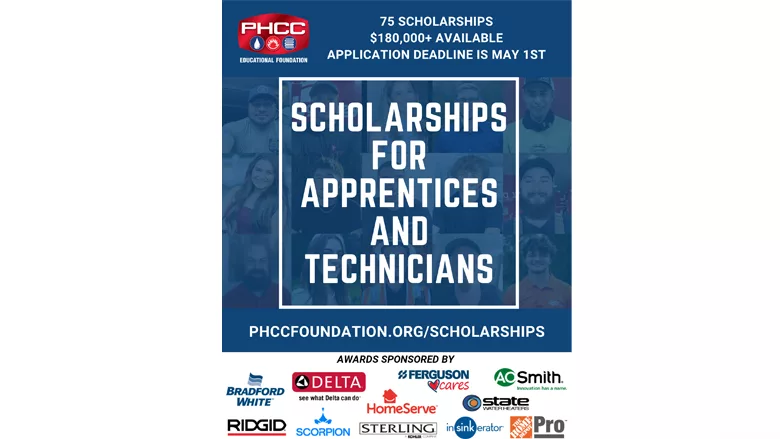
The cost of technical training can be a significant barrier for new entrants considering a trades career, especially for those balancing family expenses or living on early-career wages. The Plumbing-Heating-Cooling Contractors—National Association (PHCC) Educational Foundation is expanding the number of awards offered through its scholarship program in 2026 to help ease that burden and keep individuals moving forward in their careers.
The Foundation plans to award 75 scholarships totaling $180,000 to plumbing and HVACR apprentices employed by PHCC—National Association members, students enrolled in plumbing or HVAC programs at trade schools or community colleges, and college students pursuing degrees directly related to the plumbing-heating-cooling industry.
The application form is available now at phccfoundation.org/scholarships. Applicants must answer five questions about their interest in the plumbing-heating-cooling industry and submit a letter of recommendation. Apprentices can secure a recommendation from their PHCC member contractor employer, while trade school and college students may submit recommendations from an instructor or academic advisor. Scholarship awards range from $1,500 to $10,000, with most awards set at $3,000. All application materials must be submitted by May 1st.
The PHCC Educational Foundation’s scholarship program is funded through contributions from contractors and support from corporate partners, including A. O. Smith, Bradford White Corporation, Delta Faucet Company, Ferguson Cares Foundation, Home Depot Pro, InSinkErator, RIDGID, Scorpion Home Services Marketing, State Water Heaters, and Sterling (a Kohler Brand).
“We don’t want to see talented people forced to step away from training simply because of cost,” said John Zink, vice president of development and communications for the PHCC Educational Foundation. “These scholarships help to remove that obstacle. That can mean helping an apprentice get enrolled, supporting a technician trying to advance, or allowing an employer to redirect training dollars where they’re needed most. At the end of the day, it’s about strengthening careers and building a more sustainable workforce for our industry.”
Looking for a reprint of this article?
From high-res PDFs to custom plaques, order your copy today!