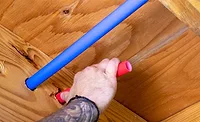
The future of jobsite piping: pre-fab and push-fit
As labor shortages and rising costs squeeze contractors, off-site fabrication and push-fit technology is transforming how plumbing systems are built.
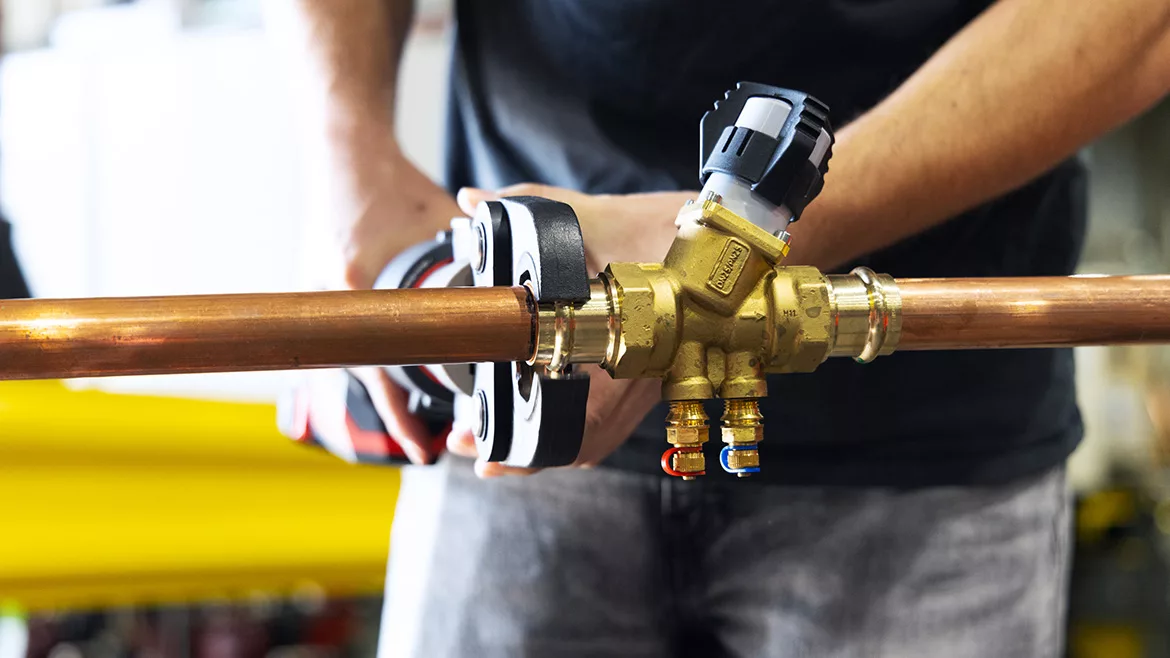
The plumbing and mechanical sector is undergoing an absolutely pivotal transformation. Contractors are confronting unprecedented labor shortages, rising material costs and unrelenting project deadlines. In response, the industry is leaning heavily into prefabrication, press-fit technology and modular piping systems — installation methods that were once considered niche, now quickly becoming standard practice. What began as an efficiency experiment on select commercial projects has evolved into a strategic shift reshaping how systems are designed, coordinated and built.
Across markets, contractors report that moving labor from unpredictable jobsite conditions into controlled fabrication environments is yielding measurable gains: fewer errors, improved safety metrics, and installation timelines compressed from weeks to days. For instance, an FMI labor productivity study found that prefabrication reduces on-site labor by shifting "82% less productive assembly hours … into controlled environments," improving safety, quality and control.
Manufacturers, engineers, and trade educators also note a steady expansion of product lines and training programs built specifically for off-site assembly and tool-free connection methods. As these technologies mature, it seems that the industry is entering a new phase — one where speed, safety and precision are not competitive advantages, but instead, baseline expectations.
This momentum is not expected to fade. With workforce pressures mounting and owners increasingly prioritizing cost certainty, the adoption of prefabricated assemblies and connection technologies, such as press-fit, appears poised for continued growth. For many plumbing and mechanical firms, the question is no longer whether to adopt these methods, but how quickly they can scale them across their project portfolios.
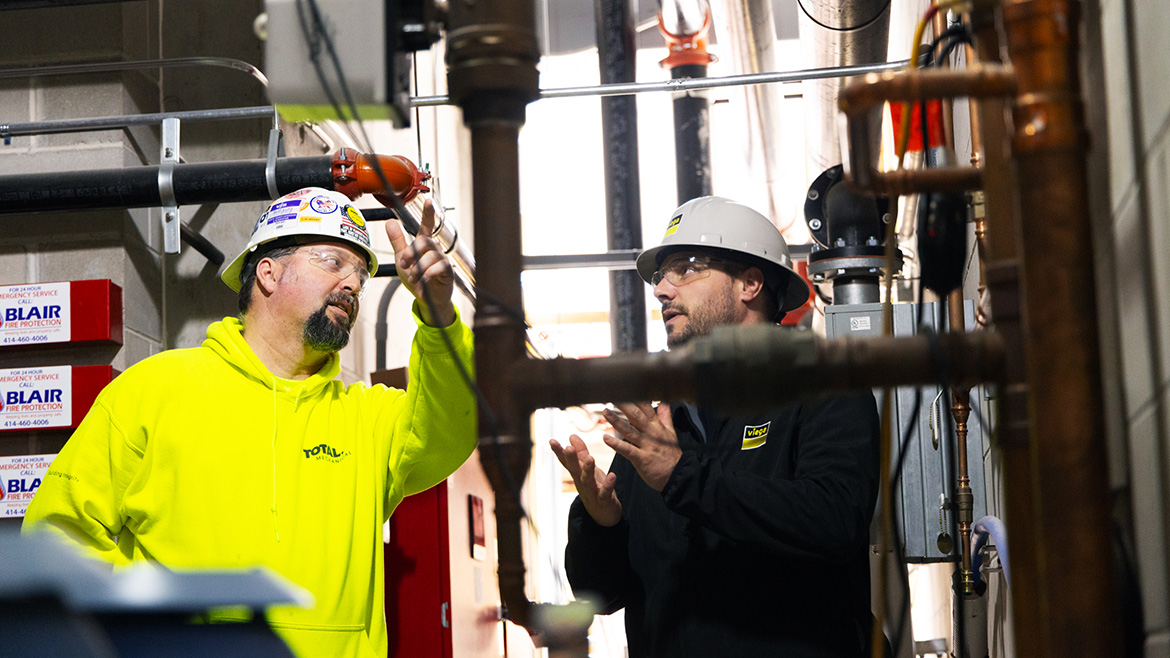
Controlled-shop assembly allows contractors to deliver high-quality mechanical systems faster. Image courtesy of Viega
Industry forces driving the shift
What is causing this major shift in the industry? According to Vice President of the Facilities Resource Group (part of Noritz), Ben Wirick, "The trend has grown significantly over time, with the most growth seen in the past five-plus years. The factors driving this trend are different today than the factors when we started fabricating tankless rack systems." He told me. "Many skilled plumbing techs left the industry during the Covid years, while other tradespeople were simply aging out. Meanwhile, fewer young people have been pursuing careers in the trades. All of these factors are now driving the need."
Viega North America's Manager of Engineering Services, Brett Austin, adds that, "Over the last 25 years, press technology has evolved from an innovative new concept to a trusted standard throughout North America. Contractors, facing labor shortages and rising demands for efficiency and jobsite safety, have embraced press systems for their significant labor and cost savings." Austin continued, "In recent years, the evolution has expanded beyond the jobsite and into the digital workflow. As more firms BIM-model their systems using press fittings, efficiencies now begin in the design phase and carry all the way through to the fab shop floor. This integration streamlines planning, reduces rework and enhances prefabrication capabilities, further accelerating project delivery."
Daniel Worm at GF Building Flow Solutions points to labor availability, schedule compression and cost predictability as the primary forces accelerating prefabrication adoption across plumbing and mechanical projects.
- Labor availability: "The construction industry faces significant labor shortages, particularly for skilled trades. Prefabrication reduces the dependency on skilled labor on-site by allowing work to be done in a controlled factory environment, which helps mitigate the impact of labor shortages."
- Schedule compression: "Developers and contractors are increasingly under pressure to reduce project timelines. Prefabricated systems enable faster assembly on-site, as pre-assembled modules or components can be quickly installed, reducing construction time and improving overall project schedules."
- Cost pressures: "As the cost of materials and labor rises, contractors are seeking cost-effective solutions. Prefabrication offers more predictable costs and fewer material waste issues due to the ability to fabricate components in bulk and optimize material usage."
Construction trade groups and national surveys report something that – unfortunately – isn’t surprising: widespread difficulty filling hourly craft positions, and a continuing need to recruit hundreds of thousands of workers to meet demand. For example, a workforce survey from the Associated General Contractors of America showed a high percentage of firms reporting openings that they cannot fill, and trade associations (like FMI Corp.) estimate the industry must attract a staggering number of new workers in the near future to balance supply and demand.
Shifting repetitive assembly work out of crowded, unpredictable job sites and into climate-controlled fabrication shops lowers the number of craft-hours required on site, and concentrates work in environments where fewer, more general-skill technicians can supervise assembly. Contractors using prefabrication often report schedule and cost improvements. These shop environments also reduce the need for highly specialized field skills for every task, making it easier to staff projects when experienced journeymen are scarce.
As Wirick mentioned, the industry is also coping with generational turnover and shifting workforce preferences. Many younger workers are seeking predictable hours, safer work environments and career pathways that include classroom training — conditions that shop-based fabrication and formal apprenticeship programs can better deliver than traditional field-first models. That cultural shift pushes contractors to rethink how and where they deploy labor.
Another major component is the rising cost of materials. When prices and supply-chain disruptions push material costs up, owners and contractors look for ways to reduce the largest controllable cost on a project: labor.
Factory assembly reduces on-site hours (where labor is generally more expensive and less efficient), which can shrink exposure to overtime, weather delays and field rework — all of which can very quickly erode project margins. Prefabrication can produce both schedule and cost benefits.
Controlled-environment fabrication also limits the chance of rework caused by poor site conditions, inconsistent workmanship or unplanned scope changes. Because shops can run standardized quality checks and testing before delivery, projects experience fewer change orders and punch-list visits.
Key benefits
According to Wirick, there are several advantages for pre-fabrication. He listed:
- Less labor is needed for installation on-site.
- Skill level is lower for onsite installation.
- Contractors need fewer, time- and expense-wasting trips to the local supply house (because complex items needed to install equipment were forgotten)
- Material costs tend to be neutral or a little less, due to OEM stability in purchasing
- More profitability for the installing contractors because of the following:
- Reduced installation time: As a result, more labor is available for additional projects.
- Fewer callbacks because there are fewer components to install (incorrectly) and to warranty.
- Factory startup and commissioning mean less time on site for a contractor’s highly skilled technicians.
- Fewer leaks because of fewer pipe and fittings to be installed on-site.
"I have spent over 16 years and worked on more than 1,500 national-account installations that involved removing two or three tank-type water heaters and installing four to six, banked tankless racks." Wirick told me. "These installations involved crews of 2 to 4 spending 8 to 10 hours onsite, at which point the application has the hot water it needs."
Brett Austin emphasizes that contractors choose press systems for speed, labor efficiency and safety. "Press connections are made in seconds, reducing installation time by up to 90 percent compared to welding or soldering." He told me. "Removing open flames improves safety and simplifies compliance, especially in healthcare and industrial settings. Consistent, leak-proof joints rely less on installer skill, often resulting in fewer callbacks and faster project delivery."
Worm also notes the sustainability that prefabrication offers and notes it as a major reason for many businesses turning to it. "Growing pressure for more sustainable construction practices is leading many to adopt prefabrication, as it generates less waste and allows for more precise material use, contributing to reduced environmental impact... Prefabrication enables better material management, with components being produced to exact specifications. This reduces the likelihood of over-ordering or under-ordering materials, minimizing waste."
For large-scale or multi-phase projects, prefab can provide logistical advantages. Modular sections can be built off-site while foundation and structural work continue, allowing multiple project streams to progress simultaneously. This approach has been successfully deployed in hospital construction, high-rise residential buildings, and industrial facilities, where schedule certainty is critical.
- Early design coordination: Prefabrication demands finalized layouts earlier in the design process to avoid costly adjustments. Changes late in the design phase can disrupt prefabrication schedules.
- Material storage and transportation: Large prefabricated modules require space for storage and safe transportation to the site. Oversized or heavy modules may even require specialized handling.
- Adaptation to site conditions: Prefabricated assemblies must account for field tolerances, uneven floors, or other site-specific conditions. Even with careful planning, some degree of field adjustment is often necessary.
Despite these challenges, the benefits of prefabrication — particularly in quality, safety and efficiency — often outweigh the upfront planning requirements, making it a central strategy in modern mechanical and plumbing construction.
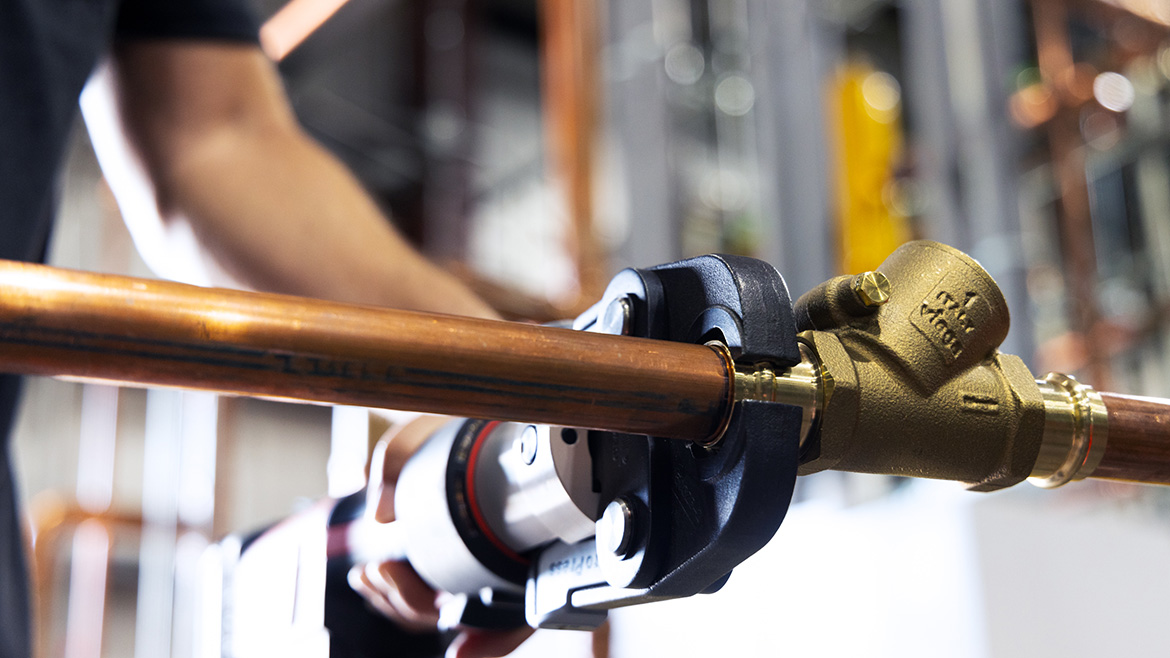
Modular assemblies ready for installation reduce on-site labor and accelerate project timelines. Image courtesy of Viega
Push-fit plumbing
Alongside prefabrication and modular systems, push-fit (or press-to-connect) technologies are transforming how plumbing and mechanical systems are installed. These fittings allow pipes to be joined without soldering, threading or glue, dramatically reducing installation time while minimizing fire risks on the jobsite. Push-fit systems are compatible with a range of materials, including copper, PEX, and CPVC, making them versatile for both residential and commercial applications.
The benefits extend beyond speed. Push-fit connections reduce the potential for leaks, simplify repairs, and require less specialized skill for field installation — a critical advantage in an era of labor shortages. Contractors also report fewer errors and rework, which improves project timelines and overall cost predictability. When paired with prefabricated assemblies or modular mechanical rooms, push-fit systems allow shops to pre-assemble complex sections that can be installed quickly and reliably on-site.
Training programs and apprenticeship curricula are evolving to include push-fit and press-fit technologies, ensuring new technicians are proficient in these modern methods. As construction continues to demand faster schedules and safer work environments, push-fit plumbing is becoming a standard tool in the contractor’s toolbox — complementing prefab, CAD-driven design, and automated fabrication to deliver high-quality systems efficiently and sustainably.
According to Dave Lazear, director of commercial sales at NIBCO, adoption patterns differ between markets: "In the commercial and institutional markets, we continue to see steady adoption of press systems, though push-to-connect remains limited to residential and light commercial applications. Contractors increasingly accept press technology, especially when they've had a positive prior experience with it, because it improves speed, consistency and labor efficiency."
He notes that engineers, historically more conservative, are gradually embracing press systems as field history grows: "Engineers favor a ‘permanent joint,’ similar to soldering or brazing, versus some push-to-connect joints, which can be taken apart. However, acceptance is still roughly split, with about half of specifiers fully embracing press systems, and half favoring traditional joining methods." Lazear also sees opportunities to expand press into additional applications such as compressed air, natural gas and A/C and refrigerant systems, though high-risk areas like medical gas remain cautious.
NIBCO supports contractors and engineers with specification services, training and hands-on engagement. Lazear explains, "Our Commercial Sales Managers work closely with engineering firms to update specifications and deliver technical lunch-and-learns that address design considerations and installation best practices. Contractors can take advantage of our full range of jobsite and fabrication training, from interactive learning sessions to practical, hands-on demos with tools and fittings." He adds that beta projects help contractors test new press products in real-world conditions, building confidence across teams.
Specifiers’ primary concern remains long-term performance: "Engineers carry liability for the life of the project through their design stamp, so they often require 5 to 10 years of proven field performance, and sometimes even more, before adopting a new joining method."
Lazear also notes that prefabrication introduces transport considerations: "Transporting large assemblies over long distances can subject piping systems to vibration, impact, and environmental exposure that may compromise joints if not properly protected. Connection integrity during transport is primarily the contractor’s responsibility . . . we advise contractors to follow original installation instructions and to develop their own best practices for protecting assemblies – such as securing piping, using end or flange protectors and minimizing exposure to debris or weather."
Finally, he points to future innovation: "Development will continue to be driven by customer needs and evolving system applications. Ultimately, innovation follows where the market is heading next."
With workforce pressures mounting and owners increasingly prioritizing cost certainty, the adoption of prefabricated assemblies and connection technologies, such as press-fit, appears poised for continued growth.
Environmental considerations
Prefabricated plumbing systems not only improve efficiency and safety; they also offer notable environmental benefits, particularly in commercial applications. According to Wirick, prefabricated tankless rack systems provide several key environmental advantages over traditional on-site methods:
- Reduced material waste: By assembling components in a controlled shop environment, contractors can optimize cuts, minimize errors, and avoid the excess material waste commonly generated on-site.Press systems offer efficiency and consistency at installation, which translates directly to labor savings and reduced energy use compared with traditional methods like soldering, brazing, threading or welding. Because press connections are machine-made, with a pressing tool, they also deliver very uniform and consistent joint quality.
- Lower fuel consumption: Fewer trips to supply houses or for on-site deliveries means less fuel use, reducing the carbon footprint associated with transporting materials.
- High-performance, efficient systems: Prefab units often integrate leading-edge water heating technologies, including hybrid systems that use real-time data to select the most efficient fuel source, further reducing energy consumption.
Wirick also emphasized best practices for implementing prefab systems in MEP projects, highlighting design features that improve both efficiency and sustainability. Prefabricated systems are typically built as one-point-of-connection (OPC) units, meaning all water, power, gas, recirculation and condensate management lines connect at a single interface, reducing installation errors and unnecessary waste.
Prefab units are designed for standard accessibility, fitting through 3’–0" x 7’–0" doors or standard freight elevators, minimizing the need for extensive site modifications. For large systems exceeding 1.2 million BTUs, factory startup and commissioning ensure systems operate optimally before installation, preventing energy inefficiencies in the field.
From a sustainability standpoint when it comes to push-fit technology, Lazear emphasizes labor and energy efficiencies: "Press systems offer efficiency and consistency at installation, which translates directly to labor savings and reduced energy use compared with traditional methods like soldering, brazing, threading or welding. Because press connections are machine-made, with a pressing tool, they also deliver very uniform and consistent joint quality."
He notes, however, that the industry has yet to reach the full lifespan of press technology. The longest systems have been in the field for roughly 20-25 years, while the life cycle largely depends on the service and media. "There has been no indication of joint degradation in properly installed press joints. The permanence and consistency of the connection provide confidence that performance will remain stable over time, but the true lifecycle comparison will be clearer as the earliest press systems approach their full service life.
Site disturbances are also an often-overlooked aspect of environmental impact in plumbing and mechanical projects. Traditional on-site construction often requires heavy equipment, frequent material deliveries, and extended labor presence, all of which can disrupt the surrounding environment. According to Daniel Worm, "Less on-site work means reduced disruption to the surrounding environment, including lower emissions from construction equipment and reduced noise pollution." By shifting much of the assembly to controlled fabrication shops, contractors can significantly decrease vehicle traffic to the site, limit idling and fuel consumption from machinery, and minimize dust and debris generated during construction. These reductions not only benefit local ecosystems and neighborhoods but also contribute to healthier, safer work sites for contractors and tradespeople. Prefabrication, therefore, delivers a dual environmental advantage: it conserves resources and mitigates the negative impact of construction activity on the immediate surroundings.
Development will continue to be driven by customer needs and evolving system applications. Ultimately, innovation follows where the market is heading next.
The road ahead
Looking ahead, Wirick predicts that prefabrication will become even more critical as the plumbing and mechanical industry adapts to decarbonization and electrification trends. Hybrid and dual-fuel systems are expected to expand, leveraging prefab assembly to manage increasingly complex technologies while compensating for a shrinking skilled labor pool. As systems grow more sophisticated, prefabrication provides a pathway for contractors to meet environmental goals, improve energy efficiency, and maintain high-quality installations with fewer resources.
When it comes to push-fit, Lazear notes that, "Future development will continue to be driven by the needs of our customers and the demands of the market. While we are always exploring opportunities, ultimately, innovation will follow where customer needs and system applications evolve next."
The adoption of prefabrication, press-fit and modular systems certainly show no signs of slowing. As construction schedules tighten and clients demand faster project turnover, contractors will increasingly turn to off-site fabrication and modular solutions to maintain timelines without sacrificing quality.
The integration of robotics and automation in fabrication shops is another growth area: automated pipe cutting, welding and assembly reduce human error, improve repeatability, and accelerate production. These technological tools also allow shops to take on larger, more complex projects that would be difficult or inefficient to complete entirely in the field.
The shift toward prefabrication and digital technologies is reshaping workforce development in the plumbing and mechanical trades. Apprenticeship programs are adapting to teach not only traditional pipefitting but also skills like prefab assembly, press technology, laser measurement and CAD/BIM software. This evolution creates new career pathways for technicians beyond the jobsite; including fabrication shop management, project planning and quality control roles.
The plumbing and mechanical industry is clearly moving from traditional, labor-intensive methods toward streamlined, technology-driven workflows. Prefabrication, press-fit, and modular systems are transforming how projects are designed, built, and managed, delivering faster timelines, safer installations, and more predictable outcomes.
Yet despite these innovations, the essence of the trade remains unchanged. Skilled craftsmanship, problem-solving and attention to detail are still at the heart of every successful installation. Today’s tools and methods simply allow tradespeople to practice their craft more efficiently, safely and sustainably — ensuring the industry can meet modern demands without sacrificing the quality and expertise that have defined it for centuries.
Looking for a reprint of this article?
From high-res PDFs to custom plaques, order your copy today!