
Contractor's Corner | Dave Yates
My water stinks: Behind a common customer complaint
What started as a customer complaint years ago comes home, and sparks a deeper look at water quality, anode rods and aerators.
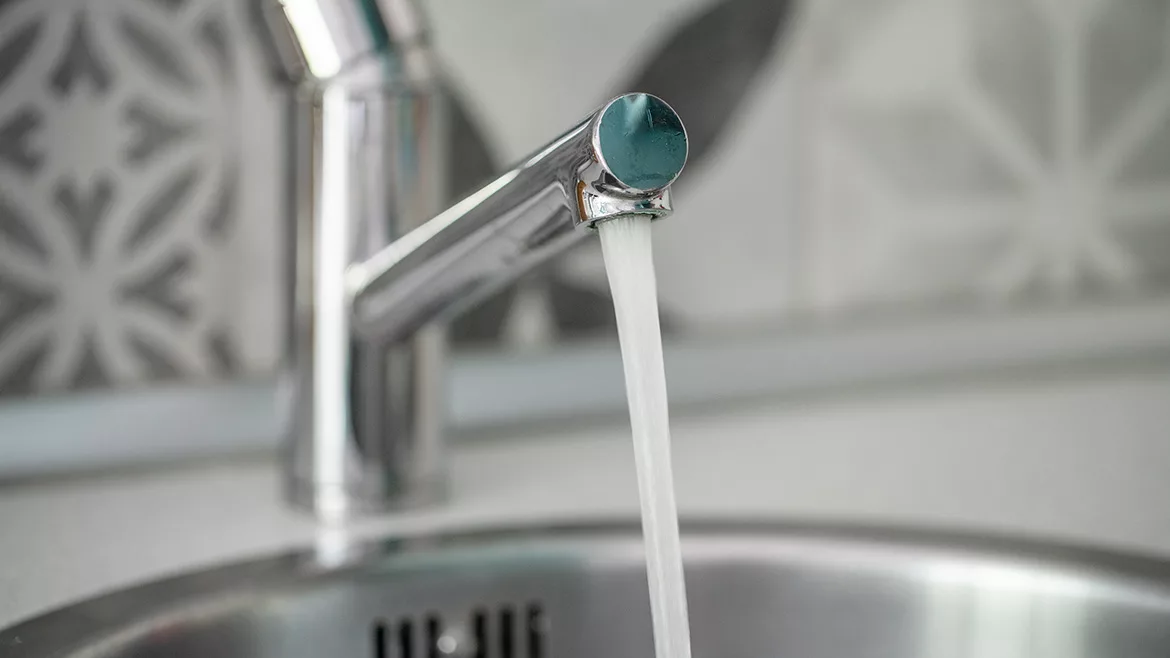
The culprit to a “rotten egg” smell isn’t always the usual suspects.
“That faucet you installed smells like rotten eggs when we first turn on our water.” Well, isn’t this just great: the faucet they purchased from the big box store stinks and now that’s my fault?! On arrival, I could not detect any odor at all, but they insisted there was an odor - except when I was there. This persisted for several days and after three return visits, with no detectible smells, they were insisting I take the faucet back and have it exchanged.
From their perspective, it didn’t matter that they had purchased and supplied the faucet, they fully expected the issue would be covered under our warranty with no charge for my time! That was the day I decided to develop a written warranty policy for any consumer-supplied products we would install. FYI: it was not the anode rod and that kitchen faucet was the only location where they claimed there was an odor and it was both the cold and hot, so that alone ruled out the anode rod. Just to be sure, I did take the time to inspect the anode rod in their three-year-old gas-fired 50-gallon water heater, the third one I had installed for these long-time customers.
Fast forward three plus decades, and it would seem their ghosts have become a plumbing poltergeist in our home’s plumbing system!
Lois first began noticing a rotten egg odor at her lavatory faucet several months ago. Our plumbing system is now 32 years old with copper tubing throughout. Our two widespread lavatory faucets are at the opposite end of the home from our water heater, a stainless steel indirect tank that has no anode rod. We are on municipal water, and have neutral pH with less than four grains of hardness.
Her complaints increased in frequency and volume until one morning I, too, noticed the rotten egg odor when her faucet was used. It made no difference if she ran cold or hot water. Then my faucet too began to emit the same odor, and just when first turned on. The kid’s bathroom, now guest bathroom, has the exact same setup with two deep K2908 cast iron enameled Kohler bowls and Delta Delex 8-inch center widespread faucets and no odors. In fact, none of the other faucets in our home were experiencing this issue. One of the plumbing forums I frequently visit on the internet suggested changing the aerators because they can harbor sulphur bacteria, and another site pointed the finger at the overflow drain suggesting initial flow causes foul air too run up through the overflow when water is first used.
We have what has become essentially a dead leg extension in our water lines to a whirlpool tub seldom used. As a plumber, you know every fixture and branch has valves, so that was easy to isolate. No dice: odor still persisted. Maybe the idle unused electric water heater I installed for the numerous times I swapped out boilers and indirect water heaters, so I isolated that and drained the tank, which had no visible sediment or odors. Strike two.
Our aerators are top-shelf chrome plated metal with metal screens and a stainless steel top-hat, universal thread Wolverine Brass, because I always toss out the OEM faucet aerators, and since I buy the upgrade models by the multipack, they are replaced every few years. As a last ditched effort, I pulled both aerators, disassembled each one looking for and slime, debris, or odors, and in spite of finding nothing, replaced both. Bingo - odor gone!
It’s been more than a month now and no rotten egg odors have returned, but I must confess I am mystified by this experience. In all of the 48-years before I retired, the sulphur odor was always the result of a magnesium anode rod reacting with sulphur bacteria that produced hydrogen sulfide gas and only on the hot water side of potable water systems. I’ve also encountered this in stagnant water systems, well water systems (fairly often), and the dark colored slime flushed from tanks and water lines.
As a last ditched effort, I pulled both aerators, disassembled each one looking for and slime, debris, or odors, and in spite of finding nothing, replaced both. Bingo - odor gone!
I recall one potential customer who had very aggressive well water and complained they were replacing their tank style water heater every three years! Once the anode rod has been used up, all glass-lined steel tanks have imperfect inner glass coatings with tiny holes where the metal tank is exposed to water and corrosion sets in rapidly, leading to premature tank failure. I proposed they have us inspect and replace the anode rod every two years and showed them by way of removing the existing anode rod for inspection, that most of the anode was gone leaving just a center wire behind.
If we do find the rotten egg odor returns at our master bathroom lavatory faucets, then my next step will be to shock chlorinate the hot and cold water lines on that end of our home in the branch lines to just that bathroom. I piped the home with a 1-inch service line from the street in K-copper and 1-inch hot and cold mains in L-copper with 3/4-inch copper branch lines to each bathroom. The laundry tub below the master bath will serve as the conduit for the chlorine shock injection point. If that becomes necessary, then knowing biofilms, which exist in all potable water pipes, are not penetrated well by chlorine, I will endeavor to locate and install a copper/silver ionization system.
If you do encounter the rotten egg odor and it is largely confined to the hot water side, then it is likely the magnesium anode rod, which does harbor sulphur bacteria. Some hot water tanks have a separate anode rod tapping while others incorporate that into the hot water outlet tapping. Once removed, you can replace the magnesium model with an aluminum or aluminum/zinc anode rod or a powered titanium electrical anode rod, which is more expensive but has a longer life, and some include a 20-year warranty. Not enough ceiling room to install a solid core anode rod? No worries, as you can easily purchase a sectional (looks like link sausages connected in a row) anode rod and I’ve encountered that numerous times where an 80-gallon tank was stuffed in a low-ceiling mechanical room or basement.
Looking for a reprint of this article?
From high-res PDFs to custom plaques, order your copy today!