Innovation vs. sustainability: AI's reliance on water
As artificial intelligence reshapes daily life, its dependence on massive volumes of water is raising environmental concerns.
AI has been integrated into nearly everything that we do. From a Google search to chatting with a helper on a retailer’s website, artificial intelligence is the latest and greatest technology in recent years. Yet, many people are unaware of what keeps it running: water.
Water covers about 71% of the Earth. Of that, 96.5% comes from the oceans, with fresh water (from lakes, rivers, etc.) accounting for the remaining 3.5%. However, as we all know, water is vital to every part of our lives; so, it’s no surprise that there is currently a water shortage. We know why we need water, but why does AI?
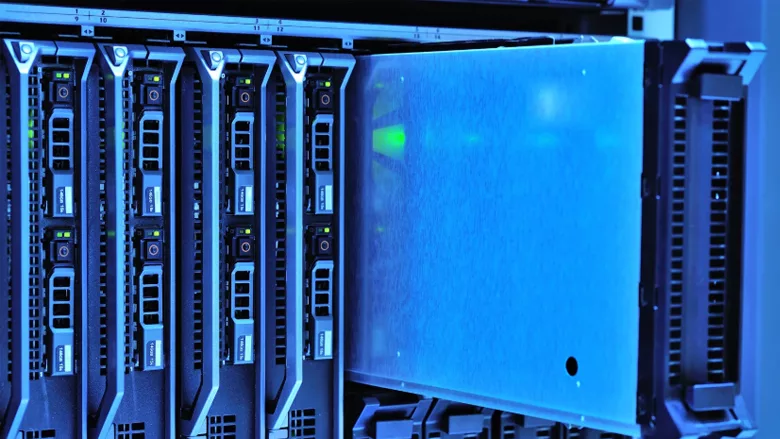
Data centers are the homes of artificial intelligence models. They host hundreds – often even thousands – of servers used to train and host AI models. You know how your phone heats up when you’ve been scrolling too long? The same thing happens to these supercomputers, requiring cooling towers to prevent these pricey systems from overheating and becoming useless.
To combat overheating, data centers often utilize a variety of systems, like:
Chillers
Heat exchangers
Condensers
Computer room air handler (CRAH) units
Cooling towers
Like a lot of these appliances, cooling towers may be familiar to some people in our field, as they are also used in industrial processes and HVAC systems by utilizing the same principles of evaporative cooling. It “drinks” the water (or, more precisely, it is pumped through the cooling tower), then the heat is transferred from the water through the air. Next, cooled water returns to a chiller to maintain low temperatures. However, about 80% of water used in the cooling process simply evaporates.
Currently in the U.S., there are around 5,426 data centers. According to Forbes, many of these data centers are located in water-stressed regions. Arizona, for instance, has become a popular location for data centers, with 162 facilities currently located there. In this drought-stricken area, the impact that these centers have on the environment are just getting started: a recent study found that in the next six years in Phoenix, water used by data centers will jump from 385 million gallons a year to 3.7 billion per year — an increase that is quickly approaching 900%.
In another Arizona town, Mesa, Google is planning to build a 750,000 square-foot data center, where half of its water will come from the Colorado river. Mesa official, while they remain confident that there will not be a shortage, have continuously reminded residents to conserve their water usage.
An — incredibly — early innovation that also requires a staggering amount of water? Agriculture. Humanity’s ability to grow food at scale reshaped civilization, but it also locked us into one of the most water-intensive practices in history. Now, agriculture finds itself sharing that title with an unexpected competitor: artificial intelligence.
Farmers, like the rest of America, are grappling with worsening water scarcity. Irrigation systems, crop choices and shifting weather patterns have long forced the industry to adapt. Decades of research and investment have driven more efficient techniques, from drip irrigation to drought-resistant crops, though the challenge of balancing output with sustainability remains immense.
By contrast, AI’s water footprint is still in its infancy — but growing at breakneck speed. Data centers, which form the backbone of AI, were first conceptualized in the mid-20th century. Yet, only in the past two decades have they seen such rapid growth: becoming large, resource-intensive facilities consuming massive amounts of electricity but water for cooling. The surge of generative AI in the last few years has only accelerated that demand.
While agriculture and AI may seem worlds apart, their shared reliance on water means they are at odds. Both industries are massive consumers of this finite resource, but their futures are tied together. The “battle” between them cannot be won in isolation; cooperation and innovation will be essential.
The question, then, is how. AI’s rapid growth has left sustainability strategies struggling to keep pace. A handful of facilities are experimenting with alternative sources such as greywater, groundwater, seawater or even produced water from industrial processes. Yet, these efforts currently account for only a small fraction of overall usage. Meanwhile, public scrutiny is mounting, and sustainability advocates are pressing tech giants to acknowledge — and reduce — their environmental impact.
Some of the biggest names in tech are already making pledges. According to Forbes, companies like Microsoft, Google, and Meta have committed to replenishing more water than they consume by 2030 through various ecological restoration projects. Whether those ambitious promises can translate into measurable results remains uncertain.
What is clear, however, is that AI is advancing at a pace that outstrips current resource-management models. Just as agriculture spent centuries refining its approach to water stewardship, AI’s supporting infrastructure must undergo a similar evolution — only this time, on a far more accelerated timeline. If society is to balance food security with technological progress, innovations in water use and cross-industry collaboration will need to move as fast as the algorithms driving AI itself.
Looking for a reprint of this article?
From high-res PDFs to custom plaques, order your copy today!