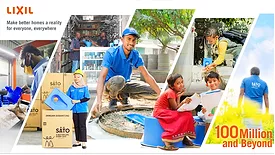
In collaboration with a diverse range of partners, LIXIL is focused on creating sanitation markets in global economies and rural communities.
Approximately 1.7 billion people do not have basic hygiene services at home. The human cost is devastating: more than 1,000 children under the age of five die every day from diseases spread by unsafe drinking water, poor sanitation, and inadequate hygiene.
As artificial intelligence reshapes daily life, its dependence on massive volumes of water is raising environmental concerns.
AI is everywhere — powering search engines, chatbots, and digital tools — but few realize its reliance on water. Data centers, the backbone of AI, consume billions of gallons annually to stay cool, often in drought-stricken regions. With usage projected to skyrocket, industry leaders face growing pressure to balance innovation with sustainability.
The Natural Resources Defense Council (NRDC) suggests that 70% of all counties in the U.S. may face more serious water shortages in the next 30 years. This depletion threatens to reduce stream flows, increase land subsidence, and elevate water costs for both households and industries.
Xylem, in conjunction with its Goulds Water Technology brand, is engaged in regular water well initiatives to provide secure water access to rural areas, striving to increase public awareness of the challenges surrounding lack of water access.
Water scarcity is forcing state and local governments to rethink water usage.
Water scarcity is a growing issue globally. Some regions are adopting water reuse and rainwater capture solutions. Onsite water reuse can help save money, reduce water demands, and manage stormwater flows. With onsite water reuse, you can reuse up to 95% of a building's wastewater.
The increase in population and the associated trash continues to increase the need for clean water. These problems are not going to improve until we decide to work for that progress.
The current U.S. workforce is comprised of four generations: Baby Boomers, Gen X, Millennials, and Gen Z. But there’s one generation in particular that the skilled trades have their eyes on right now: Gen Z.
There is no one solution to the issue of water shortages. If the discussion is about helping people get fresh water, most will initially think of water wells as the primary solution.