LIXIL surpasses 100M milestone in global sanitation access through SATO
In collaboration with a diverse range of partners, LIXIL is focused on creating sanitation markets in global economies and rural communities.
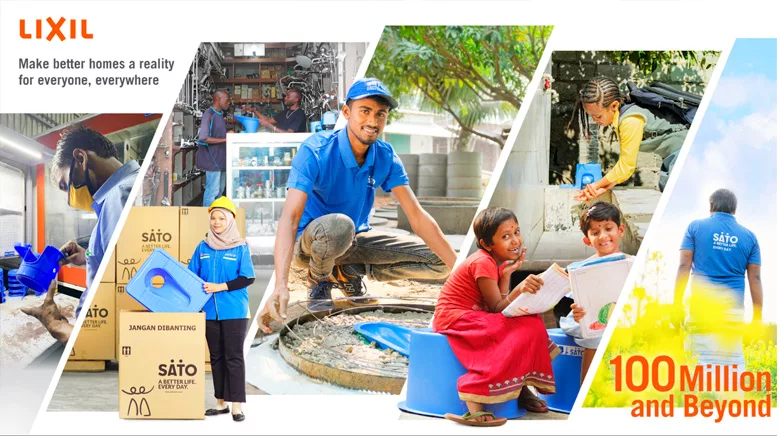
LIXIL Corporation announced that it has achieved its goal of improving sanitation and hygiene for 103 million people. According to the company, achieving this milestone, the primary target of the Global Sanitation and Hygiene pillar of LIXIL’s Impact Strategy and in 2016, reinforces LIXIL’s commitment to further accelerating sanitation and hygiene access worldwide.
Safe sanitation and hygiene remain among the most urgent global challenges. Approximately 3.4 billion people still lack access to safely managed sanitation, including 354 million people practicing open defecation. Furthermore, approximately 1.7 billion people do not have basic hygiene services at home. The human cost is devastating: more than 1,000 children under the age of five die every day from diseases spread by unsafe drinking water, poor sanitation, and inadequate hygiene.
These systematic failures result in hundreds of billions of dollars in annual losses from reduced productivity and higher healthcare costs. Yet, there is an untapped opportunity: every $1 invested in sanitation yields a fivefold economic return.
LIXIL’s achievement is the result of shipping more than 10 million SATO toilet and hand hygiene products across 59 countries and territories. By establishing a social business and serving underserved communities with affordable and innovative sanitation and hygiene solutions, LIXIL's SATO has developed sanitation markets in Africa and Asia. Predominantly reaching sub-Saharan Africa and south and southeast Asia, SATO's business not only reaches households, it also expands the impact in communities through critical non-household settings including schools and healthcare facilities, and most recently in humanitarian settings such as refugee camps.
“Reaching 103 million people is not a finish line, but powerful proof that the private sector plays a critical role in addressing an urgent global issue.” said Kinya Seto, CEO of LIXIL. “While LIXIL is renowned for high-end innovations, we take equal pride in our affordable SATO solutions. By establishing a social business, we are addressing the sanitation and hygiene challenges at scale, not only improving health, but empowering families with security and peace of mind they deserve to build their livelihoods and prosper.
Our journey is one of learning and partnership. We are grateful to the families and partners who have welcomed our solutions into their homes and communities. Seeing first-hand how simple, safe toilets can restore dignity and improve quality of life deepens our commitment. Our role is to serve as a catalyst, supporting the resilience and potential of every community we reach.”
The power of collaboration
In collaboration with a diverse range of partners—including governments, international organizations, NGOs, and private sector players—LIXIL is focused on creating "resilient and sustainable sanitation markets in global economies and rural communities." A cornerstone of their progress is the 'Make a Splash!' partnership with UNICEF, UNICEF’s first global shared-value partnership for water, sanitation, and hygiene (WASH), and the first of its kind with a Japanese company.
According to the company, this collaboration combines LIXIL's expertise in product development and supply chains with UNICEF's strengths in sanitation programming and changing behavior through community education. "The partnership empowers a robust, self-sustaining ecosystem comprising local entrepreneurs and masons, community healthcare workers, manufacturers and retailers to ensure sanitation and hygiene for all."
Going forward: evolved ambition toward 2030
“Reaching 100 million people is a significant milestone, representing the impact on individuals and communities, and it is also a vital transition point,“ said Erin McCusker, Leader of SATO. “ The global goal of universal access to safe sanitation and hygiene by 2030 demands unprecedented acceleration. We see sanitation as a foundation for the achievement of many other development goals. LIXIL’s upcoming 2030 targets will reinforce our commitment to deliver private-sector innovation and market-driven models essential to making better homes a reality for everyone, everywhere.”
To learn more about LIXIL’s initiatives on sanitation and hygiene: visit here.
Looking for a reprint of this article?
From high-res PDFs to custom plaques, order your copy today!