
Hydronic and Heat Pump Hybrid Solution Presents Path for Efficiency Progress
The future for the heating industry is to identify and implement a collaborative system that combines the best features of hydronics with heat pumps.
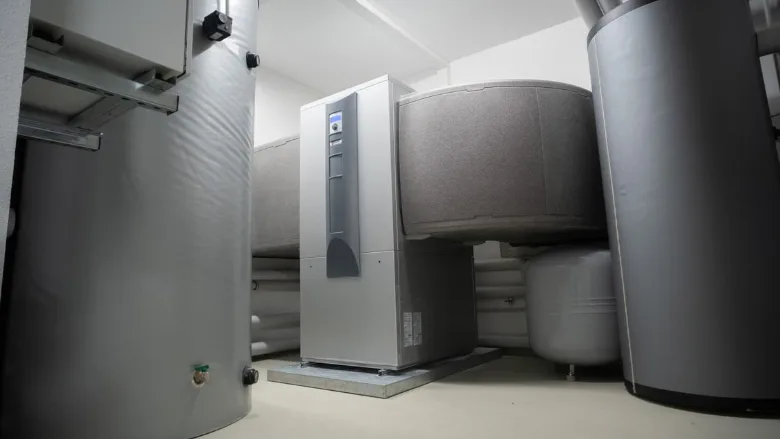
Today’s modern workplace demands collaboration. No matter the industry – whether it’s construction, finance, manufacturing or any other business segment – businesses discovered value in having teams work together to improve efficiency and reach goals more quickly.
The future for the heating industry is to identify and implement a collaborative system that combines the best features of hydronics with heat pumps. In the long term, commercial property owners and homeowners who install hybrid systems that work in tandem will emerge with superior efficiency, a dramatically reduced carbon footprint and financial savings.
Independently, each system offers undeniable benefits. Working as a seamless unit, however, will bring out the best in each – and deliver thermal comfort and domestic hot water with an integrated and efficient hybrid system.
Pushing the Efficiency Envelope
Hydronic systems and condensing technology have improved significantly over the past few decades. It’s important to note that condensing units are not old. The embryonic stages of gas condensing technology started in the 1970s and dramatically improved efficiency compared to cast iron units, reaching the mid-90s while the cast iron units could only reach the low 80s.
Hydronic technology has continued to evolve, and the changes have been beneficial as manufacturers continue to promote higher turndown ratios and the use of oxygen sensors to stabilize combustion.
The ancient Romans used hypocausts, a template for today’s hydronic systems, for heating hot baths and public buildings. The system included a wood-burning furnace that generated dry hot air and gases that circulated hot air under floors.
The first modern closed-loop hydronic heating system came along in the 1830s, and innovation has continued to improve durability, performance and efficiency.
Realistically, fossil fuel appliances are approaching their practical limits. Even with all of the improvements, a combustion appliance will likely not achieve efficiencies beyond the mid 90 percent range. The envelope has been pressed to the edges. For further system improvements, the focus needs to shift beyond boilers.
The next opportunity lies in improving overall system performance by reducing heat loss through better building envelopes, designing systems around lower temperatures and taking an honest look at hybrid heating solutions.
Promising Intersection
The advances in air-to-water heat pump technology present an interesting intersection rife with intriguing possibilities for additional efficiency.
Those improvements, coupled with one of the most effective methods of transferring heat ever developed with water, could lead to a new trend. The opportunity to redefine and recalibrate systems with hydronics and heat pumps could produce the most effective system over the long haul.
One of the biggest misconceptions surrounding air-to-water heat pumps is the idea that they must operate at a water temperature of 180˚. While that may be necessary during the coldest days in some homes, those conditions represent only a small fraction of the heating season.
For the majority of the year in most climates, homes can be heated with significantly lower water temperatures. Importantly, those lower temperatures are where air-to-water heat pumps operate at their highest efficiencies.
Rather than viewing the existing boiler as a replaceable relic, contractors and homeowners should view it as an asset. By utilizing the existing hydronic infrastructure, an air-to-water heat pump can be integrated into the system, creating a highly efficient hybrid solution.
Many existing homes already have more radiation installed than the current heat loss requires, allowing them to operate comfortably at lower water temperatures. Modern controls can seamlessly transition between the heat pump and fossil fuel boiler when outdoor temperatures fall below the heat pump’s optimal operating range, or when fuel economics favor the boiler.
Homeowners do not need to choose between electrification and fossil fuels. The priority needs to be using each technology where it performs best. Hybrid systems with hydronics and heat pumps can reduce operating costs, lower emissions and provide them with reliable comfort regardless of outdoor conditions.
The Case for Adaptation
Years ago, a sales manager asked the team to read a book by Dr. Spencer Johnson titled “Who Moved My Cheese?” The book, which was published in 1998, is still one of the world’s best-selling business books and teaches a valuable lesson about adaptation. The lesson that has stayed with me is those who refuse to adapt eventually get left behind.
The current landscape with hydronics and heat pumps feels like an important time to adapt. Changing long-held opinions within the industry is not easy. The trades, rightly so, are built on experience. Many industry veterans rely on tried-and-true methodologies and are reluctant to embrace change.
But with the right equipment, proper education and a willingness to embrace new ideas, we can help contractors and homeowners realize that the future of hydronics isn’t abandoning what has worked for generations. It’s building on it. The future of hydronics is not combustion or electrification. It’s intelligently combining both.
Looking for a reprint of this article?
From high-res PDFs to custom plaques, order your copy today!


