To keep the code current and viable with input from all interested parties, the NSPC Committee — comprised of licensed contractors, engineers, inspectors and manufacturers — reviews the code annually and updates it on a three-year cycle.
Qualified plumbers from eight Southern California contractors, representing six United Association locals, brought their expertise to the installations.
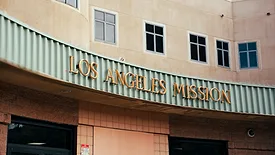
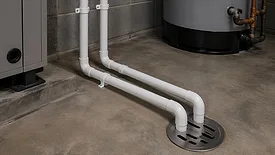
The International Water, Sanitation and Hygiene Foundation (IWSH), the public charity of IAPMO, has completed a major plumbing upgrade at the Los Angeles Mission, strengthening essential facilities used by more than 1,000 people each day.
IAPMO urges its members and other interested parties to get involved in the code development process to ensure effectiveness in preserving the public health, safety and welfare through fair and balanced development of the Uniform Codes.
IAPMO employs a voluntary consensus development process accredited by the American National Standards Institute (ANSI), gathering the largest assembly of plumbing and mechanical experts in the world at its Annual Education and Business Conference and technical committee meetings, enabling anyone — members and non-members alike — to have a voice on proposed changes to the code.
Among the significant updates included in the 2024 UMC are enhanced air filtration requirements, new ventilation system balancing provisions, updated refrigerant safety classifications, and requirements addressing the use of emerging low-global-warming-potential refrigerants.
In this 1.5-hour webinar, instructor Randy Lorge will review how to use the Water Demand Calculator, highlight its technical benefits, and demonstrate how to apply it to accurately right-size a water distribution system.
IAPMO has published the 2027 editions of the Uniform Plumbing Code (UPC) and Uniform Mechanical Code (UMC) in both hardcopy and electronic versions. The Uniform Codes are developed using IAPMO’s ANSI-accredited consensus development procedures. This process brings together volunteers representing a variety of viewpoints and interests to achieve consensus on plumbing and mechanical practices.
IAPMO urges its members and other interested parties to get involved in the development process to ensure effectiveness in preserving the public health, safety, and welfare.
The technical committees, consisting of a coalition of industry experts, considered public comments to amend the USHGC and USPSHTC in advance of the release of the 2027 editions.
The USHGC is a model code developed by IAPMO to govern the installation and inspection of solar energy systems as a means of promoting the public’s health, safety, and welfare.
IAPMO will join members of the High-Performance Buildings Coalition (HPBC) on Capitol Hill to advocate for resilient, efficient, and sustainable building practices.
This annual event connects industry leaders with policymakers to promote forward-thinking building policy.