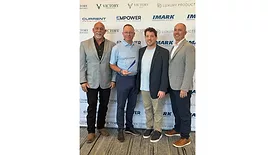
The collaboration focuses on workforce optimization, a core Trimble value that addresses the widening skills gap by making professional technology more accessible.
Brian Bartlett will transition to COO leadership as Jake Fegely prepares to retire.
Bringing 29 years of operational and managerial leadership experience, Bartlett joined Cooney Brothers in September of last year with the plan to eventually assume the COO role after gaining a full understanding of the company’s operations.
One often-overlooked factor in technology adoption is how the human brain responds to change. We’re naturally wired to seek familiarity and avoid uncertainty, especially in high-pressure environments like the trades. When new systems are introduced without context or preparation, the brain reads that change as a threat, triggering resistance or disengagement. That reaction isn’t stubbornness; it’s human nature.
For years, leadership in the trades was defined by grit, hustle, and sheer willpower. If you worked harder, stayed longer, and pushed through, you were considered a strong leader. And while work ethic will always matter in plumbing, the demands of today’s workforce are calling for something more.
All year, leadership is a fast-moving, day-by-day experience. But December's slower pace lets you take a step back, and that's when strategic thinking happens. An intentional leadership reset is a chance to reflect on what truly matters, refocus on the strategies that drive results, and reignite the performance, purpose, and passion that will carry you into 2026 with clarity and momentum.
In this episode of And So It Flows, host Natalie Forster sits down with Spencer Pope, manager of technical support and training at Bradford White, to explore how education and workforce development are evolving across the plumbing, HVAC and mechanical trades.
Culture is a vital driver of results. A 2025 Deloitte study found that strong cultures lead to 30% more innovation and 40% higher employee retention, saving companies 90–200% of an employee’s annual salary for each retained worker. In contrast, Gallup estimates disengaged employees cost the global economy $8.8 trillion, or 9% of GDP.