
Radiant Heating Systems as a Pathway to Energy Performance, Thermal Comfort, and Leed Contribution
Radiant systems provide a viable approach to meeting performance targets while supporting electrification and reducing operational energy demand
Need to Know
- Radiant heating systems improve occupant comfort by conditioning surfaces rather than relying primarily on heated air, allowing buildings to maintain comfort at lower air temperatures.
- Lower operating temperatures and efficient hydronic distribution can reduce energy consumption while supporting integration with electric heat pumps and building electrification strategies.
- Radiant systems can contribute to LEED certification through improved energy efficiency, thermal comfort, and reduced reliance on extensive ductwork.
Mechanical system design is being reshaped by competing demands. Projects are expected to reduce carbon emissions, support electrification, and deliver measurable improvements in occupant comfort, all while maintaining constructability and cost control. Traditional forced-air systems can meet baseline requirements, yet they often struggle to balance energy performance with consistent thermal comfort across diverse building types.
Radiant heating systems present an alternative approach. Rather than conditioning air as the primary medium, these systems condition surfaces, allowing buildings to operate at lower air temperatures while maintaining occupant comfort. When evaluated as part of an integrated design strategy, radiant systems offer a pathway toward improved energy performance, reduced operational intensity and meaningful contribution to green building certifications.
Understanding Radiant System Operation
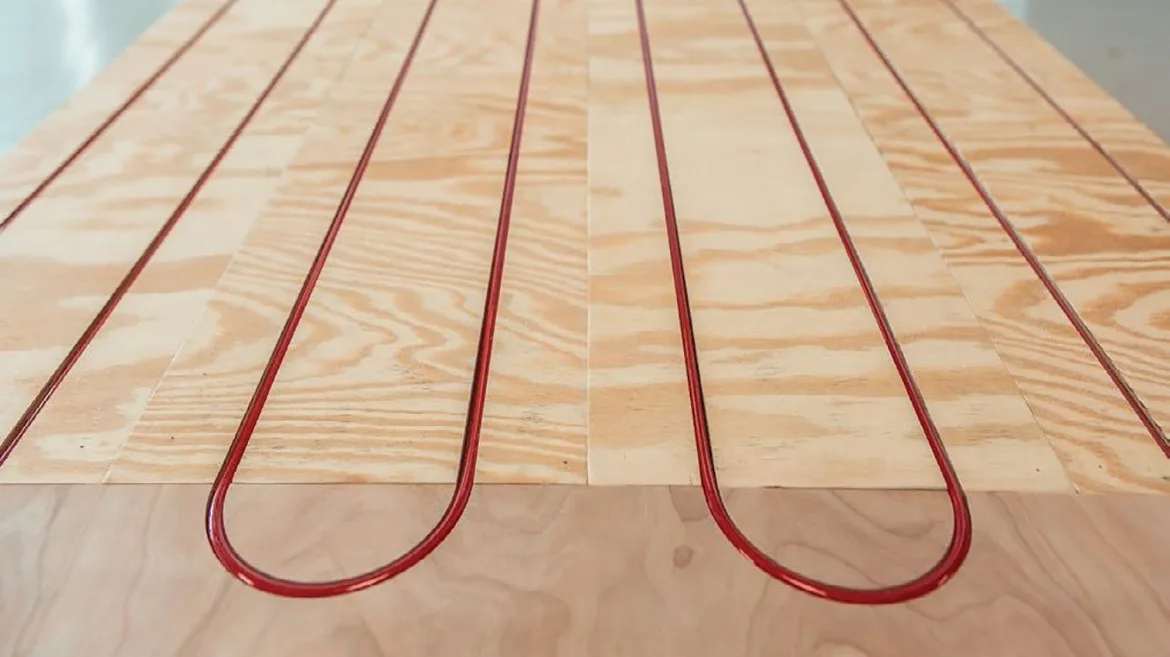
Hydronic radiant systems circulate warm water through a network of tubing, typically crosslinked polyethylene, embedded within floors, walls or ceilings. Heat is transferred from these surfaces to occupants and surrounding objects primarily through radiation, with a smaller contribution from natural convection.
Several system configurations are commonly used:
- Embedded surface systems installed within structural slabs
- Thermally activated building systems integrated into mass construction
- Panel-based systems applied above or below finished surfaces
- Ceiling or wall systems used where floor installation is not practical
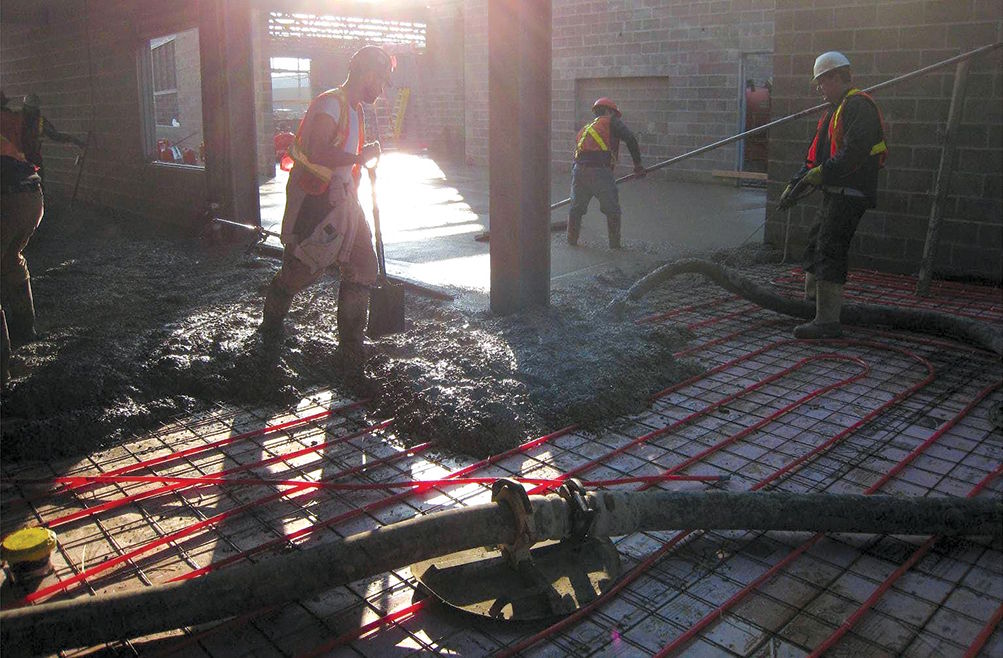
Installation methods vary depending on project type. New construction often uses slab-on-grade or suspended slab overpour systems, while retrofit applications may rely on above-floor panels or joist-space installations. This flexibility allows radiant systems to be applied across commercial, institutional and residential projects without requiring a single prescriptive approach.
Thermal Comfort: Beyond Air Temperature
Thermal comfort is often simplified to thermostat setpoints, yet human heat exchange is dominated by radiant effects. Research aligned with ASHRAE 55 indicates that a significant portion of heat transfer between the body and its environment occurs through radiation, rather than convection.
Radiant systems address this directly by increasing mean radiant temperature within a space. Warmer surrounding surfaces reduce the rate at which occupants lose heat, allowing comfort to be maintained at lower air temperatures. In practice, buildings can operate with air temperatures several degrees lower than those required by forced-air systems while achieving comparable or improved comfort conditions.
Field and post-occupancy studies highlight a persistent gap in thermal satisfaction. Large-scale surveys have shown that only a small percentage of buildings achieve high levels of occupant satisfaction with thermal conditions. Radiant systems help address this gap by reducing temperature stratification, limiting drafts, and creating more uniform conditions across occupied zones.
The result is not simply warmer floors, it is a shift in how comfort is delivered, with less dependence on high air movement and more reliance on stable surface temperatures.
Energy Performance and Distribution Efficiency
Radiant systems influence energy performance through both reduced demand and more efficient heat distribution.
Lower air temperature setpoints reduce overall heating loads. Because comfort is maintained through surface conditions, the system does not need to elevate air temperature to the same extent as convective systems. This translates directly into lower energy use at the building level.
Distribution efficiency is another key factor. Water carries significantly more thermal energy per unit volume than air, enabling smaller distribution pathways and reduced fan energy. Hydronic circulation typically requires a fraction of the electrical input associated with air movement, and it avoids losses associated with duct leakage and poorly insulated air distribution systems.
Independent studies reinforce these performance advantages. Evaluations of commercial buildings using radiant heating and cooling have shown meaningful reductions in energy consumption compared to conventional systems, with many high-performing buildings incorporating radiant strategies as part of broader energy reduction goals.
Thermal mass integration further enhances performance. When tubing is embedded within concrete or other structural elements, the system can store and release heat over time, supporting load shifting and improved peak demand management.
Electrification and Carbon Reduction
As building systems transition away from combustion-based heating, compatibility with electric heat sources becomes increasingly important. Radiant systems are well suited to this transition.
These systems operate effectively at lower water temperatures than traditional convective systems, making them compatible with air source, water source and ground source heat pumps.
Lower supply temperatures improve heat pump efficiency and expand their viable operating range.
Radiant systems also support demand response strategies. Thermal mass can be used to store energy during off-peak periods and release it during peak demand windows, helping align building operation with grid conditions.
In combination, these characteristics position radiant systems as a practical component of decarbonization strategies, particularly in jurisdictions where electrification is being accelerated through policy or utility incentives.
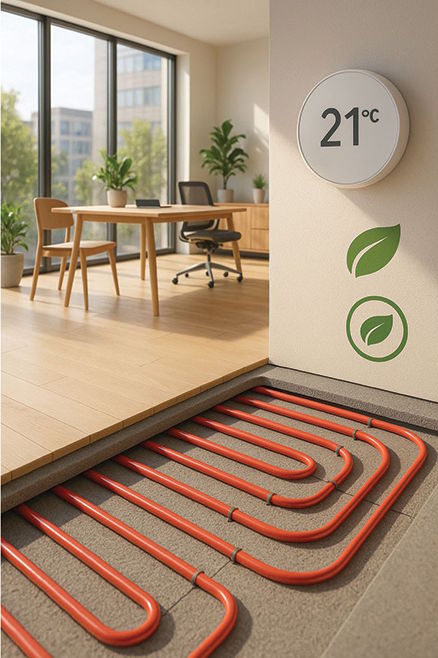
Image courtesy of Saeed Danesh and REHAU
Contribution to LEED and High-Performance Design
Radiant systems can contribute to multiple categories within LEED and similar certification frameworks. Their impact is not limited to a single credit but rather spans several performance areas when integrated into the overall building design.
Energy and Atmosphere credits are supported through improved system efficiency and reduced energy consumption. Indoor Environmental Quality benefits from enhanced thermal comfort and reduced reliance on forced air systems, which can lower particulate distribution and improve perceived air quality.
Material-related considerations are also relevant. Reduced ductwork can decrease material use and limit exposure to components that may contribute to indoor emissions. Radiant systems can also support daylighting strategies by removing overhead mechanical constraints, enabling more open ceiling designs and increased access to natural light.

Image courtesy of Saeed Danesh and REHAU
When combined with renewable energy systems and appropriate controls, radiant systems can contribute a meaningful number of points toward certification, particularly in projects targeting higher performance tiers.
Installation Flexibility and Design Integration
One of the practical advantages of radiant systems is their adaptability across construction types.
In new construction, integration into structural slabs or prefabricated panels allows the system to become part of the building fabric. In retrofit scenarios, above-floor panel systems or joist-space installations provide alternatives that minimize disruption while still delivering performance benefits.
Images courtesy of Saeed Danesh and REHAU
Architecturally, the reduction or elimination of large duct systems can free up ceiling space, simplify coordination, and support design objectives such as increased glazing or exposed structural elements. This flexibility is particularly valuable in projects where mechanical systems must be integrated within constrained spaces or complex geometries.
Case Applications
Project experience demonstrates how these systems perform under real-world conditions.
At the Toronto Elm Centre YWCA, a radiant system integrated with geo-exchange technology contributed to a significant reduction in carbon emissions while reducing reliance on traditional air handling components.
Images courtesy of Saeed Danesh and REHAU
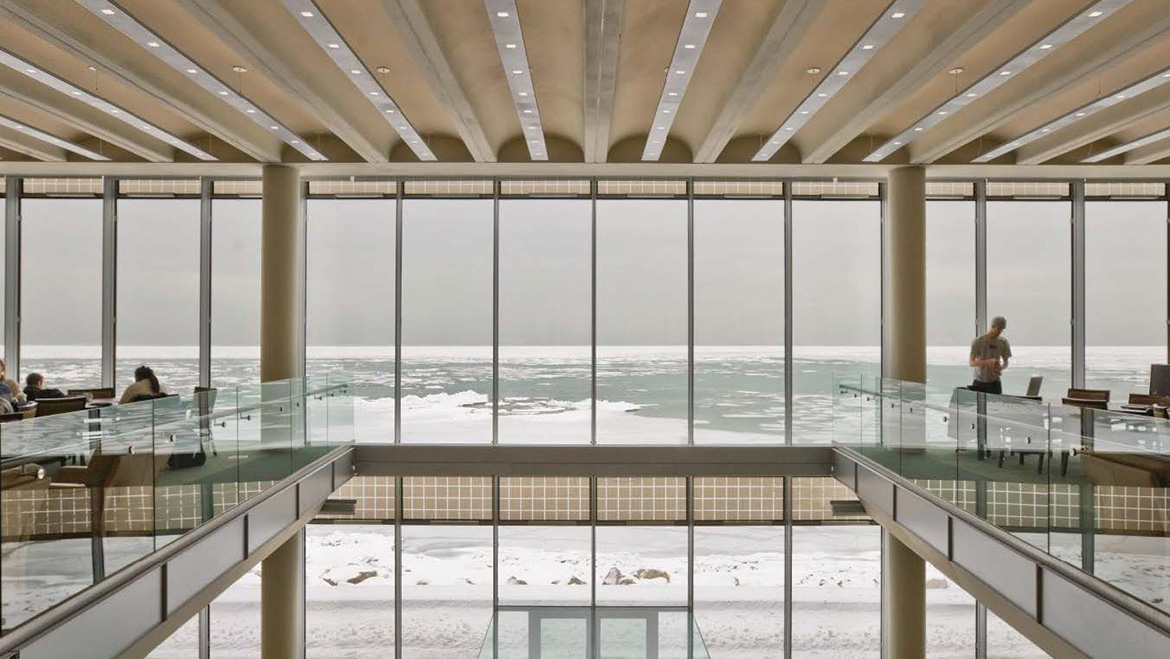
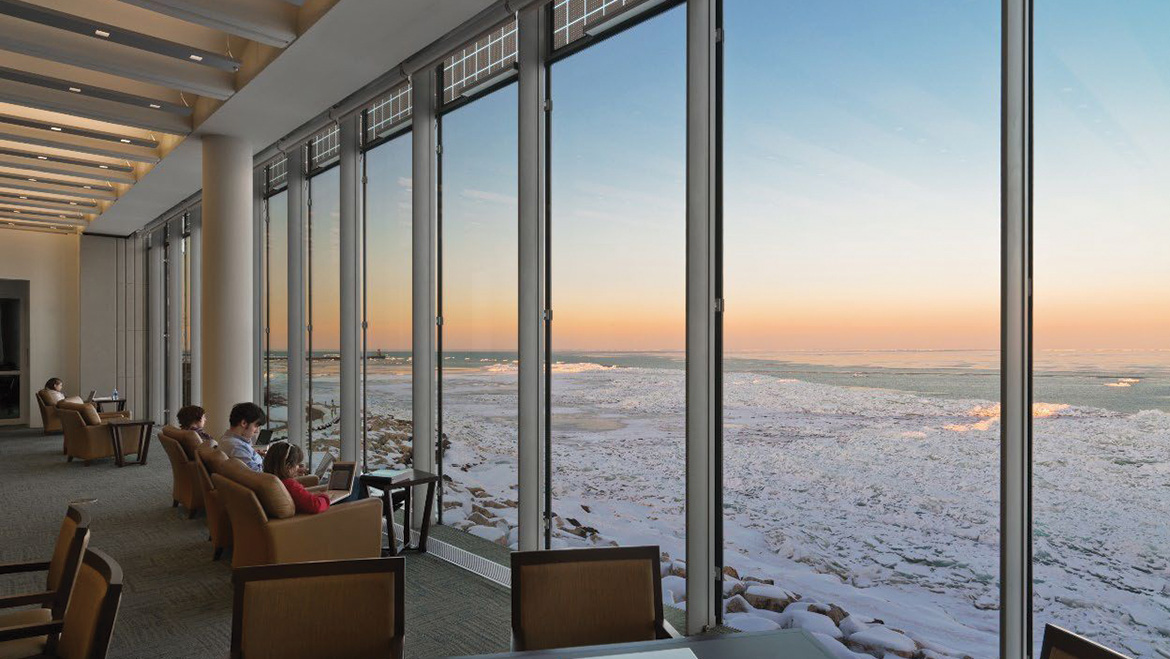
At Loyola University’s Information Commons, radiant floor and ceiling systems operate in conjunction with natural ventilation for a substantial portion of the year, supporting both energy performance and occupant comfort while enabling expansive glazing and open interior spaces.
Large-scale applications, such as airport facilities and institutional buildings, demonstrate the scalability of radiant systems. Installations exceeding tens of thousands of square feet have been used to provide consistent thermal conditions with reduced operational complexity and maintenance requirements.
Radiant heating systems shift the focus of building performance from air conditioning to surface conditioning. This distinction has practical implications for comfort, energy use, and system integration.
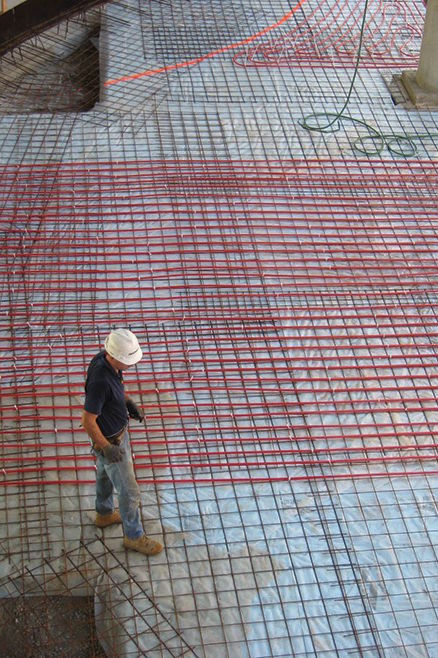
Image courtesy of Saeed Danesh and REHAU
For plumbers, engineers, inspectors and specifiers, the relevance is increasingly clear. Radiant systems provide a viable approach to meeting performance targets while supporting electrification and reducing operational energy demand. Their ability to integrate with modern heat sources, improve occupant experience, and contribute to certification frameworks makes them a strong candidate for inclusion in high-performance building design.
As the industry continues to prioritize efficiency and carbon reduction, radiant systems are likely to play a larger role in how buildings are designed, constructed, and evaluated.
While system performance ultimately depends on proper design, installation and control strategies, manufacturers with established experience in hydronic radiant technologies, including companies such as REHAU, have contributed to the development of reliable piping systems and application methods that support these outcomes at scale.
Looking for a reprint of this article?
From high-res PDFs to custom plaques, order your copy today!


