
Navigating the Shift: Innovation in Commercial Water Heating
Commercial water heating is moving beyond like-for-like replacement as efficiency standards, electrification policies and smart controls change how systems are specified, installed and serviced.
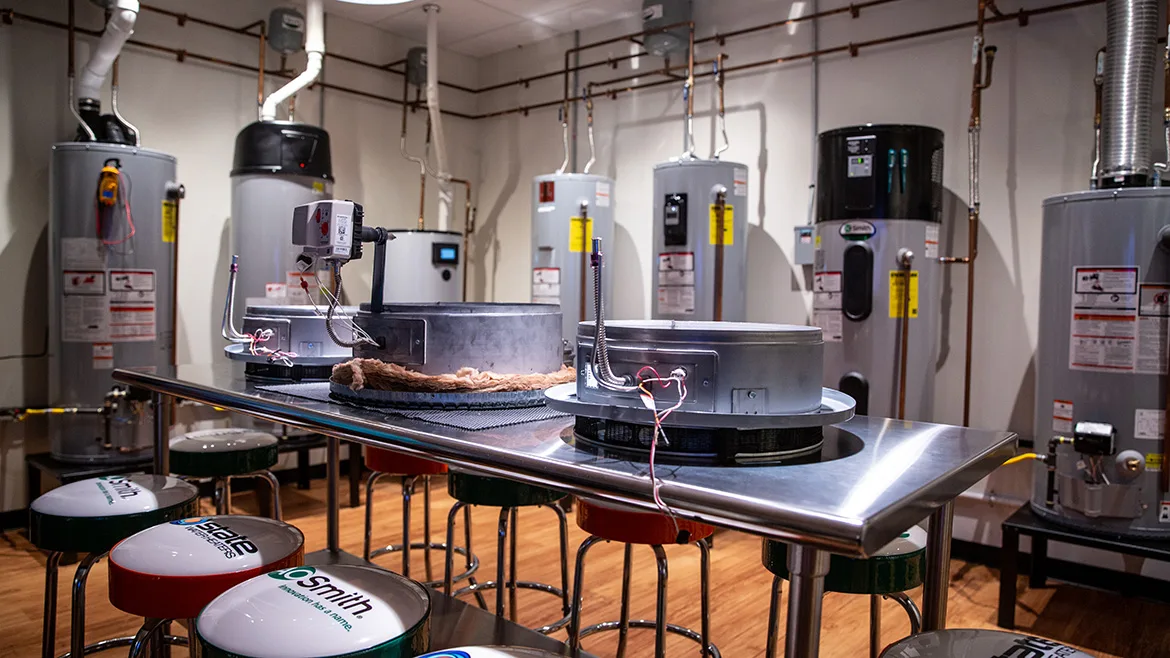
Many manufacturers offer hands-on training to assist professionals in learning about advanced application engineering, regulatory compliance and control programming.
Like most industries, the commercial water heating sector is experiencing a transitional period. The market, which is no longer dictated solely by traditional equipment, is being reshaped by federal mandates and decarbonization goals. Adding to this shifting environment is the Department of Energy (DOE)'s minimum efficiency standards recent extension of the commercial regulation enforcement deadline to October 2027.
This extension gives the commercial industry an extended window to adapt to the new rules while maintaining a clear overarching trajectory: sustainable, high-efficiency commercial water heating units are in greater demand than ever before. In combination with customer-driven demands, these regulations are accelerating the development and adoption of new sustainable technologies. Heat pumps, integrated controls and intelligent combustion systems are among the next-generation of technologies that offer superior efficiency and unprecedented user control.
The High-Efficiency Regulatory Shift
As manufacturers and consumers navigate the future of commercial water heating, they must first understand the changing federal regulations and localized climate policies. At the national level, the efficiency baseline is undergoing a massive upgrade as the industry evolves away from traditional non-condensing equipment toward strict minimum standards for condensing equipment. Commercial gas storage units are moving from an 80% minimum to 95% Thermal Efficiency (TE), while instantaneous units are moving from an 80% minimum to 96% TE. The DOE's decision to extend non-enforcement through October 2027 has placed many manufacturers, distributors and contractors in a temporary holding pattern. However, this is far from a standstill, as forward-thinking professionals are using this extra time to prepare building owners for the transition, especially as state and local rules are moving even faster than federal timelines.
Beyond federal mandates, regional requirements are also altering the design of building systems. ASHRAE 90.1 serves as the benchmark energy code for commercial buildings by specifying stricter minimum system efficiencies, mandatory pipe insulation and expanded energy tracking or metering requirements. Meanwhile, states like California, Washington and New York are enforcing aggressive carbon reduction targets. California's Title 24, for instance, establishes heat pump water heaters as the baseline for new construction and often requires complex energy modeling for permit approval. Multiple cities are increasingly implementing natural gas bans for new construction, pushing electric infrastructure or enacting zero-emission building ordinances that phase out fossil fuel combustion alongside low-NOx air quality rules.
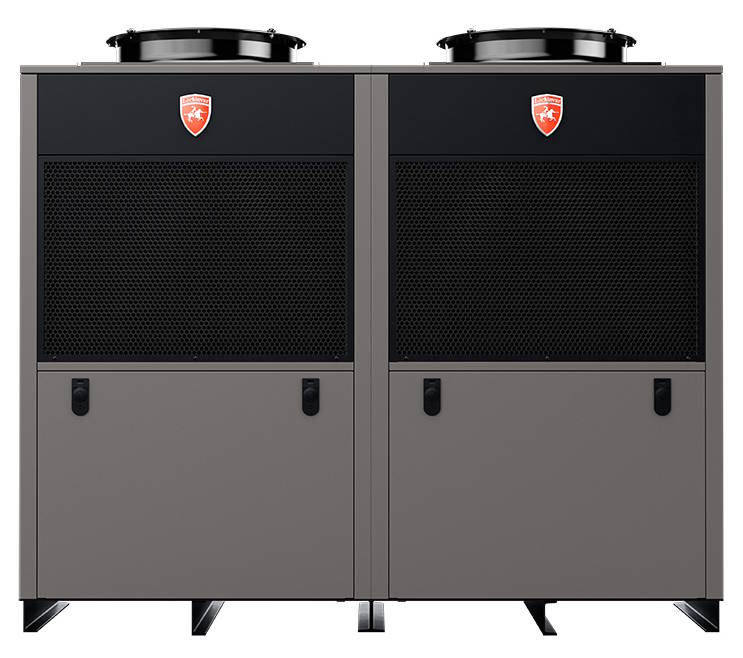
Lochinvar’s Veritus Heat Pump Water Heater. Photo courtesy of Lochinvar | click to enlarge.
Engineering the Next Generation of Water Heating
As non-condensing options phase out, the next generation of gas-fired water heaters is stepping up to prove that efficiency upgrades do not have to compromise reliability. Rather than simply settling for the new federal minimums, manufacturers are engineering systems that push the limits of gas combustion. New units with an advanced heat exchanger design routinely achieve 98% to 99% efficiency. These units feature larger surface areas and optimized flow dynamics, maintaining peak efficiency under varying conditions. New technology like AiQ Adaptive Gas Technology automatically adjusts the system's operation based on fluctuating gas quality and usage. This ensures the burner is consistently modulating to protect the unit and maximize fuel efficiency and savings.
For contractors and engineers, the transition to modern gas equipment requires planning to address structural and mechanical building constraints. Switching to condensing technology introduces many challenges, as standard atmospheric venting is no longer viable. Understanding these logistical realities ahead of the 2027 deadline ensures that the move from legacy systems to next-gen technology remains seamless, profitable and compliant.
Driven by a surge in decarbonization momentum, commercial heat pump water heaters (HPWHs) are the fastest-growing trend in the commercial sector, particularly in new construction projects. Adoption is accelerated by local and state regulations, much like California's Title 24. This positions heat pumps as the new baseline technology for sustainable building designs. But new technological advancements have successfully overcome these geographical limitations. The engineering advancements of variable-capacity compressors, combined with the industry-wide shift towards high-performance refrigerants, ensure that modern heat pumps can extract ambient heat and operate effectively even in freezing conditions.
For instance, advanced systems are engineered to operate in ambient temperatures as low as 23°F while maintaining an exceptionally high Coefficient of Performance (COP). To meet the high-capacity demands of large-scale commercial facilities, manufacturers are adopting modular, scalable system architectures. Leading technologies allow contractors to bank multiple independent units together into a single cohesive system. This configuration offers extensive installation flexibility, enabling systems to adapt to unique facility layouts while providing built-in redundancy to ensure continuous delivery of domestic hot water.
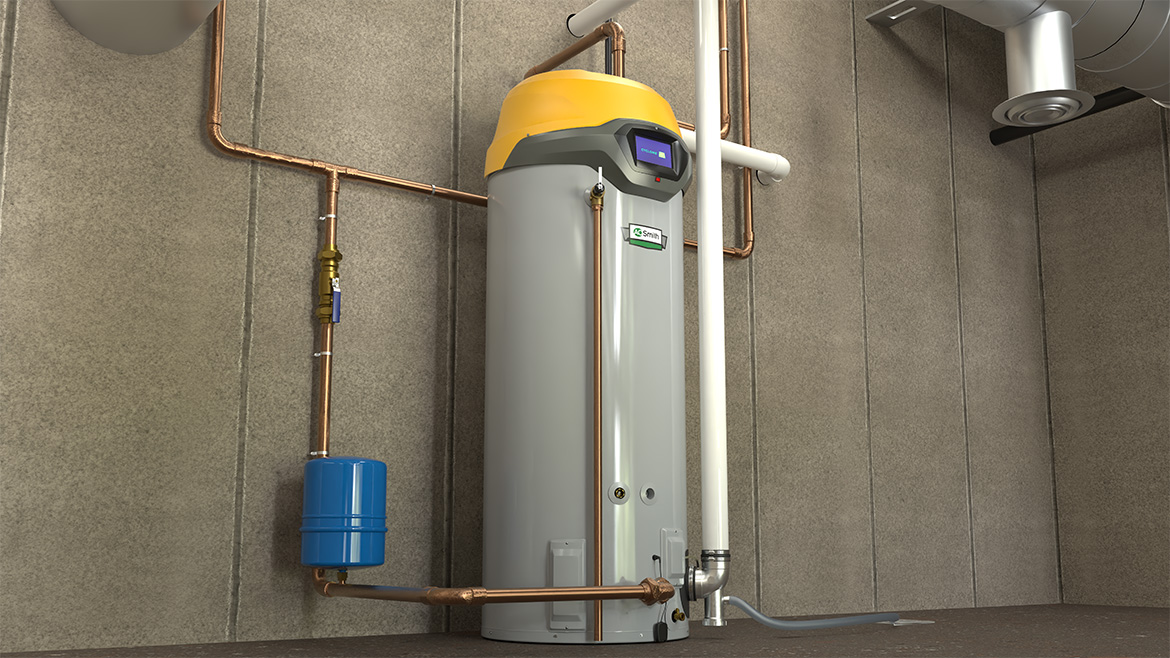
A. O. Smith’s Cyclone Flex model. Photo courtesy of A. O. Smith | click to enlarge.
Creating a Smart, Connected Mechanical Room
Given the goal of many municipal decarbonization policies to achieve complete electrification, numerous barriers make all-electric designs difficult to implement. Strict grid limitations, constrained electrical access and high upfront costs all pose obstacles. In these cases, hybrid systems serve as a practical bridge to full electrification. Hybrid units allow buildings to drastically reduce emissions without requiring high-cost, disruptive electrical service upgrades and bring cost savings at peak performance.
In modern commercial facilities, digital connectivity has transitioned from a premium, optional feature to a standard operational expectation for engineers and facility managers. Modern commercial water heating equipment features integrated, factory-standard controls, sensors and communication protocols that function beyond basic water heating to optimize whole-building energy ecosystems. Using digital platforms (with options such as A. O. Smith's iCOMM connectivity network and Lochinvar's remote connect software, Con·X·Us), facility teams can review historical run data, adjust setpoints in real time and catch minor operational anomalies before they escalate into property damage or unexpected building downtime. This digital evolution has begun to redefine how commercial buildings work with electrical infrastructure. The standardization of communication protocols such as CTA-2045, a port that plugs directly into the smart grid, has enabled modern water heaters to become fully grid-interactive. This capability enables seamless participation in communication between the mechanical room and power consumption.
Adapting Expertise for Next-Gen Tech
As the commercial water heating sector approaches the DOE’s 2027 enforcement deadline, the traditional methods of specifying, installing and servicing equipment are changing. In this regulatory-driven environment, comprehensive technological literacy has become the key to sales growth and business longevity for commercial contractors and engineers. Professionals can no longer rely on simple like-for-like system replacements; instead, they must act as educated advisors, guiding building owners through the nuances of an ever-changing industry.
Recognizing that the success of this market-wide transition depends on ongoing field education, leading manufacturers have committed massive resources toward professional training. Specialized educational platforms like A. O. Smith University and LochinvarU offer HVAC professionals access to state-of-the-art training. Through hands-on, live-site training and virtual courses, professionals can learn about advanced application engineering, regulatory compliance and control programming. By pairing grid-interactive equipment with a highly trained workforce, professionals can deliver better mechanical systems that meet sustainability demands while safeguarding the financial performance and long-term reliability end users require.
Looking for a reprint of this article?
From high-res PDFs to custom plaques, order your copy today!


