State of the Industrial PVF Market: Data Centers Drive Growth
August 4, 2026
State of the Industrial PVF Market: Data Centers Drive Growth
August 4, 2026Data centers have emerged as one of the industrial PVF market's strongest growth drivers, creating demand for specialized piping systems, valves, and mechanical products.

The industrial PVF market is entering another period of growth, but the drivers behind that growth are changing. Rather than the broad manufacturing expansion that defined recent years, today's momentum is being fueled by data centers, artificial intelligence infrastructure, and large commercial construction.
While this market continues to grow, planning remains complicated by uncertainty surrounding tariffs, interest rates, commodity prices, and the global energy market at large.
Even so, manufacturers and distributors continue investing in the market while taking a more strategic approach to inventory, sourcing, and project timing.
Data Centers Dominate Market
Nonresidential construction has been the main driving force for industrial PVF demand for years, but the projects fueling that growth are evolving. After several years of expansion led by warehouses and logistics centers, data center construction now drives much of the market's momentum, though logistics projects remain active.
“Data centers are currently generating the strongest demand for our industrial PVF products, driven by continued investment in digital infrastructure and the need for reliable, high-performance mechanical systems,” said Joe Choflet, vice president, sales & marketing, NIBCO. “Continued investment in AI and data center infrastructure, along with general infrastructure spending, represents the greatest growth area.”
Luke Muszynski, vice president, vendor relations, Winsupply, said data center demand is particularly strong for copper, groove, and fusion related product categories.
Demand also remains strong across hospitals, institutional facilities, and large commercial construction.
“The medical sector is still booming as the population ages and demands more and more health care,” said Dr. Chris Kuehl, ASA chief economist and managing director at Armada Corporate Intelligence. “Manufacturers had been doing a good bit of expanding but that pace has started to slow.”
Looking for a reprint of this article?
From high-res PDFs to custom plaques, order your copy today!
All in all, while some construction segments continue to face challenges from elevated financing costs and higher mortgage rates, the broader industrial PVF market remains supported by a diverse mix of end markets.
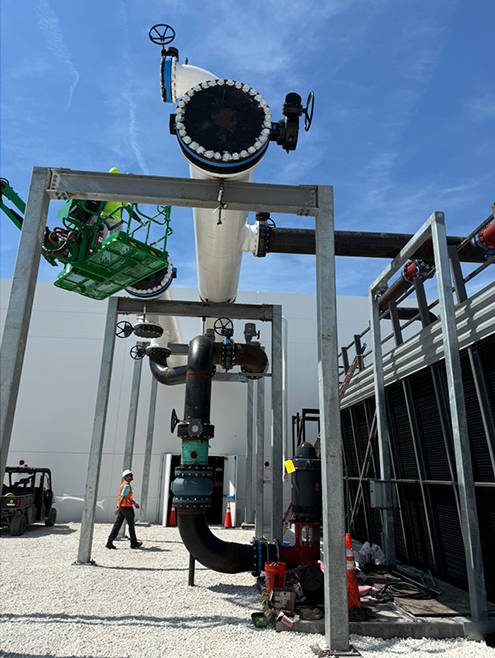
Manufacturers and distributors are investing in supply chain infrastructure, inventory strategies, and logistics to keep pace with growing demand across industrial markets. Photo courtesy of NIBCO | click to enlarge.
Economic Uncertainty Reshapes Planning
Oil and oil and oil. If one phrase captures today’s industrial PVF economy, it’s that of Kuehl, who said the front-page story of this year is oil.
“The Iran War has totally altered the energy situation as the world has gone from fears of an oil glut that would rive per barrel prices as low as $45 or $50, to a situation where many expect prices above $100,” said Kuehl. “Low per barrel pricing makes it impossible for U.S. producers to make profits, but very high prices stall the entire supply chain.”
This uncertainty, coupled with supply chain tensions, has delayed many industrial PVF projects, ultimately affecting PVF demand. Kuehl added that construction financing has slowed, but not stalled, as developers continue weighing higher borrowing costs against ongoing project opportunities.
Oil is only one piece of the equation. Tariff uncertainty, commodity price swings, and borrowing costs are also forcing manufacturers and distributors to rethink pricing, inventory, and supply chain investments.
“The tariff situation is as unstable as it has been in while … These are complex and always changing and it is nearly impossible for business to keep up,” said Kuehl.
Companies are responding by making their supply chains more flexible.
Winsupply said its locally owned business model allows each location to quickly adjust inventory and pricing based on market conditions and demands.
“Because our owners are local, they are able to have immediate conversations with customers about margin pressures and tariffs,” said Muszynski. “This proximity allows them to quickly adjust pricing structures to remain competitive and capture market share from larger, less flexible competitors.”
Choflet said NIBCO is evaluating every link in its supply chain, including which products and components make the most strategic sense to bring back in-house, to improve resilience while maintaining product availability.
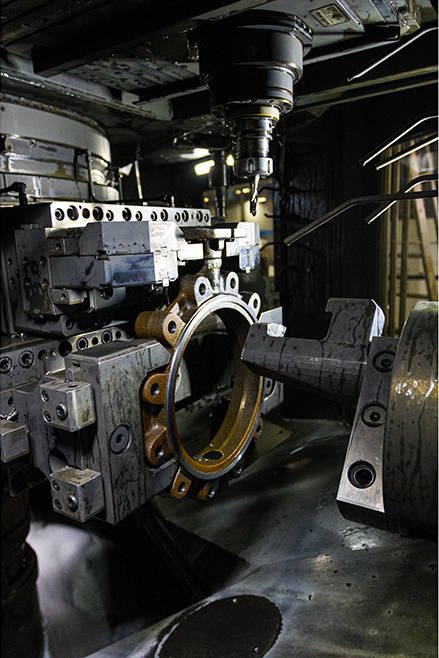
Despite uncertainty surrounding tariffs, commodity prices, and labor, industry leaders say demand remains strong across data centers, health care, and large commercial construction. Photo courtesy of NIBCO | click to enlarge.
“By strengthening our manufacturing capabilities while continuing to optimize our supplier network, we can remain competitive, adapt to changing market conditions, and, most importantly, continue delivering the quality and service our customers expect,” said Choflet.
Rising fuel and logistics costs are also influencing operations. NIBCO has invested in warehouse technology and inventory management systems while evaluating more efficient transportation options, including Shared Truckload solutions (STL), to improve operational efficiency, control costs, and strengthen its overall supply chain resilience. Winsupply has taken a similar approach by redesigning its transfer truck network into a dedicated round-trip system, giving local companies faster access to a broader range of products, while expanding its distribution network.
“The massive expansion of the distribution network, including a new 1.17-million-square-foot center in Atlanta, along with dedicated indoor pipe capacities, is designed to make the supply chain more robust,” said Muszynski.
Growth Brings New Challenges
Strong demand is creating new opportunities for industrial PVF companies, but it is also increasing the need for specialized expertise to properly serve these markets, reliable supply chains, and a skilled workforce.
“The biggest opportunity for the industrial PVF market over the next several years will be supporting the continued growth of emerging sectors such as technology and energy while maintaining a strong focus on our established markets like commercial, mechanical, HVAC, and process systems,” said Choflet. “The most successful companies will be those that can capitalize on new opportunities while continuing to serve the customers and industries that have been the foundation of the market.”
Muszynski said distributors must continue evolving their inventory strategies while building expertise around emerging technologies, including the products required for liquid cooling systems in data centers.
Operational challenges remain.
“Data centers are currently generating the strongest demand for our industrial PVF products, driven by continued investment in digital infrastructure and the need for reliable, high-performance mechanical systems.” — Joe Choflet, vice president, sales & marketing, NIBCO.
“Products related to data centers remain "hit-or-miss" regarding availability, and domestic production times for large diameter items have increased,” said Muszynski.
For contractors serving this market, strong backlogs continue to support business, but rising material costs and labor shortages are beginning to pressure project schedules and margins.
“Labor shortages can slow project timelines, limit capacity, and affect the industry's ability to respond quickly to growing demand,” said Choflet. “Addressing workforce development and attracting the next generation of skilled professionals will be critical to sustaining long-term growth across both emerging and traditional market segments.”
Ultimately, the state of the industrial PVF market is no longer defined by just manufacturing alone. Its resiliency is greatly owed to how industry stakeholders choose to adapt, and as data centers, AI infrastructure, and other specialized projects continue to reshape demand, that’s exactly what success will continue to depend on.