The ROI on Smart Water: Do Connected Systems Really Pay Off?
Smart water systems can save money, uncover hidden problems, and create new opportunities for contractors

It usually starts small.
A faint, steady sound behind a wall, a barely noticeable increase on a water bill, or drip that never makes itself known until it becomes something much bigger. By the time the signs are visible – stained drywall, warped flooring or worse – the damage is already done.
For decades, this has been the reality of water management in both homes and commercial buildings. Problems are discovered after the fact, then reactive repairs can begin. As a result, costs escalate quickly; often far beyond what anyone expected when the issue first began.
Now, that model is starting to shift.
Connected water systems are changing how contractors, property owners and insurers approach one of the most persistent risks in the built environment. Instead of waiting for failure, these systems are designed to detect abnormalities early, monitor usage continuously and, in some cases, shut off water automatically before a minor issue becomes a major loss.
Interestingly, water damage remains one of the most frequent and costly claims categories, yet it is often underestimated by both homeowners and building operators. Industry data shows that in-home water events occur far more often than other commonly insured risks, but the perception of that risk hasn’t always kept pace.
Driven in part by insurance incentives, increasing awareness of hidden leaks and the growing need for operational efficiency in larger buildings, adoption is accelerating. Contractors are finding new service opportunities, while property owners are gaining visibility into systems they previously could not monitor and insurers are shifting their focus from payouts to prevention.
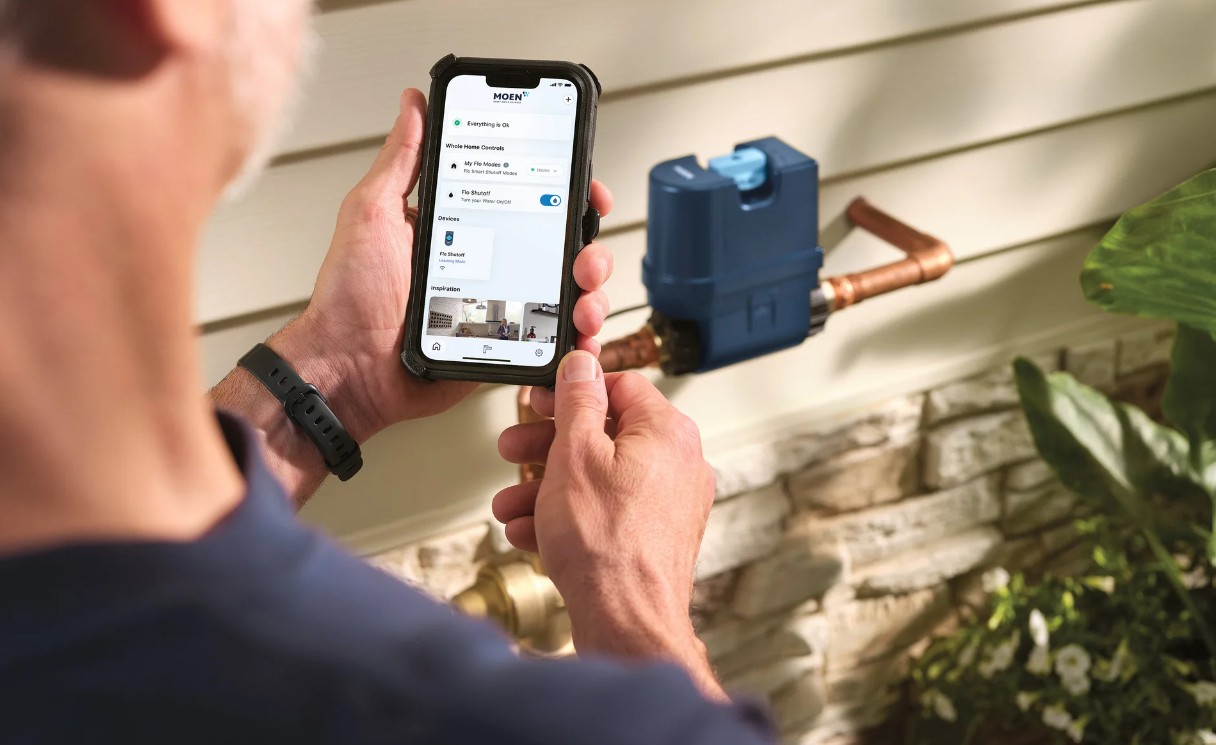
Preventing a single major leak can deliver the strongest ROI, avoiding extensive damage and costly repairs. Image courtesy of Moen, click to enlarge.
Still, one question continues to surface across the industry: do these systems actually pay off?
The answer depends on how return on investment is defined, and who is doing the measuring. For some, the value lies in avoiding catastrophic damage. For others, it is found in reduced operating costs, improved system performance or new revenue streams.
What is clear is that the ROI on smart water is not always obvious at first glance. It’s often tied to events that never happen, problems that never surface and losses that are never realized.
And, that makes it worth a closer look.
ROI starts with what never happens
The most compelling return on investment for connected water systems is actually not always visible.
Unlike equipment upgrades that improve efficiency or reduce energy consumption in measurable increments, smart water technology delivers its greatest value by preventing events entirely. In many cases, the ROI on prevented events -- what smart water systems specialize in -- is much more difficult to measure.
Water damage remains one of the most frequent and costly causes of property loss. According to the Insurance Information Institute, water damage and freezing consistently rank among the most common homeowner's insurance claims. For contractors and property owners, that translates into a persistent, often underestimated risk.
Jeff Barnes, vice president of affinity partnerships at Moen, points to this gap in perception as one of the biggest challenges in understanding ROI.
“The most significant ROI is found in avoided costs and risk mitigation,” Barnes says. “Beyond helping to prevent the potential thousands of dollars in out-of-pocket expenses not covered by standard insurance, the device prevents the massive lifestyle disruption of being displaced during lengthy flood remediation and reconstruction.”
When failures do occur, the financial impact can escalate quickly.
In residential settings, a single leak in a kitchen, bathroom or concealed pipe can result in tens of thousands of dollars in repairs. In commercial and multifamily buildings, where systems are larger and consequences are amplified across multiple units or tenants, the cost of a single event can climb into the millions.
“A single leak in a kitchen, bathroom, or ceiling can easily result in tens of thousands of dollars in repairs for [a] single family, and millions of dollars in multifamily or commercial spaces,” says Stephanie Radel, director, hot and cold water supply Americas at GF.
Connected water systems are designed to interrupt that cycle. By combining continuous monitoring with flow and pressure analysis, these systems can detect abnormalities early; often before visible signs appear. Some platforms go further, automatically shutting off the water supply when a major leak or burst is identified, limiting the scope of damage in real time.
The measurable impact of that prevention is becoming clearer.
“Carriers see a dramatic reduction in claims severity and frequency,” Barnes says. “Third-party research shows that homes with these devices installed can experience up to a 96% reduction in claim frequency and as much as 72% reduction in average claim costs.”
Beyond catastrophic failures, these systems are also addressing the smaller issues that often lead to larger problems.
“Connected water systems are particularly effective at uncovering the ‘hidden’ sources of water loss that would otherwise go unnoticed for long periods of time,” Radel explains. “Using continuous flow monitoring, pressure sensing, and real-time alerts, these systems can detect slow, silent leaks behind sheetrock or in subfloors, often before visible damage occurs.”
The numbers speak for themselves, according to Matt Adcock, director of business development at Resideo. "Research shows that 93% of water leaks can be lessened or minimized if an automatic water leak detection and shut-off system had been present in the home. Installing water leak detectors, ideally connected to a water shutoff valve in a home, can help prevent detrimental water damage, and having just a leak detector by itself can be a benefit by providing early warning to potentially big problems. "
Jason Abajian explains, "Not all water leaks come from dramatic pipe bursts – they can come from small, slow issues that can go undetected for days or weeks. Smart water leak detectors and automatic shut off valves can help uncover these “hidden” leaks early, helping to prevent detrimental water damage."
The opportunities are numerous, Abajin noted. "For example, appliance-related leaks like those from washing machines, dishwashers, water heaters, or refrigerators with ice makers, can develop hose or connection leaks that can go unnoticed because they’re tucked out of sight. Having a water leak detector near these appliances may help catch these problems early."
For contractors and building owners, that capability reinforces a key shift in how ROI is evaluated: the value is no longer tied solely to performance improvements or efficiency gains. Instead, it is increasingly defined by risk reduction, early detection and the ability to stop problems before they escalate.
In other words, the strongest return is often what never happens!
Insurance is accelerating the payback
If avoided damage is the foundation of ROI, insurance is quickly becoming the mechanism that makes that value tangible. Across the industry, carriers are shifting their focus from reacting to claims to preventing them. Water damage, long one of the most frequent and costly categories, has pushed insurers to look for ways to reduce both claim frequency and severity before a loss occurs.
Connected water systems are at the center of that shift.
According to Adcock, "Water leaks are one of the most expensive non-weather related insurance claims, accounting for 25% of all home insurance claims and resulting in an average payout of more than $14,000. All told, water leak damage is a multi-billion-dollar problem for U.S. property insurers."
“Insurance companies are increasingly focusing on claim prevention, using technologies like Moen Flo to mitigate water damage,” Barnes says. That influence is showing up in several ways.
Financial incentives are among the most visible. According to Moen, more than 15 major insurers (including half of the top 10 carriers) now offer premium discounts or subsidies to policyholders who install leak detection and automatic shutoff systems. These programs help offset upfront costs and shorten the payback period, making adoption easier to justify for homeowners.
In some cases, incentives are evolving into requirements.
“For high-risk properties, such as those with prior claims, older infrastructure or high-value homes, some carriers now require this type of product as a condition for issuing or renewing a policy,” Barnes explains.
GF’s Radel notes that this trend is not limited to residential applications. “Some insurance companies are playing an increasing role in driving adoption of leak detection and shutoff technologies by either requiring or strongly encouraging their use, and in some cases offering premium discounts for properties equipped with connected water systems,” she says.
For property owners and operators, these changes are reshaping how ROI is calculated. Instead of evaluating smart water systems solely as a capital expense, they are increasingly viewed as part of a broader risk management strategy; one that can reduce premiums, limit liability and protect asset value over time.
For insurers, the math is clear.
“Given that non-weather water damage is often a provider's largest expense, these savings can be substantial,” Barnes says. That alignment between insurer and customer is helping accelerate adoption across the market.
As carriers continue to prioritize prevention, connected water systems are moving from optional upgrades to expected safeguards, particularly in higher-risk properties. In doing so, they are turning ROI from a theoretical benefit into a measurable, and often immediate, financial advantage.
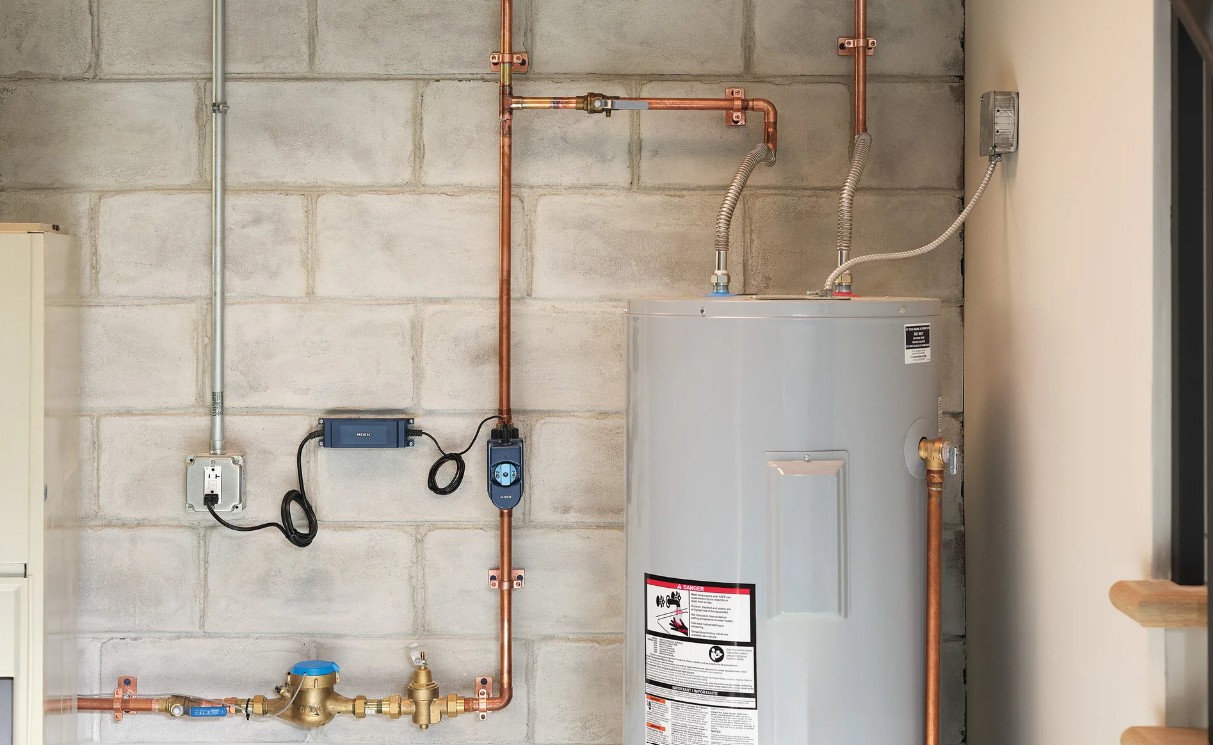
Many water issues start as small, hidden leaks, the kind connected systems are designed to catch early. Image courtesy of Moen
The hidden cost of water loss
However, not all ROI is tied to catastrophic failures – thankfully!
“Water issues are far more common than most realize, in fact, 60% of new Moen Flo users discover an existing leak within 30 days upon installation,” Barnes says. These are not always obvious failures; instead, they are often small, persistent problems hidden behind walls, beneath floors or inside mechanical systems.
“The most critical ‘hidden’ issues these systems identify include micro-leaks,” Barnes agreed. “These tiny, pinhole leaks occur inside walls or floor slabs. Because they are invisible, they often go undetected for years, potentially leading to catastrophic structural damage and hidden mold growth.” Slow, continuous leaks are another major contributor. “The system performs a nightly health check capable of detecting leaks as small as one drip per minute, catching issues before they escalate,” He adds.
GF’s Radel points to a similar pattern across both residential and commercial environments.
“Connected water systems are particularly effective at uncovering the ‘hidden’ sources of water loss that would otherwise go unnoticed for long periods of time,” she says. “Using continuous flow monitoring, pressure sensing and real-time alerts, these systems can detect slow, silent leaks behind sheetrock or in subfloors, often before visible damage occurs or mold begins to develop.”
Beyond concealed leaks, these systems are also identifying everyday inefficiencies that can significantly impact operating costs. “They also identify running toilets and failing valves by recognizing abnormal, continuous water flow patterns, which can otherwise waste thousands of gallons per year without detection,” Radel says. In larger buildings, the impact is magnified.
“In multifamily properties, connected systems provide visibility across units, helping flag small fixture leaks that typically go unnoticed until they surface as unexpectedly high water bills,” she explains.
For contractors and building owners, these insights shift the ROI conversation beyond emergency response. Instead of reacting to failures, connected systems provide continuous visibility into system performance. They turn hidden problems into actionable data, allowing issues to be addressed early, before they escalate into costly repairs or operational disruptions.
In that sense, the return is not just in preventing major losses; it’s in eliminating the steady, often invisible drain on resources that happens every day.
Residential vs. commercial ROI
While the core technology may be similar, the return on investment for connected water systems actually varies quite significantly depending on where it is applied. For residential users, the value proposition is largely centered on protection.
“The most significant ROI is found in avoided costs and risk mitigation,” Barnes says. “Beyond helping to prevent the potential thousands of dollars in out-of-pocket expenses not covered by standard insurance, the device prevents the massive lifestyle disruption of being displaced during lengthy flood remediation and reconstruction.”
In this context, ROI is often tied to a single event: a burst pipe, a failed appliance or an undetected leak can quickly turn into a major financial and personal burden. Preventing that event, or at least minimizing its impact, is where the system delivers its value.
There is also a growing awareness that many of these risks are more common than homeowners assume. “The most significant misconception is a massive underestimation of risk,” Barnes notes. “While many view smart water technology as an optional luxury, water damage frequency far outpaces other common home threats.”

Continuous flow monitoring and pressure sensing allow smart systems to detect concealed leaks before visible damage occurs. Image courtesy of Moen
For commercial and multifamily buildings, the equation is quite different. Instead of focusing on a single household, operators are managing multiple systems, tenants and risk points simultaneously. In these environments, ROI extends beyond protection, and into day-to-day operations.
“The ROI profile differs significantly between residential and commercial or multifamily applications,” Radel says. “For homeowners, the value is most tangible in risk avoidance. In commercial and multifamily buildings, ROI is broader and more multifaceted.”
That broader value includes operational efficiency, cost control and tenant experience.
“In commercial, multifamily and rented occupancies, ROI shows up more through reduced downtime, fewer tenant disruptions and lower maintenance costs,” Radel explains.
Visibility is also a key factor. “In multifamily properties, connected systems provide visibility across units, helping flag small fixture leaks that typically go unnoticed until they surface as unexpectedly high water bills,” she adds. For building owners and operators, that visibility can translate into better planning, faster response times and fewer large-scale failures.
There are also implications for sustainability and compliance.
“In some cases, ROI includes sustainability goals, reduced claims and liability exposure, and even compliance or certification benefits,” Radel says.
According to Abajian, "Water leak detectors and automatic shut-off valves offer value to both single family homeowners and commercial and multifamily operators." He continues, "Residential ROI hinges on preventing a major incident, while commercial ROI is driven by consistently reducing risk and inefficiency across an entire property or portfolio. For homeowners, the return on investment is often event-driven – it’s most clearly seen when a leak alert or prevention helps avoid thousands of dollars in damage. In contrast, commercial and multifamily operators can see a more continuous and scalable return, with benefits extending beyond avoided losses to include ongoing operational savings from improved monitoring and maintenance."
Taken together, these differences highlight an important point; residential ROI is often defined by protection and peace of mind, while commercial ROI is driven by performance, efficiency and scalability. Both are valid, but they require different ways of measuring success.
Understanding that distinction is key to evaluating whether connected water systems truly pay off in a given application.
A new opportunity for contractors
For contractors, connected water systems are doing more than preventing damage; they’re reshaping how service is delivered and how revenue is generated.
Connected water technology introduces a different model compared to the classic “reactive service” model, according to Abajian, transitioning it into one built around continuous monitoring, early detection and ongoing engagement with the customer.
That shift is creating new entry points for contractors. Once installed, smart systems often reveal issues that would have otherwise gone unnoticed, creating immediate opportunities for additional work. “Installation often uncovers existing issues, such as the leaks found in 60% of homes, which immediately leads to additional retail repair work and billable hours,” Barnes explains.
Beyond one-time repairs, connected systems are opening the door to recurring service models. “These systems allow contractors to move toward a ‘trusted advisor’ role, where they can offer ongoing monitoring or preferred maintenance contracts based on the device’s diagnostic data,” Barnes adds.
GF’s Radel sees a similar evolution, particularly as systems become more integrated across building infrastructure. “Contractors can now offer more proactive maintenance services by monitoring systems remotely and identifying issues before they become major problems,” she says.
That capability supports new revenue streams tied to long-term service agreements. “Installation of these systems also opens recurring revenue opportunities through subscriptions, service agreements and ongoing sensor maintenance or replacement,” Radel explains.
It also creates differentiation in a competitive market; something that certainly can’t be overstated!
“Contractors are increasingly able to differentiate themselves by bundling water management solutions with other smart building systems such as HVAC and energy management, creating a more integrated offering for customers,” she adds.
For contractors willing to adopt the technology, the ROI is not just in the installation itself, it is in the long-term relationship that follows. The shift from reactive service provider to proactive partner represents one of the most significant changes connected water systems bring to the trade.
The perception problem
Despite the measurable benefits, adoption of connected water systems is still shaped by a gap between perceived value and actual risk.
One of the most persistent challenges is how these systems are viewed. “Many customers still view these systems as luxury gadgets rather than practical tools for risk mitigation and operational efficiency,” Radel says.
“The most significant misconception is a massive underestimation of risk,” Barnes says. “While many view smart water technology as an optional luxury, water damage frequency far outpaces other common home threats.”
Abajian puts it well: "Often, customers don’t understand the value of smart water technology until they experience a water leak firsthand. With the prevalence of leaks and damage, water leak detectors would be a good addition to every home and are a natural offering from plumbers to their customers. "
However, even when the risk is acknowledged, the full impact is not always understood. “There is a common belief that insurance covers the ‘cost,’ but this ignores the extreme personal disruption, such as displacement from the home, loss of irreplaceable items and the long-term health risks of mold,” Barnes explains.
Another barrier? How ROI itself is evaluated. It’s a complicated topic, after all. “There is also a tendency to underestimate ROI, as many focus on upfront cost rather than the long-term savings from avoided damage and reduced water waste,” Radel noted. “Others assume they are complex and difficult to install, when most modern systems are designed to be retrofit-friendly with minimal disruption.”
Underlying all of these misconceptions is a common theme. Connected water systems are preventive by nature, and preventive value can be quite difficult to quantify. When the primary benefit is stopping a problem before it happens, the return is not always immediately visible.
These factors create a disconnect between what the technology does, and how it is valued.
Closing that gap, through education, real-world data and contractor engagement, will be key to broader adoption. Until then, the perception of smart water as a luxury may continue to lag behind its role as a practical tool for risk management and long-term savings.
So, do they pay off?
The answer is yes, but not always in the way people expect.
They don’t just save money; they prevent losses, uncover hidden problems, create new opportunities for contractors, and provide greater control for building owners.
Most importantly, they change the way water is managed, from a reactive expense to a proactive strategy. And, in an industry where a single failure can define the outcome, that shift may be the most valuable return of all!
Looking for a reprint of this article?
From high-res PDFs to custom plaques, order your copy today!