Old Systems, New Demands: How Contractors are Navigating the Retrofit Market
Integrating high-efficiency equipment with existing piping and controls remains a key challenge (and opportunity) in today’s retrofit market
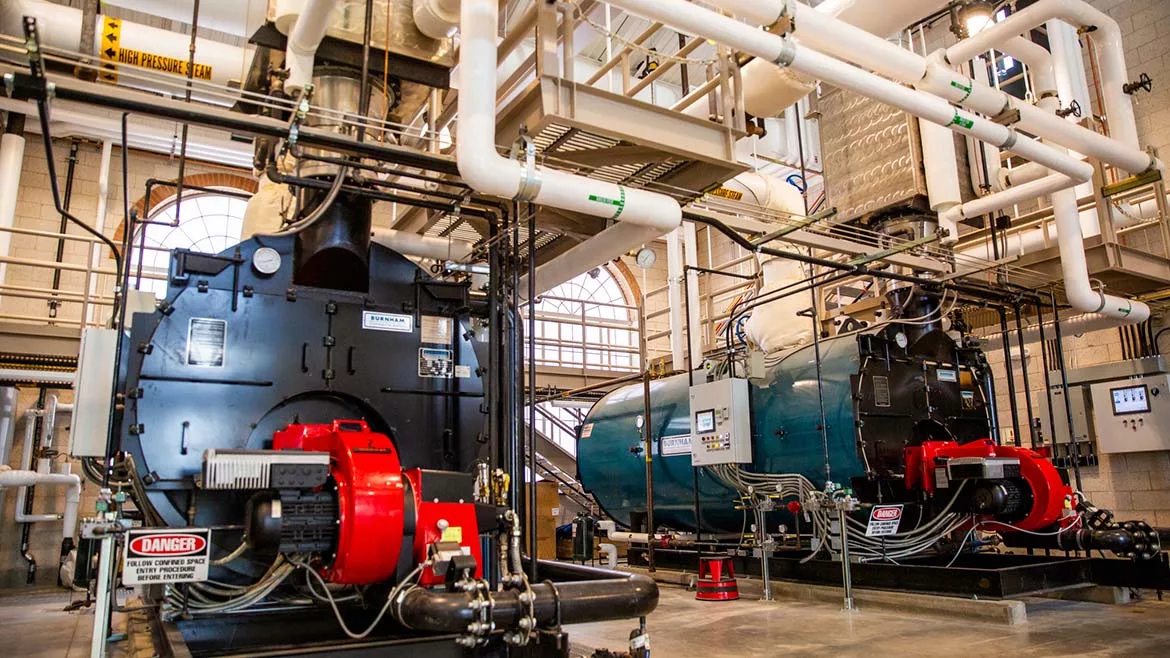
In mechanical rooms across the country, the signs of aging systems are hard to miss: decades-old boilers still running beyond their expected lifespan, piping networks patched and re-patched over time, and control systems that offer little-to-no visibility into performance. Yet, these same buildings are now expected to meet modern demands for efficiency, reliability and, increasingly, lower carbon output.
For contractors and engineers, that tension is reshaping how projects are approached. Rather than defaulting to full system replacements, many are turning to retrofit strategies that work within the constraints of existing infrastructure. The goal is not just to extend system life, but to improve performance without the cost and disruption of starting from scratch.
Across the commercial and institutional landscape, retrofit work is gaining traction as stakeholders weigh cost, occupancy and long-term value. But, while retrofitting can offer a practical path forward, it also introduces a new set of technical and operational challenges; particularly when modern equipment meets decades-old systems.
Retrofit vs. replacement: a decision driven by reality, not theory
In today’s retrofit-heavy market, the choice between upgrading an existing system or starting from scratch is rarely philosophical. Instead, it’s driven by real-world constraints.
Beyond cost and disruption, decarbonization is also shaping retrofit decisions in many markets. According to Mitsubishi Electric Trane HVAC US (METUS), Regional Sales Manager, Water Products, George Wehnert retrofits are increasingly tied to greenhouse gas reduction efforts as aging systems reach end of life. “All-electric… air-to-water heat pumps offer an ideal solution… since they utilize electricity over fossil fuels,” he notes.
Cost remains the most visible factor. “If a customer can replace a water heater or boiler with a similar, updated version and achieve the same heating output, that is what they will typically do,” says Ross Brawner, product manager at Lochinvar. By maintaining existing venting and equipment footprints, contractors can avoid costly structural changes and keep projects on schedule.
That aligns with broader industry trends. In most commercial applications, retrofitting carries a lower upfront investment because it avoids full system tear-outs, duct redesign and major electrical or structural work. For owners facing tight capital budgets — or trying to phase improvements over time — that lowers the barrier of entry, making upgrades more realistic.
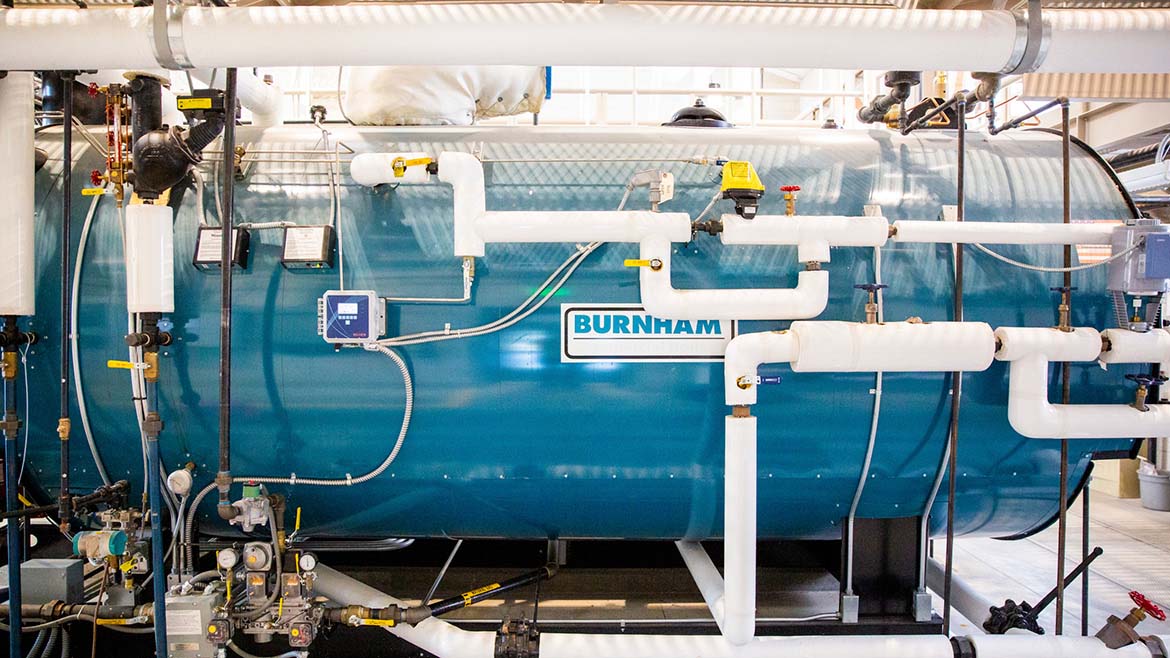
Modern controls and upgraded components are increasingly being integrated into existing boiler systems, allowing contractors to improve performance without full replacement. Image courtesy of Burnham Holdings, click to enlarge.
But, cost alone doesn’t drive the decision. In occupied buildings, disruption often carries equal weight. “The building is currently occupied and must stay occupied during construction, so a wholesale replacement of a system type may be too invasive,” explains Al Spinelli, mechanical technical manager at Henderson Engineers.
Bryan O’Toole, senior vice president, business development at Burnham Holdings, agrees. “Retrofit solutions can be crafted around keeping a building active, occupied, and minimally detrimental to the occupants. Full replacement of building systems can cover more project scope and as a result can cost more and take longer than a retrofit solution.”
This dynamic is especially pronounced in sectors like healthcare, multifamily and education, where downtime can be impractical or even impossible. Retrofitting allows contractors to work within tight operational constraints, sequencing upgrades in a way that keeps systems online.
But, the decision is rarely as simple as choosing the cheaper or less disruptive option. Industry guidance increasingly emphasizes lifecycle performance over first cost. The retrofit-versus-replace question should not be based solely on equipment age, but instead on factors such as performance, reliability, energy use and long-term capital planning.
In many cases, retrofits make sense when systems are still structurally sound, yet underperforming due to outdated controls or components. Targeted upgrades — like controls integration or high-efficiency equipment — can extend system life by five to 10 years while improving energy performance. Conversely, when core components are failing or reliability is declining, replacement may offer a more durable solution.
Ultimately, as multiple sources point out, there is no universal answer. The retrofit vs. replacement decision is not a one-size-fits-all choice, with outcomes often shaped by system condition, operational needs and long-term goals.
For contractors, that means the role is shifting: from installer to advisor. The most successful firms are those that can evaluate not just the equipment in front of them, but the broader context in which it operates; balancing cost, disruption and performance to arrive at the right solution for each facility.
Retrofit or replace? Key questions to ask
- Is the building occupied during construction?
- What is the remaining useful life of core components?
- Are operating costs or capital costs the priority?
- Is the system structurally sound but inefficient?
- Are there code or decarbonization pressures?
Where the work is happening
As retrofit activity accelerates, a clear pattern is emerging in where contractors are focusing their efforts: the systems that age fastest, consume the most energy or have historically lacked visibility.
Central plants sit at the top of that list. Boilers, chillers and air handling systems are among the most common upgrade targets, largely because their service life is significantly shorter than the buildings they serve. “These plants can last 25 years before they are on borrowed time, whereas the life span of the building structure is almost always longer,” Spinelli noted. As a result, plant upgrades have become a routine part of maintaining older commercial and institutional facilities.
Within that category, boiler retrofits are seeing particularly strong momentum. “We are mostly seeing upgrades to high efficiency boiler[s] right now,” Brawner said. Much of this activity is driven by the natural replacement cycle, as lower-efficiency units reach end of life and are swapped out for modern, high-efficiency alternatives that offer improved performance and reduced operating costs.
Electrification is also beginning to reshape upgrade strategies. “The trend we are seeing most is the replacement of natural gas-fired domestic hot water generation plants with heat pump systems,” according to Wehnert. He adds that these systems “can help reduce the greenhouse gas emissions or carbon footprint of the buildings where they are installed.”
At the same time, regulatory pressure and decarbonization goals are beginning to shape equipment selection in certain markets. Brawner points to “growing demand in electric boilers in certain regions amid evolving regulations on carbon emissions,” reflecting a broader industry shift toward electrification strategies where feasible.
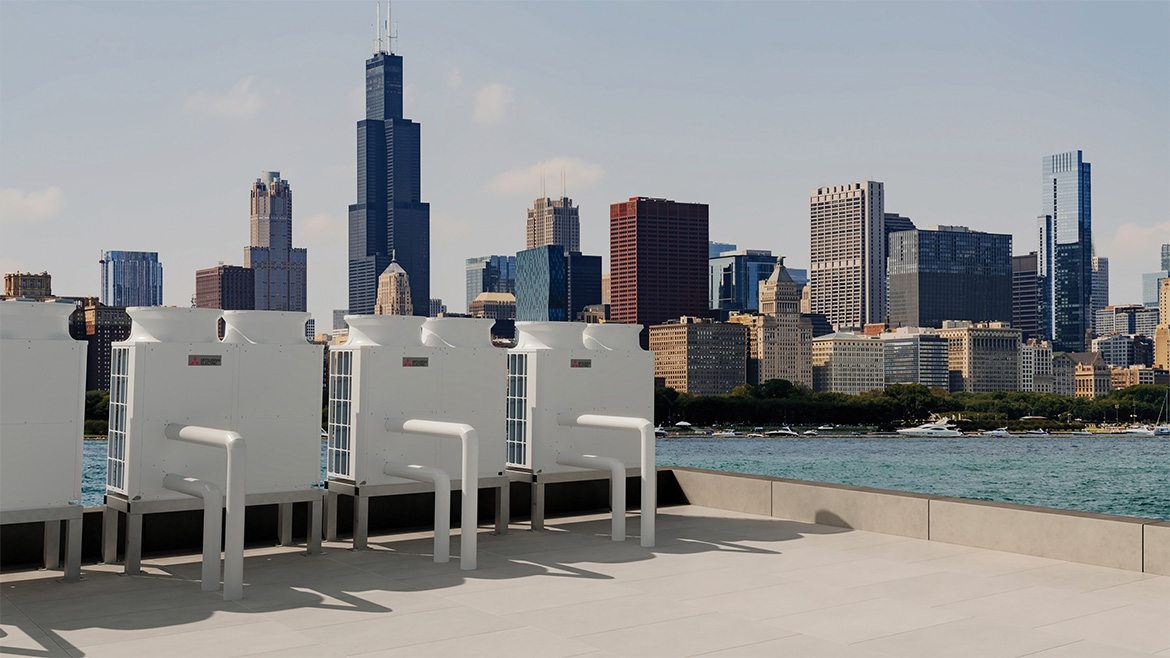
Mitsubishi Electric's ecodanPro CAHV heat pumps. Image courtesy of METUS.
Beyond core equipment, aging infrastructure is also driving retrofit scope. Piping systems — both plumbing and mechanical — are frequently in service far longer than originally intended. “Piping system upgrades are a typical project in older assets since many piping systems… are in service for 50-plus years,” Spinelli explains. These upgrades are often less visible than equipment replacements, but are critical to overall system performance and reliability.
Controls systems represent another major area of opportunity; and, in many cases, a significant gap. “We come across many buildings that have no real central controls system, so anything that we do in this scenario is a brand-new system,” Spinelli says. In facilities where controls do exist, the focus often shifts to modernization rather than replacement, with owners opting to upgrade to newer platforms that provide better data and integration capabilities.
O’Toole echoes this trend, noting that controls upgrades can range from entirely new installations to retrofits of existing systems, depending on what is already in place. Once a building has a baseline controls infrastructure, there is typically “more appetite to retrofit the existing [one] to a newer, similar system,” rather than starting over.
Interest is also growing in hybrid system configurations, though adoption remains uneven. “We are also seeing more interest in hybrid systems, though demand for this technology does not quite match the interest yet,” Brawner says. These systems, often pairing heat pumps with supplemental boilers, offer a pathway to higher efficiency and lower emissions, but they introduce additional complexity in design and controls.
Taken together, these trends point to a retrofit market that is both targeted and layered. Rather than wholesale system overhauls, many projects are focused on high-impact components — central plants, piping and controls — that can deliver measurable improvements without requiring a full rebuild. For contractors, understanding where these opportunities lie, and how they interact within the broader system has become a critical part of navigating today’s retrofit landscape.
The unknowns inside legacy systems
If retrofit projects share a common thread, it’s uncertainty. Beneath the surface of even the most well-maintained buildings, legacy systems often carry decades of undocumented changes, creating challenges that often don’t fully reveal themselves until work is underway.
“By far, the biggest challenge is the potential unknowns when you are working with existing systems,” said Spinelli. “These legacy systems have been modified throughout their lifespan, and those changes are not always documented.”
O’Toole echoes that sentiment, noting that it is “not uncommon to uncover unexpected past modifications during a retrofit.” Over time, equipment swaps, emergency repairs and partial upgrades can leave behind a system that looks straightforward on paper, but behaves very differently in practice.
In some cases, long-held assumptions about system capabilities are also being challenged. “In the past, heat pumps were not considered as solutions, as it was widely accepted — and is still mistakenly believed by many today — that they cannot provide usable heat at low ambient temperatures,” Wehnert explains. “Today’s ATW heat pumps… can provide heating down to ambient temperatures of -13°F.”
From a contractor’s standpoint, that lack of visibility can complicate everything from design decisions to installation timelines. Existing drawings may be outdated — or even nonexistent — while field conditions often diverge from original specifications. The result is a level of unpredictability that must be accounted for early in the process.
Manufacturers see a similar challenge from the system performance side. “The biggest challenge when retrofitting a legacy system is understanding exactly what it consists of,” Brawner noted. Without a full picture of the system, even a properly sized, high-efficiency unit can fall short of expectations!
That’s because the condition of surrounding components (particularly piping and water quality) can have an outsized impact on performance. Brawner cautions that “a new appliance will not fix a system that needs attention,” emphasizing that issues beyond the equipment itself can often undermine results.
In some cases, those issues are hidden until after installation. Aging piping systems, for example, may contain small leaks or accumulated contaminants that introduce total dissolved solids (TDS) into the system. When new equipment is installed, those conditions can quickly lead to fouling or restricted flow within heat exchangers, reducing efficiency and shortening equipment life.
Industry guidance reinforces the importance of uncovering these conditions early. Pre-retrofit assessments such as system audits, water quality testing and non-destructive inspection are increasingly viewed as essential steps in minimizing risk. Without that upfront work, projects are more likely to encounter scope changes, delays or performance issues after commissioning.
Ultimately, the challenge of unknowns underscores a broader shift in how retrofit projects are approached. Success depends not just on selecting the right equipment, but on developing a clear understanding of the system as it exists today: warts and all.
Making old and new work together
If uncovering unknowns is the first hurdle in retrofit work, integration is often the most technically demanding. Bringing modern, high-efficiency equipment into legacy systems requires more than matching capacities: it demands a clear understanding of how old and new components will interact under real operating conditions.
In electrification-focused retrofits, integration challenges can extend beyond hydronics. “Electrical capacity often needs to be evaluated and, in some cases, expanded,” Wehnert notes. He also points to “space implications, as heat pumps will require outdoor space… and may also require some additional indoor space.”
One of the most common pitfalls is the assumption that a like-for-like equipment swap will automatically deliver improved performance. In reality, that approach can fall short if the surrounding system is not evaluated. “If a professional replaces a heating appliance without examining the rest of the system, they may encounter issues with overall system performance,” said Brawner. “Simply put, a new appliance will not fix a system that needs attention.”
Without proper integration, the benefits of high-efficiency equipment can be diminished. For example, condensing boilers require specific return water temperatures to operate at peak efficiency; conditions that may not be achievable without adjustments to the distribution system or control sequences. Similarly, hybrid systems introduce additional complexity, requiring coordinated control between primary and supplemental heat sources.
These challenges are why a system-level approach is becoming the standard in retrofit work. Contractors are increasingly tasked with evaluating not just the equipment, but the entire hydronic or mechanical ecosystem.
In practice, making old and new work together often means moving beyond the idea of a “drop-in replacement” and toward a more engineered solution: one that accounts for the realities of the existing system while unlocking the performance potential of modern technology.
ROI in Retrofits: efficiency, data and long-term value
While first cost often drives the initial decision to retrofit, long-term return on investment is increasingly defined by efficiency gains, operational insight and extended system life.
For many projects, the most immediate ROI comes from upgrading aging equipment. As older, low-efficiency boilers and water heaters reach the end of their lifespan, replacing them with high-efficiency models can significantly reduce energy consumption. Brawner notes that “a lot of retrofit jobs are now seeing lower-efficiency units reach the end of their lifespans,” prompting a shift to newer technology that delivers “long-term operational savings.”
For electrified systems, return on investment can extend beyond energy savings. “Heat pump products can provide a return based on various factors,” Wehnert says, noting that “another often-overlooked advantage… is their reduced annual maintenance as compared to fossil fuel-fired equipment.”
Retro-commissioning further enhances those benefits by recalibrating existing systems to operate as intended — or better! Given how much system design has evolved over the past two decades, many legacy systems are operating well below their potential. Bringing them back into alignment can yield substantial energy savings without major capital investment.
Hybrid systems also factor into the ROI conversation, though their value is more situational. Brawner notes that these systems “offer high efficiency rates and operational savings,” but their performance depends heavily on factors such as local utility rates and control strategies. When properly designed, they can optimize energy use by shifting between heat sources based on cost and demand.
Ultimately, the ROI of retrofit projects is becoming less about a single upgrade and more about a layered approach: combining equipment, controls and system optimization to deliver sustained performance improvements. For contractors and owners alike, the focus is shifting from short-term savings to long-term value, where efficiency, data and adaptability play an increasingly central role.
Looking for a reprint of this article?
From high-res PDFs to custom plaques, order your copy today!