Plumbing’s Hidden Miracle: Why Savvy Contractors are Betting on the Most Urgent Trade
From apprenticeship backlogs to modern training and evolving industry standards, plumbing is reshaping contractor business models
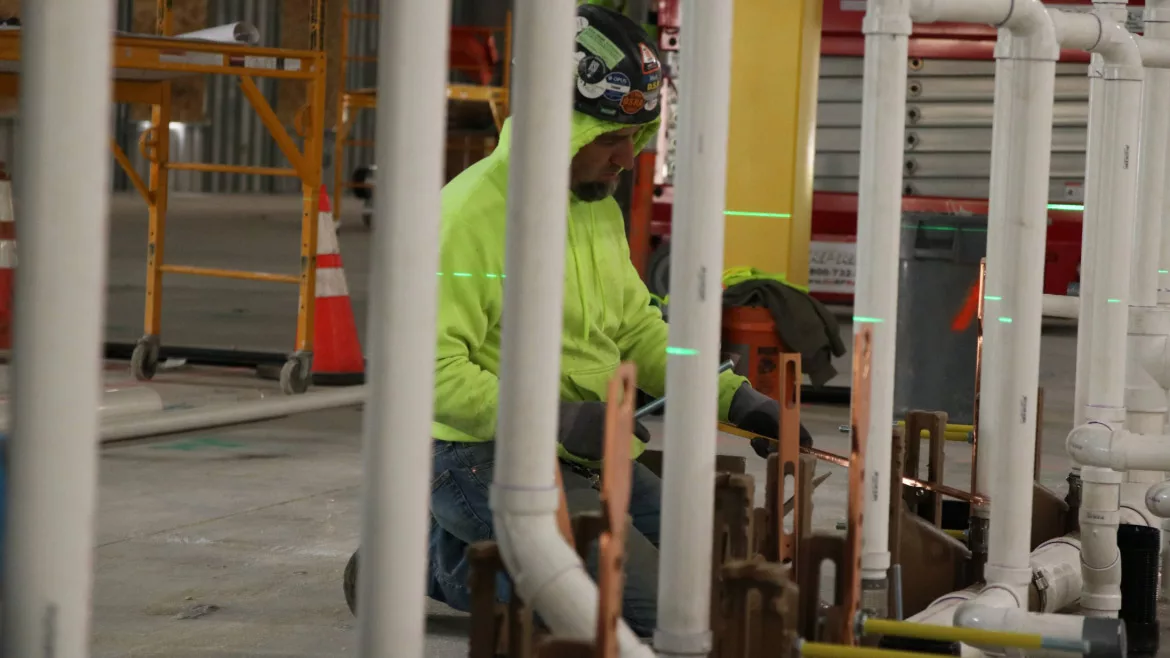
WATER: When water’s on the floor and there’s no time to shop around, contractors who master urgency (and overhead) are finding success.
If you ask Nick Agentis what separates a successful plumbing business from the pack, he won’t start with fancy branding or the latest marketing hack. He’ll talk about urgency – and how few industries are as defined by the customer’s immediate, sometimes panicked need.
“Nobody says, ‘Oh yeah, I’m happy to call a plumber.’ Never happens,” Agentis, director of the plumbing vertical at Business Development Resources, told a recent room of contractors and business owners at the AHR Expo. “Nobody wants you – they need you.”
It’s the kind of insight that’s easy to overlook if you’ve spent your career in HVAC or electrical, where routine maintenance and planned upgrades drive much of the work. Plumbing, Agentis said, is a different animal. Pipes burst at midnight, water heaters fail on the coldest day of the year, and nobody’s shopping around when there’s water on the floor. “When we market this, we have to not only do the whole branding approach … but we also have to have an entire marketing approach that is urgent, that is available when the customer is searching for it,” he said.
That urgency, it turns out, can be lucrative – if you approach it strategically. For HVAC companies pondering a plumbing add-on, Agentis sees a clear financial upside, but warns against seeing plumbing as simply “HVAC with different keywords.”
The Overhead Equation
The numbers, Agentis said, are straightforward if you know where to look. Plumbing is a steady, year-round business – there are no slow seasons like in HVAC. Add just two plumbers, he suggests, and a company can start contributing “$20,000 to $30,000 per month to overhead.” But for just one client, adding plumbing meant $75,000 in new monthly revenue within half a year at the HVAC and plumbing company Agentis developed.
But the real magic happens when owners finally get a handle on their overhead. “Knowing our overhead number is really, really, really important. Why? What happens when we pay our overhead? All the money over that, we can build a reserve, we can take profit,” Agentis told the crowd. “But if we don’t know our overhead per month, how do we know how much money we need per month to make money?”
It’s a lesson learned the hard way by many owners who, as Agentis puts it, “go day by day, just like, ‘I got work, I got jobs…checks aren’t bouncing.’ Then you realize you never made money.”
By adding $25,000 in monthly plumbing profit, HVAC companies can pay off fixed costs by the third week of the month. The rest is profit – and, if owners are disciplined, cash reserves. “If you did that for a year, you build three months, three months of cash reserves for your business,” he said. “That’s incredible. That’s a hard number to get.”
A New Generation of Plumbers
The financial calculus isn’t just about dollars and cents. The workforce behind the wrenches is changing, too. Dan Quinonez, the executive director of the PHCC Educational Foundation, sees demand for plumbing and HVAC apprenticeships at an all-time high, with online and in-person programs both facing backlogs. “There’s a backlog. So many people are applying for it right now, and it’s been incredibly successful,” Quinonez explained. “The good thing about having an online educational platform is that enrollment is open year-round, and apprentices can learn at their own pace.”
The PHCC’s online academy has served around 15,000 students, many of them adults who’ve already tried other careers. “The average age of our online apprentice is 25. So it’s not somebody that’s right out of high school,” he said. Their $29 pre-apprentice course gives would-be plumbers and HVAC techs a real look at the realities of the job. “You can take that certificate to a PHCC contractor and show them you’re serious. They really want to do this, like you have some understanding.”
The trades, once seen as a fallback, are now an increasingly popular and professional career path – helped along by a wave of new technology and training. “The perception has changed. They see successful careers, and even our contractors at PHCC are bringing more of a professionalism to the way they operate their businesses,” Quinonez said.
Chuck White, PHCC’s vice president of regulatory affairs, adds that the push for better-trained, multi-skilled techs is transforming the industry. “We have a number of members that are strictly plumbing, some that are strictly HVAC, but probably the majority of members are plumbing and HVAC, and we have some that are also electrical. We’re seeing more and more of a diversification of their portfolios. I mean, it’s the growth market – you could do all for everyone. Why not?”

GROWTH: Nick Agentis, director of the plumbing vertical at Business Development Resources, shares insights on why plumbing’s urgent nature offers steady revenue and growth potential. (Staff photo)
Training for the Future
As the industry modernizes, so do its training methods and tools. “Our program involves two steps. You have your online learning, and you have your hands-on learning,” Quinonez said. Programs are now accessible on just about any device, and students are as likely to be working adults as recent graduates. “The combination of two ... what I noticed is the folks who do take the course, there’s a seriousness, there’s a determination to succeed.”
Technology is also changing the work itself, with more advanced systems, monitoring tools, and even remote diagnostics entering the field. But understanding basic skills – and being able to work with legacy systems in older buildings – still matters. “There’s such a difference between plumbing apprenticeship training, whereas HVAC tends to be a little more open and less restrictive or regulated, as opposed to the plumbing side. But I think the key is to make sure on the HVAC side is that you have the best trained techs that you could possibly have,” said White.
Rethinking the Basics
Even as workforce training evolves, the industry’s technical foundations are finally catching up to modern realities. For decades, the formulas used to size plumbing systems were based on water usage patterns from the 1940s – a time when homes were smaller and lifestyles were vastly different. Matt Sigler, Executive Director at the International Code Council’s PMG division, sees that changing as there has been a renewed focus on research to better understand plumbing systems and how they should be designed based on the real needs of the buildings.
“Oversizing; it has been an issue,” Sigler said, pointing out that many buildings have larger pipes than necessary, which can lead to unintended consequences, such as potential bacterial growth in water supply systems and blockages in sanitary drainage systems, along with unnecessary increases in construction costs.
Now, with the growth in mixed-use developments and high-rise apartment buildings, those old standards just don’t fit the way people live and work. “We’re looking at all residential occupancies, including apartments, dormitories, mixed-use commercial occupancies – think high rises with residences above and businesses below,” Sigler explained. “Not since Roy D. Hunter’s work in the 1940’s for the National Bureau of Standards, and most recently, IAPMO’s introduction of their Water Demand Calculator (which addresses pipe sizing for water supply systems for only one- and two-family dwellings), has a meaningful update occurred for accurately sizing the entire plumbing pipe system of these larger building types, which includes both water supply and sanitary drainage systems.”
To meet these changing needs, the ICC and University of Miami are working on a new standard (ICC 815) and supporting software package (the Design of Robust International Plumbing Systems, or DRIPS) that will help contractors and engineers right-size plumbing systems for today’s buildings. The goal is clear: improve public health and safety, reduce unnecessary construction costs , and ensure plumbing design finally matches the complexity of modern construction.

STEADY: Plumbing’s break-fix demands, as well as new construction opportunities, offer contractors year-round revenue and a path to business growth. (Staff photo)
The Value of Diversification
There’s another reason to consider plumbing, and it’s not just about cash flow. Buyers pay a premium for companies with diversified revenue streams. “We’re seeing dual trade businesses, or three trade businesses, we’re seeing that demand a much higher value in the market space – up to 10x. It’s just a ridiculous multiplier,” Agentis said. In a market where HVAC companies often sell for five to seven times earnings, a business that can show steady revenue from multiple sources is worth significantly more to both private equity and strategic buyers.
Don’t Go It Alone
But Agentis is quick to warn against the most common mistake: treating plumbing as a bolt-on, separate entity. “Just do a DBA, get a new corporation, Total Home Services. Put it all under that.”
Trying to split branding, insurance, and operations across multiple entities is “really messy,” he said. “One phone number, one logo, one insurance plan, one workman’s comp plan, one truck insurance. Otherwise, it gets really messy.”
Leveraging What You Have
The most overlooked asset, Agentis argues, is the customer list. “You know your market space best. You sold hundreds of jobs to people in your community. How do we leverage that?”
A disciplined approach – using existing techs who can cross over, marketing to the same customer base, and tracking new vertical profits separately – can turn plumbing from a headache into a growth story. “You’re always going to get crossover techs that can do both, where you can have fewer people on call. I’ve got one guy that does HVAC and plumbing, and makes that overhead number even lower.”
The Long View
As the trades evolve and private equity continues to circle, Agentis sees the companies that plan – tracking overhead, building cash reserves, and diversifying services – as best positioned for whatever comes next. “If we’re going to do this vertical, we understand clearly the upside today. I also share enough risk. We’re balancing thinking about those two. This needs to go back to your team. This needs to go into a strategic plan.”
In other words: plumbing might be urgent for customers, but for contractors, the real wins go to those who take the long view – and those who recognize that the future of the industry is as much about people and adaptability as it is about pipes and profits.
Looking for a reprint of this article?
From high-res PDFs to custom plaques, order your copy today!