How manufacturers are reframing risk, resilience and return in 2026
In an uncertain market, predictive maintenance and domestic manufacturing are emerging as the new pillars of risk management and competitive strength.
As manufacturers navigate 2026, the mood in the boardroom is one of strategic caution. Energy price volatility, evolving tariffs and global supply chain fragility remain top of mind. While AI and connected equipment promise massive efficiencies, they also require significant capital decisions.
Editor Kristen Bayles sat down with Bryan O’Toole (SVP of Business Development) and Paul Spradling (SVP, COO) at Burnham Holdings to discuss how these forces are reshaping the executive agenda. The conversation revealed a critical shift: predictive maintenance is no longer just a service tool; it is a risk management strategy. Similarly, domestic manufacturing has evolved from a "patriotic footnote" into a dominant competitive differentiator.
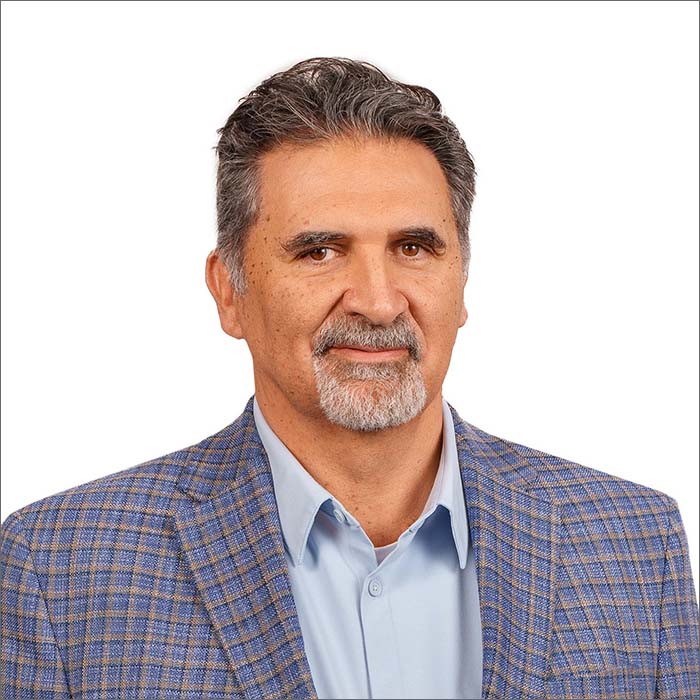
Bryan O’Toole
Courtesy of Bryan O’Toole

Paul Spradling
Courtesy of Paul Spradling
Bryan O’Toole (SVP of Business Development) and Paul Spradling (SVP, COO) at Burnham Holdings discuss how the executive agenda is being reshaped.
Q: As the U.S. enters 2026, what pressures do you think are most influencing C-suite decision-making around capital investment, risk management, and long-term competitiveness?
O’Toole: It’s the persistence of uncertainty. Last year, we hoped for stabilization, but the volatility hasn't stopped. This sentiment seemed to be the theme with many of the speakers who spoke at a boiler manufacturer’s conference that I attended recently. In this environment, leaders are naturally more cautious. We see projects that have been on the books for years still facing delays because executives are hesitant to commit capital without a clearer view of the horizon.
Q: How has the conversation around heating infrastructure evolved at the executive level from a cost center to a strategic asset over the past several years?
O’Toole: Equipment is simply more sophisticated now. It’s no longer just about BTU output; it’s about how that equipment integrates with the company's information systems. Most modern units talk to the cloud.
We’ve also seen a pendulum swing regarding electrification. Last year, the conversation moved sharply toward affordability. With energy costs rising, the highest levels of leadership are now focused on the total cost of ownership and operational reliability rather than just the initial purchase price.
Q: From an operations perspective, where are you seeing the most immediate value from predictive maintenance?
Spradling: The value is actually in the human element, specifically, the technician and contractor. Tools like our USB Connect allow for remote diagnostics and firmware updates. Instead of a technician spending significant time on trial-and-error, they can quickly diagnose on-site, or they can arrive at the site with the correct part or solution already in hand. We are saving time, which is our most precious resource. This assists in allowing skilled labor to be incredibly productive with their time.
Q: How does predictive maintenance change the way executives evaluate risk, particularly when it comes to unplanned shutdowns in mission-critical systems?
Spradling: For a hospital, data center or food processor, an unplanned shutdown isn't just a repair cost — it’s a reputational threat. We are moving from "turning data into knowledge" to using data to identify patterns in flame signals or motor cycles to predict a failure before it happens. We are also thinking about how AI can augment this process.
O’Toole: We’ve also addressed this with our rental boiler business. Even the best predictive maintenance can’t stop 100% of failures. By providing a "boiler room in a box" for immediate deployment, we ensure that a mission-critical failure doesn't become a catastrophe.
Q: What cultural or organizational hurdles must be overcome to successfully move from traditional maintenance practices to data driven AI supported models?
Spradling: It isn't just about one thing. There's software that is a critical part of our technology.
I would say that it’s a journey, not an event. So, when we look at our software tools, one of the key things we try to do is make it incredibly easy to use but powerful by providing plain English actionable data on the smartphone app, which gets back to empowering human judgment rather than just replacing it.
Q: So, looking ahead, how do you see predictive maintenance influencing facility budgeting and capital planning in 2026 and beyond?
Spradling: When you look at 2026 and beyond, maintenance is moving to a fixed strategic asset, versus just being something out there that's an expense. It's really moving to, “how can we have this maintenance process be part of strategic planning and part of our ecosystem to help the facility stay up or save costs?”
And when I look at that, predictive maintenance allows managers to forecast capital expenditures. You can get incredible accuracy there and value in that process.
Our USB connect tool, for example, does data logging. It’s intuitive and can perform a lot of different tasks on new and existing condensing boiler products. Through a smartphone app, you can easily access our controls dashboard and see your system’s operating details like the runtime hours, performance diagnostics and other updates.
When you think about preventive maintenance, it’s, “I do it once a year, whether it needs it or not.” Predictive maintenance takes the number of hours and runtime, and there might be a part that has a 10-year lifespan. So, the technician can get into the app and review hours and runtime by part, that’s critical real-time information that lets a technician know if they really need to replace a part now or sometime in the future.
Tools like this can also assist in preventing a surprise boiler replacement. Facility managers can use performance data to plan the replacement cycle two years out and align it back to their planning cycles in their budget. So, it's back to, it's a fixed strategic process and an investment.
Q: How are high-efficiency heating systems being positioned as both a compliance tool and a financial performance lever as investors?
O’Toole: We’ve seen a noticeable shift. While the corporate focus on ESG metrics has stabilized, the focus on operating costs has intensified. High-efficiency systems are now justified primarily through their financial performance lever.
Two or three years ago, stakeholders might have accepted a longer payback period for the "intangible" benefits of sustainability. Today, the math has changed. If an executive is going to approve a higher upfront cost, they require a clear, short-term ROI driven by reduced fuel consumption and lower operating expenses.
Q: Are you seeing a shift in how companies justify higher upfront cost for higher efficiency systems in light of long-term volatility and sustainability mandates?
O’Toole: They definitely are. And I think where even as recently as two years ago, but let's say maybe two to three years ago, people were willing to spend a little bit more upfront for some of these intangible benefits.
I think that's changed a bit, and they're not really willing to do that. If they're going to spend money upfront, they need to see that payback, right? They need to see that this is going to use less fuel. That fuel is going to cost me less. I'm going to get my payback in a shorter window than they were willing to do when maybe they were trying to satisfy an ESG requirement.
And so, there were intangible benefits, if you will, that they're not taken into effect as much, at least in the last 18 months, I think we've seen more of that.
Q: How do measurable efficiency gains translate into stronger ESG reporting, and ultimately greater confidence from investors and stakeholders?
O’Toole: I think for the companies that are still focused on that ESG reporting, they're using less fuel.
And if you're moving to reduce your carbon footprint, a more efficient product can allow you to do that more quickly. I think that's the most direct way they do that. We sell one of our newest products, the Alta boiler, which is a high-efficiency residential boiler that probably doesn't come into play from an ESG reporting standpoint, because most individuals aren't really thinking about their ESG report or their carbon footprint. But we certainly have customers who are focused on where the environment is and it’s very important to them.
A higher efficiency product allows them to shrink their carbon footprint and make the impact that they believe they're making on the environment. And I think that's important.
Q: Supply chain disruptions remain a big concern for the U.S. How has domestic manufacturing become a strategic differentiator rather than a sourcing decision?
Spradling: Absolutely. We have 600,000 plus square feet in Lancaster, PA, dedicated to manufacturing and warehousing, putting us within a day’s drive of 80% of our residential market. When you compare that to waiting months for a product to cross the ocean, the math changes. It’s not just about the lowest unit cost anymore; product availability, short lead times and delivery to the customer are major advantages to the customer.
O’Toole: We’ve seen European competitors pull out of the North American market because tariffs made them uncompetitive. Customers are starting to prioritize the stability of having a manufacturer in their own backyard.
Another critical piece to this is our strategic alliances – we keep a huge amount of inventory here, products that are ready to ship. That manufacturing coupled with the inventory gives us the ability to satisfy customers in an incredibly efficient and quick way. If we have an emergency or a no-heat situation, we can literally get products out the same day by getting it on a truck and delivered to wherever it needs to go within hours.
Q: From a risk management standpoint, how are executives weighing supply chain resilience alongside cost? And 2026 procurement decisions.
Spradling: You look at the math; it’s really changed in some of those decisions. A lot of times quality coupled with cost unit has been part of the equation, and that can win the procurement bid for something we might be building. Looking at quality, cost and availability is key, with quality and availability being a big part of the math. When you look at a supply chain that has a lot of roots right here in North America, there is an incredible amount of value with shorter lead times and availability. Looking at the math, it increasingly favors North America.
Also, especially post-COVID and the supply chain, we've looked at trying to double up on suppliers for the same product and usually when we do that, we try to transition to a purely North American manufacturer.
Ultimately, we turn all that around and we offer these intangibles to our customers in having the product here and having it available to ship.
Q: Do you anticipate domestic manufacturing becoming a stronger factor in ESG and resiliency reporting over the next several years?
Spradling: Yes. If you source a heavy part from across the globe, you’re looking at five or six weeks of carbon emissions on the water. We have a foundry in Ohio; from their door to our factory in Lancaster is five hours and 40 minutes. Socially, we support local economies and ensure transparent, auditable labor practices, and can help reduce carbon footprint.
Q: So, if you had to identify one capability or mindset that will separate successful manufacturers from the rest in 2026, what do you think it would be?
O’Toole: Agility and adaptability. Customers trust reliable products, but they are now demanding smarter products. You have to be able to pivot your strategy based on data, not just intuition.
Q: What advice would you give to executive teams that are still on the fence about investing in advanced maintenance technologies, high-efficiency systems, or domestic manufacturing?
Spradling: You have to get off the fence and move toward the marriage of machines and technology. Being proactive here will pay off, as this is where the future is headed.
Q: How does Burnham Holdings see its role evolving as a partner to manufacturers navigating these converging challenges?
O’Toole: Our role is evolving from providing a product to providing a solution. Whether it’s a standard boiler or a full-scale rental system, the key is listening to what the partner actually needs to stay operational in a volatile world.
Really, it's about listening to what your customers want, and providing them a solution to what they want, rather than just this is what we have, and convince them that what we have is the answer.
It's really understanding what they need and then providing. One of the things that we've been doing more of is selling people basically a boiler room in a box, and then, they don't have room in their building for it, so they might put it outside their building and attach it to their boiler room. But again, it provides everything they need in one place.
Spradling: I think it's right back to, we can take care of the customer with technology, tools, and robust quality products. We have the ability that if, for whatever reason customers need help we can roll a piece of equipment right up to their facility and take care of them or we have inventory that we can quickly ship. We’ve really done a great job focusing on both ends of the spectrum to take care of the customer.
We have an incredible organization, and from order to ship we look to focus on the customer. We have a significant amount of footprint here in Lancaster, PA with manufacturing that’s located close to our customer base and we are proud of our heritage as an American manufacturer.
Every day we try to support all our customers by leveraging everything we have to offer.
Looking for a reprint of this article?
From high-res PDFs to custom plaques, order your copy today!