Heating Perceptions | Scott Secor
Taking photos at jobsites
Lessons learned from decades behind the lens, and why good photos matter as much as good workmanship.
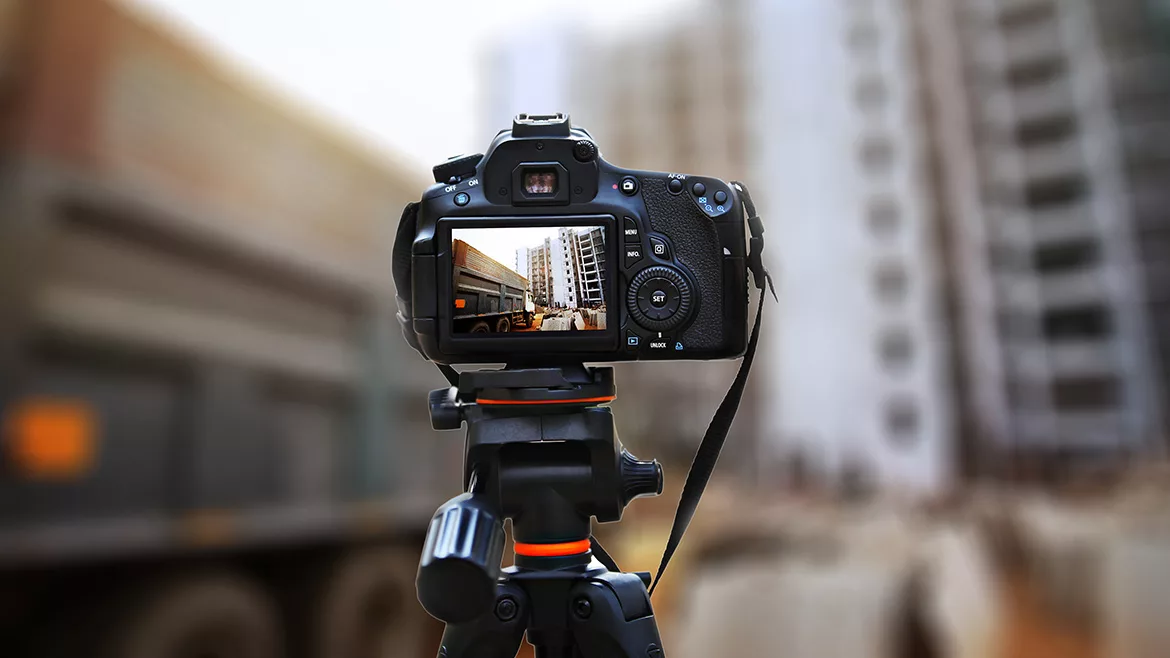
I have sort of been into photography since I was a kid. When I was nine years old, my father had a SLR film camera that he would often use during family vacations and occasionally on the holidays. Dad purchased a Kodak film camera with flash cubes for Mom. This camera was used much more often. Unfortunately, Mom’s camera stopped working and sat on the bookshelf for months. I asked my mother what she was going to do with her camera, she mentioned she should probably just throw it out. I asked if I could have it if I could fix it. Mom hesitated, and then gave me the go-ahead.
That night, I decided to pull a few tiny screws from the back of the camera. I did not realize there were many tiny springs inside that could shoot across the room. As I dug deeper, I realized I was in way over my head. After about fifteen minutes, I realized why Dad (aka the fixer of all things mechanical) did not attempt the repairs. I gave up on the camera repair and added a camera to the top of my Christmas list.
Much to my surprise, Santa gave me a new Kodak camera for Christmas with two rolls of 110 film. I quickly realized that at nine years old, I could not afford to purchase new rolls of film. I also quickly realized that I could not afford to have the film developed. Getting to the store to purchase film and getting to Fotomat store to have the film developed was nearly impossible on my Schwinn Stingray bicycle. After wasting the two rolls of film on taking photos around the house, the camera sat on my shelf for years collecting dust.
When I got married, my wife and I purchased an SLR camera. We took many photos during the holidays, trips, and of course when our son and daughter were born a few years later. I think the owner of the camera store in town put his kids through college with the money we spent on film and the cost of having the film developed. Fortunately, a new Costco opened and began offering huge discounts on film and developing it. Somewhere buried in our house are thousands of printed photos from the 1990’s.
In 1996, my parents decided to give me and each of my brothers a new digital camera for Christmas. At first glance, I thought to myself, what are they thinking? At the time I already had a good SLR film camera with a few lenses, flash, tripod, camera bag, etc. I thought this new digital camera fad would fade and we would never use the new camera. Within about a month, I realized not having to drop off film and having it developed was a blessing. Not paying for film and developing costs also saved us a lot of money. The old film SLR is still sitting in the camera bag collecting dust to this day. I just can’t let it go.
After getting used to the digital camera, I realized it could work as a tool on the jobsites. I learned that the digital camera was able to collect details I would sometimes miss when I was doing site visit. The photos might remind me, were there two zones or three zones on that hot water boiler? Did I need a “low-boy” gas water heater or a regular “tall-boy?” Was there one steam main or two? Were the stairs robust enough to take the boiler out in one piece or did we have to break it down into sections? Were there isolation valves near the boiler, and if so, did they look like they would stop the flow of water? I think you get the picture.
In the late nineties, we started using Motorola Nextel cell phones for work. I do not recall if these “military grade” phones had cameras or not. Early in the new century, cell phone cameras got popular, and now everyone had a camera with them. The cell phone camera became a very valuable tool. Employees could take photos of the job and send them to me while I was at another location. We could take a photo of a funky circulator pump, with all the details and markings, then show it to our wholesaler or the rep and they could identify it for us.
The cell phone camera became a very valuable tool. Employees could take photos of the job and send them to me while I was at another location. We could take a photo of a funky circulator pump, with all the details and markings, then show it to our wholesaler or the rep and they could identify it for us.
I do not consider myself a great photographer, more like an average photographer that enjoys taking photos as a hobby. I have learned a lot since I was a kid, but I still have a lot to learn. I have tons of modern camera gear, but find myself using my cell phone most of time on jobs as it is always with me. I am reminded of something our wedding photographer told me, and I never forgot it. “It’s not the camera that takes great photos, it the person behind the camera.” I suppose this holds true to most tools (paint brushes, hammers, airplanes, combustion analyzers, race cars, etc.).
A few photography tips for those in our industry:
- Try to keep your camera level. This gives the viewer perspective and scale.
- Stand back and take a few photos from a wide angle. You can always zoom in later, but you would have to revisit the site if you missed something past the edge of your photo.
- Take a few close-up photos of the details, like the old boiler rating labels, the circulator pump details such as the electric motor and the tag on the bearing assembly.
- Learn how to use the flash and use it. Most of the boiler rooms we visit are poorly lit. If you force the camera flash (I think the flash is the built in flashlight) you might capture the details that would have been missing.
- Keep in mind, it is easier to erase photos you do not need as compared to not snapping one more photo that you desperately needed.
- Try to watch the background when taking photos. This is not all that important with photos of boilers, but it can certainly make or break a family photo. In simple terms, try to avoid cluttered backgrounds.
- Give yourself a few minutes to take jobsite photos. Your results will be much better. Taking a one photo while walking up the basement stairs will probably not be sharp and will likely not show the details you were hoping to capture.
- I typically take about a dozen photos of residential jobs. For commercial jobs, I may take up to three dozen if necessary. Remember, it only takes a few seconds to erase an image. It might require another trip to the site if you miss something.
Looking for a reprint of this article?
From high-res PDFs to custom plaques, order your copy today!