Reducing Legionella risk through comprehensive water management
ASA Platinum Supplier Spotlight: Watts
As plumbing professionals and facility managers know, few challenges in building water safety are as persistent a risk as Legionella.
Found naturally in freshwater environments, Legionella bacteria can multiply rapidly in manmade systems such as those in hospitals, nursing homes, hotels, and office complexes. When inhaled through aerosolized water droplets, the bacteria can cause Legionnaires’ disease, a severe form of pneumonia that disproportionately impacts older adults and immunocompromised individuals.
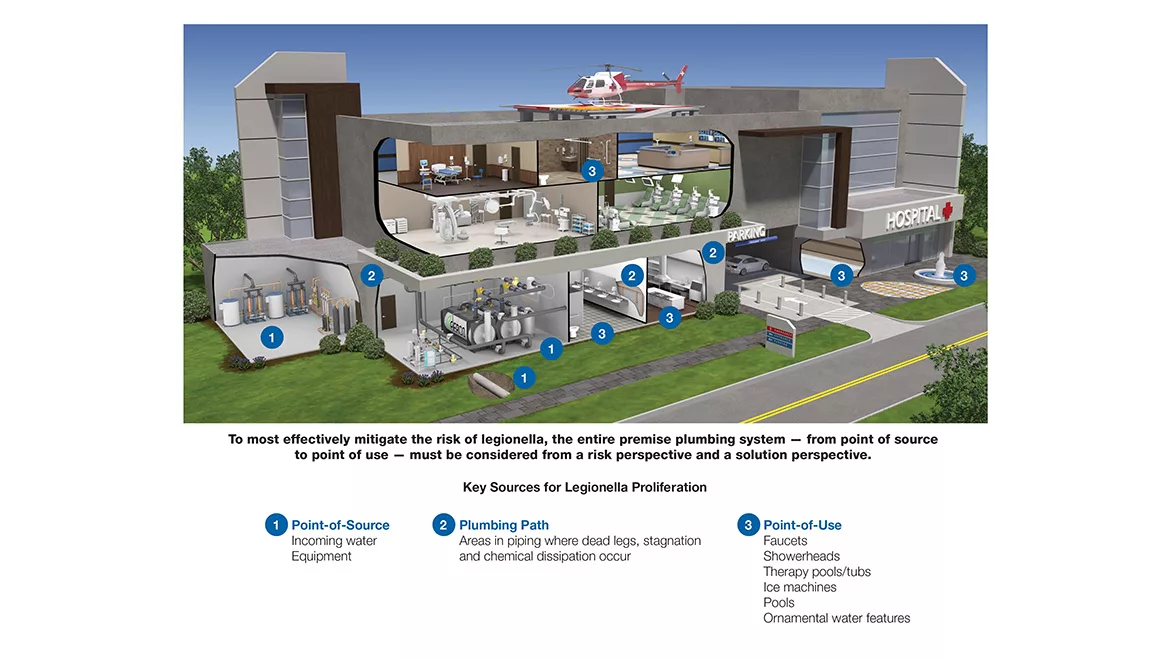
While the risk of Legionella exists across many types of buildings, healthcare and long-term care facilities are particularly vulnerable. These buildings often have large, complex plumbing systems with extensive pipe networks, variable water usage, and numerous fixtures, all of which can create conditions conducive to bacterial growth if not properly managed. As a result, even well-designed and well-maintained systems require ongoing attention to minimize risk.
Understanding the conditions for growth
Legionella bacteria thrive in stagnant or slow-moving water, especially at temperatures between 77°F and 113°F. Within plumbing systems, these bacteria find refuge in biofilm, a slimy layer that adheres to pipe walls and provides nutrients and insulation against disinfectants and heat. Over time, biofilm can form throughout domestic water systems, creating ideal conditions for bacteria to multiply and spread.
Routine testing and proactive monitoring are therefore critical components of any facility’s water management plan, and are especially important in environments such as healthcare, where patients may already have compromised immune systems.
A collaborative and layered approach
Preventing the spread of Legionella requires more than isolated interventions, and requires a systemic strategy that combines smart design, consistent monitoring, and human vigilance. The most effective strategy is a multibarrier approach, in which several layers of protection work together to maintain water quality and control temperature, flow and disinfection.
This approach aligns with the principles promoted by the American Supply Association (ASA), which encourages its members to take an active role in promoting water safety through education, innovation, and collaboration across the plumbing and mechanical industries.
Through its advocacy and professional development initiatives, ASA helps ensure that distributors, manufacturers, and reps alike remain informed about evolving safety standards and technologies that support healthy building operations. ASA’s industry partners, including Watts, support this mission by helping the industry move toward safer, more sustainable, and better-managed water systems through education and innovation.
Building the foundation for prevention
An effective water management program begins with understanding system vulnerabilities and implementing control measures at key points, from the building’s water entry to distribution and use. Continuous circulation and proper temperature control help prevent stagnation and reduce bacterial growth, while regular thermal disinfection and monitoring of disinfectant levels further enhance protection.
Ensuring that mechanical systems such as storage tanks and recirculation loops are functioning properly, and conducting routine sampling and testing, are essential steps in verifying program effectiveness.
Today’s smart and connected technologies make these efforts more manageable and precise. Digital mixing should serve as the backbone and central nervous system of a coordinated strategy to prevent Legionella growth in commercial facilities. It helps maintain consistent water movement, stabilize temperature, and reduce the potential for stagnation.
By integrating with building management systems, these intelligent platforms provide real-time monitoring and control, giving facility teams actionable insights to identify issues early, streamline maintenance, and sustain safe, efficient water operations.
Shared responsibility in water safety
Protecting building occupants from Legionella is a shared responsibility across the industry. Organizations like ASA play a critical role in fostering collaboration to promote awareness and standardization in water management practices.
By taking a proactive, multibarrier approach and embracing industry collaboration, we can significantly reduce the risk of Legionella and safeguard the health of those who depend on safe, clean water every day.
Looking for a reprint of this article?
From high-res PDFs to custom plaques, order your copy today!