Guest Editorial | Jay Egg
Greenwashing and geothermal HVAC technologies
Stay vigilant and check facts.

All images courtesy of Egg Geo
Greenwashing (coined from "whitewashing") is a form of advertising or marketing spin that deceptively uses green PR and green marketing to persuade the public that an organization's products, goals or policies are environmentally friendly. Greenwashing occurs when companies spend more resources on looking green than on practicing environmentally sound practices.
As an example, a company that promoted geothermal exchange in 2010 had a greenwashed design. They claimed their geothermal heat pump design was eligible for the impressive 30% federal tax credits. When the industry researched the design, it utilized an air-source heat pump that buried the refrigerant line in shallow earth for a minimal length of about 20 feet after leaving the air-source condenser unit outside the building. Typically, geothermal heat pumps need more buried pipe length than this (20 feet) to handle the exchange needs of a system. This was an example greenwashing a geothermal installation, because it met one characteristic of a geothermal exchange system, while missing the intent. “Deceptive” may be a better description. As a result, geothermal systems regulations require better documentation of the earth exchange capacity of a geothermal HVAC system.

As a result of greenwashing, consumers become desensitized to claims. TerraChoice, an environmental consulting division of UL, described "seven sins of greenwashing" in 2007 to "help consumers identify products that made misleading environmental claims"
- Hidden trade-off: a claim that a product is "green" based on an unreasonably narrow set of attributes without attention to other critical environmental issues;
- No proof: a claim that cannot be substantiated by easily accessible information or a reliable third-party certification;
- Vagueness: a poorly defined or broad claim that the consumer will likely misunderstand its meaning. “All-natural,” for example, is not necessarily “green;”
- Worshipping false labels: a claim that, through words or images, gives the impression of a third-party endorsement where none exists;
- Irrelevance: a claim that may be truthful but unimportant or unhelpful to consumers seeking environmentally preferable products;
- Lesser of two evils": a claim that may be true within the product category, but risks distracting consumers from the more significant environmental impact of the category; and
- Fibbing: a claim that is simply false.
The organization noted that by 2010, approximately 95% of consumer products in the U.S. claiming to be green were discovered to commit at least one of these sins. Now consider the air-source/geothermal heat pump in the second paragraph and see how many of the seven sins they committed. We count three or four of them.
RELATED ARTICLES
The term greenwashing was coined by New York environmentalist Jay Westerveld in a 1986 essay about the hotel industry's practice of placing notices in bedrooms promoting the reuse of towels to “save the environment.” He noted that these institutions often made little or no effort toward reducing energy waste, although towel reuse saved them laundry costs. He concluded that the fundamental objective was most frequently increased profit. He labeled this and other profitable-but-ineffective “environmentally conscientious” acts as “greenwashing.”
A survey by LendingTree found that 55% of Americans are willing to spend more money on products they perceive to be more sustainable and eco-friendly.
As we move into the mid-2020s, we believe that we are a much better-educated society. It would be safe to say that our ability to sniff out phishing emails and scams has created a critically thinking society. Verification of claims is more common now than ever before.
Recently, while working on a district geothermal energy network for a metropolitan downtown community, the apartment cooperative said that the local steam distribution company told them that they could decarbonize their community utilizing their high-energy steam network. When we were asked to consider this as part of the decarbonization isolation strategies that we were tasked to design for the community, we asked for a meeting with the steam distribution utility to see if we would be able to confirm whether the steam network was going to be a good fit to help decarbonize the community.
The creation of steam typically comes from the combustion of fossil fuels. There are now high-temperature heat pumps that can create low-energy steam, but the lift to high-energy steam still must be accomplished with other heat sources that might include electric resistance or combustion heating. The only way to get a reasonable comparative analysis to see if there is any truth to this decarbonized steam claim was to have an interview with the energy company and the cooperative together.
Before talking about that interview, it's important to understand that the rating of energy processes is done by calculating the coefficient of performance (COP). It is one of the easiest algebraic equations one can use. It is simply energy delivered divided by energy consumed. (COP = kW delivered / kW consumed).
As the delivery temperature produced for processes increases, the coefficient of performance is reduced. For example, a heat pump can deliver 100°F from a 50° source at a COP of 5.0. If we increase the delivery temperature to 140°, 180°, 250° or higher, the COP will eventually be reduced to 1.0 or less. Those are simply the facts.
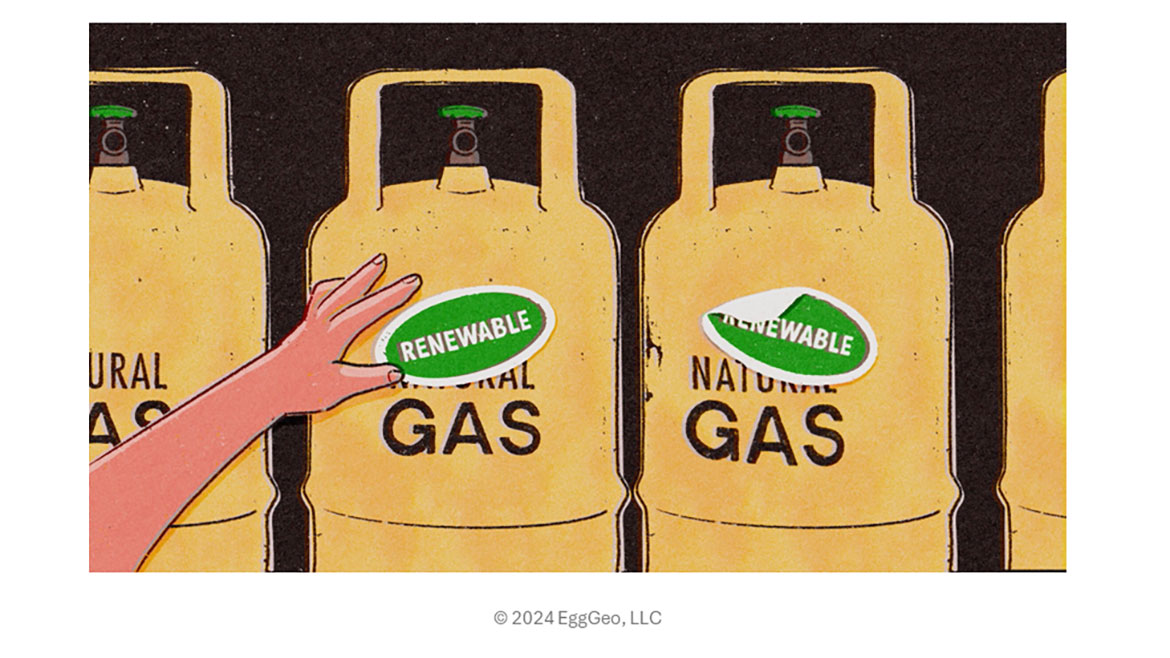
Some of the methods that are acceptable for operating at such a low coefficient of performance include utilization of waste heat from other necessary operations. The smoke and mirrors part of this last solution is that, many times, the combined heat and power processes are codependent, an often-flawed premise. The scenario for this would be the electric utility stating that burning natural gas to create electricity was providing necessary waste heat to create steam for their steam network. Meanwhile, the steam delivery division of the company states that they are simply a byproduct of creating electricity necessary for the local grid. Do you see the circular illusion? It may be smoke and mirrors.
It requires a level head and the willingness to rise above the simple return on investment (ROI) and look at the big picture to eliminate greenwashing from the picture.
Another acceptable source may be the burning of fossil fuels that have zero emissions, such as hydrogen. If hydrogen is created from green energy, it may be acceptable. However, the codependency on processes is a difficult landscape to navigate and has plenty of potential to be flawed or deceptive, just as in the last example with combined heat and power (CHP).
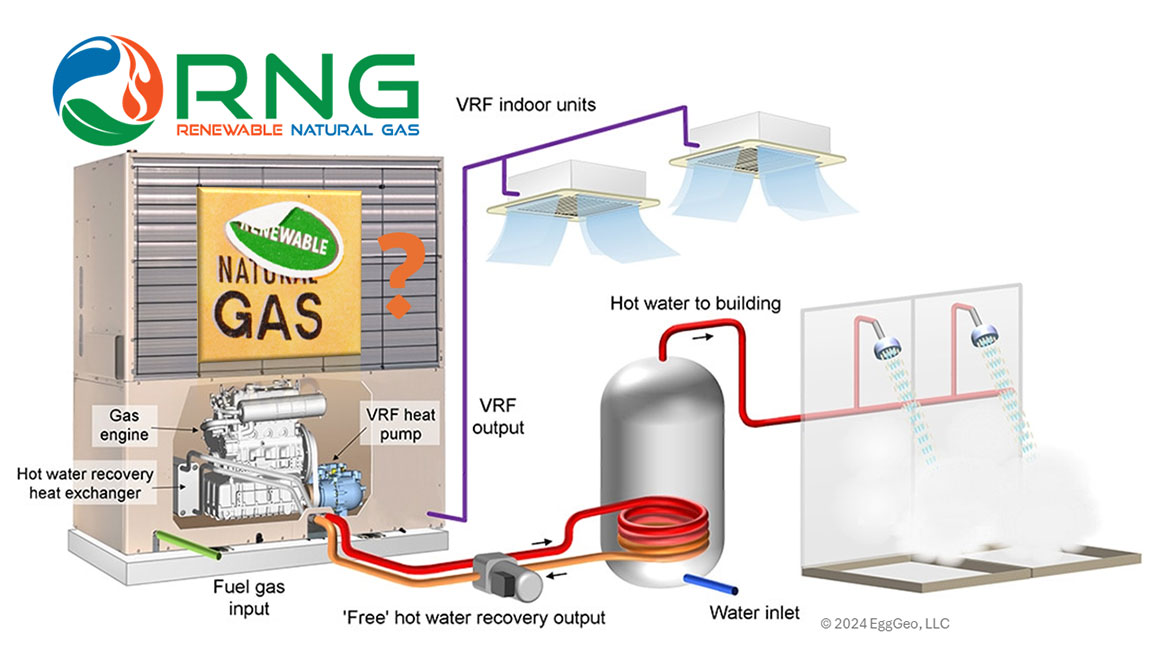
It requires a level head and the willingness to rise above the simple return on investment (ROI) and look at the big picture to eliminate greenwashing from the picture.
In his book, “The Big Pivot,” Andrew Winston states on page 168, “…companies set absolute hurdle rates with inputs and outputs measured solely in actual cash flows. In the process, these organizations lose out on making strategic investments that might miss the hurdle rate but create much more value than just what is immediately measured in cash.” He goes on to say in the next paragraph, “… Installing your own renewable energy systems does pay off in traditional financial terms, but it may take longer than a typical company's two-year hurdle rate.”
We must have a longer view of our investments in green tech.
We are getting better as a society in our efforts to overcome the deceptiveness of greenwashing in our communities and technologies. Stay vigilant, and check facts. Together, we can use critical thinking and common sense to keep geothermal technologies pure.
Looking for a reprint of this article?
From high-res PDFs to custom plaques, order your copy today!