search
cart
facebook instagram twitter linkedin youtube
  • Sign In
  • Create Account
  • Sign Out
  • My Account
  • NEWS
  • PRODUCTS
    • FEATURED PRODUCTS
  • CONTRACTORS
    • BATH & KITCHEN PRO
    • BUSINESS MANAGEMENT
    • HIGH EFFICIENCY HOMES
    • TECHNOLOGY
    • WATER TREATMENT
    • PMC COLUMNS
      • Dave Yates: Contractor’s Corner
      • John Siegenthaler: Hydronics Workshop
      • Kenny Chapman: The Blue Collar Coach
      • Matt Michel: Service Plumbing Pros
      • Scott Secor: Heating Perceptions
  • ENGINEERS
    • CONTINUING EDUCATION
    • DECARBONIZATION | ELECTRIFICATION
    • FIRE PROTECTION
    • GEOTHERMAL | SOLAR THERMAL
    • PIPING | PLUMBING | PVF
    • PME COLUMNS
      • Christoph Lohr: Strategic Plumbing Insights
      • David Dexter: Plumbing Talking Points
      • James Dipping: Engineer Viewpoints
      • John Seigenthaler: Renewable Heating Design
      • Lowell Manalo: Plumbing Essentials
      • Misty Guard: Guard on Compliance
  • RADIANT & HYDRONICS
    • RADIANT COMFORT REPORT
    • THE GLITCH & THE FIX
  • INSIGHTS
    • CODES
    • GREEN PLUMBING & MECHANICAL
    • PROJECT PROFILES
    • COLUMNS
      • Codes Corner
      • Natalie Forster: Editorial Opinion
      • Guest Editorial
  • MEDIA
    • EBOOKS
    • PODCASTS
    • VIDEOS
    • WEBINARS
  • RESOURCES
    • INDUSTRY CALENDAR
    • DIRECTORIES
    • PM BOOKSTORE
    • CE CENTER
    • MARKET RESEARCH
    • CLASSIFIEDS
  • EMAGAZINE
    • EMAGAZINE
    • ARCHIVE ISSUES
    • CONTACT
    • ADVERTISE
    • PME EMAGAZINE ARCHIVES
  • SIGN UP!
Plumbing NewsPlumbing & Mechanical ContractorRadiant & HydronicsRadiant Comfort Report

New standard addresses water quality for closed-loop hydronic systems

But it’s just water, isn’t it?
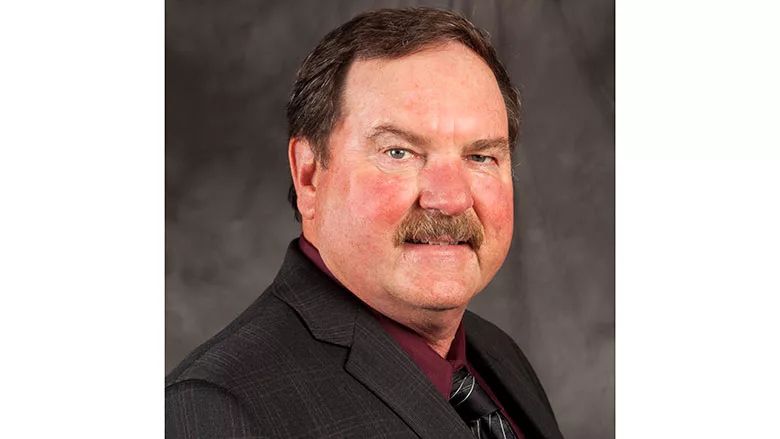
By Mark Eatherton
Mark Eatherton

Mark Eatherton
President and owner of Intelligent Radiant Solutions and former director of the Radiant Professionals Alliance

November 7, 2022

During the late, great Les Nelson’s last AHR conference in Chicago back in 2018, he asked me what our hydronics industry needed the most. He was on a mission to increase the visibility of the Radiant Professionals Alliance and give the industry something that it could really use. At the time, I was the service manager for a large hydronic concern here in Colorado. We had just replaced a bunch of mechanical equipment on a large complex that had failed within its warranty coverage period. The equipment manufacturer had required a copy of the water quality analysis report for the property. They wanted to see the pH, total dissolved solids, conductivity, oxygen content, total suspended solids and concentration of chlorides.

Fortunately, when this system was originally sold, it included a comprehensive water treatment program utilizing some chemicals that ensured we were in compliance with their companies’ water quality standards. Prior to this time, closed-loop system water quality was not on top of mind as it pertained to closed-loop hydronic systems. The general attitude of hydronic contractors was, “It’s just water, isn’t it?”

For hundreds of years, the equipment that was employed for hydronic systems had very thick walls. The boilers and the heat emitters were made of thick cast iron. It was accepted that some parent material would be lost to oxidation without compromising the heat exchangers integrity. In fact, it was thought that if the water was black, it was considered “Plumbers’ Black Gold” and was an indication that the residual oxygen had been consumed through the process of oxidation and the water was considered “dead.” As it pertained to piping and distribution systems, most of these older systems also utilized metal pipes (steel, copper, cast iron fittings) and the systems were not subject to oxygen diffusion through the walls of the tubing or pipes used to transport these fluids through the systems. The times, they are a-changin’.


In the end, the standard can be adopted by individual contractors looking to enhance their position within the industry. The standard was dedicated to the memory of Les Nelson, a tireless warrior for the hydronics industry.


Today’s systems are comprised of various metals, including different classifications of stainless steel, steel, aluminum, copper, cast iron and a significant amount of plastic tubing, which allows oxygen to diffuse through the walls of the tubing. So, with all of this in mind, I told Les that our industry badly needed a water quality standard for closed-loop hydronic systems. He said he’d begin the process of filing the necessary paperwork to get this initial concept under development for a recognized national standard. Unfortunately, Les passed away before we were able to assemble the necessary brain power to construct the standard. But it did not end there. We moved the effort forward with the support and help of the good folks at IAPMO.

Participants were solicited, and a large group of affected industries was well represented from throughout of the industry including equipment manufacturers, tubing manufacturers, chemical manufacturers, system designer/engineers, equipment manufacturer representatives, labor unions and installing contractors. All told, the initial solicitation ended up with 23 people representing all facets of our industry from both North American and European concerns. Europe is many years ahead of North America as it pertains to having an actual standard. In fact, we had access to numerous standards from which we were able to extract portions of the new standard. We met numerous times between August 2020 and August 2021 and assembled this standard, known as American National Standards Institute/IAPMO H1001.1, Standard for Quality of Heat Transfer Fluids Used in Hydronics Systems.

After many hours of meeting, the final standard included both a chemical and non-chemical treatment program. The process of developing this standard included a public review and comment period to give industry peers the opportunity to review the standard and to make public comments as it pertained to the standard. After this rigorous process was completed, the standard was accepted and the necessary paperwork put in place to make it an ANSI/IAPMO standard. It is the hope of the committee that this standard will be adopted by jurisdictions having authority to ensure the standard is put in place and provide guidance for contractors who are responsible for designing, installing and maintaining these systems, and provide warranty protection to the consumer to ensure that their systems warranty is kept intact.

In the end, the standard can be adopted by individual contractors looking to enhance their position within the industry. The standard was dedicated to the memory of Les Nelson, a tireless warrior for the hydronics industry.

For more information or to purchase a copy of the standard, visit https://iapmomembership.org/store/iapmo-ansi-h1001-1-2021/1142/.

Thank you to all of the participants and IAPMO staff who helped to produce this very comprehensive standard. And thank you to Les Nelson for having the foresight to help further the hydronics industry.

KEYWORDS: codes and standards hydronics systems IAPMO Radiant Professionals Alliance (RPA) water quality

Share This Story

Looking for a reprint of this article?
From high-res PDFs to custom plaques, order your copy today!

Eatherton

Mark Eatherton is the former director of the Radiant Professionals Alliance and still serves as the chairman of its Technical Committee. He is currently employed by Advanced Hydronics in Denver. He can be reached at markeatherton@mac.com.

Recommended Content

JOIN TODAY
to unlock your recommendations.

Already have an account? Sign In

  • 2025 Next Gen ALL-STARS hero 1440

    2025 Next Gen All Stars: Top 20 Under 40 Plumbing Professionals

    This year’s group of NextGen All-Stars is full of young...
    Plumbing & Mechanical Contractor
    By: Kristen R. Bayles
  • Worker using the Milwaukee Tool SWITCH PACK drain cleaner

    Pipeline profits: Drain cleaning, pipe inspection create opportunities

    Drain cleaning and inspection services offer lucrative...
    Green Plumbing and Mechanical
    By: Nicole Krawcke
  • Uponor employee, Arturo Moreno

    The reinvestment in American manufacturing and training

    Plumbing & Mechanical Chief Editor Nicole Krawcke and...
    Plumbing News
    By: Nicole Krawcke and Natalie Forster
Manage My Account
  • eNewsletters
  • Online Registration
  • Subscription Customer Service
  • eMagazine
  • Manage My Preferences

More Videos

Popular Stories

Hot water pipes

Campus shutdown at Oakland University exposes hidden risks of aging hot-water infrastructure

Floor heating manifold cabinet with flowmeter and PEX pipe.

Elegance extended: How to use the homerun system of connecting heat emitters

Industrial pressure gauge on a tank.

From cutting edge to classic: How to modernize outdated pneumatic control systems

Poll

Will business be up or down in 2025?

Do you anticipate business in 2025 to be up or down in comparison to 2024?
View Results Poll Archive

Products

The Water Came To A Stop

The Water Came To A Stop

See More Products
eBook | 2025 Radiant & Hydronics All Stars

Related Articles

  • Axiom Puropal portable water dimineralizer cartridge

    Axiom’s water demineralizer cartridges for hydronic systems

    See More
  • Water quality makes — and breaks —hydronic systems

    Water quality makes and breaks hydronic systems

    See More
  • Water Faucet

    New guide addresses stagnant water in buildings with low occupancy

    See More

Related Products

See More Products
  • Pumping Away and other really cool piping options for hydronic systems

  • QMref Standard_COVER.jpg

    QMref - Quality Maintenance of Commercial Refrigeration Systems

  • Residential_Hydronic_Heatin.gif

    Residential Hydronic Heating Systems Course

See More Products

Events

View AllSubmit An Event
  • September 11, 2025

    Optimized Plumbing Design for the 21st Century: Smarter Systems for Health, Affordability, and Sustainability

    On Demand The session highlights how modernized plumbing design can accelerate hot water delivery, reduce stagnation, and mitigate health risks, while supporting affordability, energy efficiency, and sustainability.  Earn: 0.1 IAPMO CEU; 0.1 ASPE CEU; 0.1 ICC CEU; 1 PDH; 1 AIA LU/HSW
  • August 26, 2014

    Free Webinar: Low Temperature Heat Emitter Options in Hydronic Systems

    With proper design, you can create systems that require supply water temperatures no higher than 120° F under design load conditions.
View AllSubmit An Event
×

Keep your content unclogged with our newsletters!

Stay in the know on the latest plumbing & piping industry trends.

JOIN TODAY!
  • RESOURCES
    • Advertise
    • Contact Us
    • Directories
    • Store
    • Want More
    • Supply House Times
  • SIGN UP TODAY
    • Create Account
    • eMagazine
    • eNewsletter
    • Customer Service
    • Manage Preferences
  • SERVICES
    • Marketing Services
    • Reprints
    • Market Research
    • List Rental
    • Survey/Respondent Access
  • STAY CONNECTED
    • LinkedIn
    • Facebook
    • Instagram
    • YouTube
    • X (Twitter)
  • PRIVACY
    • PRIVACY POLICY
    • TERMS & CONDITIONS
    • DO NOT SELL MY PERSONAL INFORMATION
    • PRIVACY REQUEST
    • ACCESSIBILITY

Copyright ©2025. All Rights Reserved BNP Media.

Design, CMS, Hosting & Web Development :: ePublishing