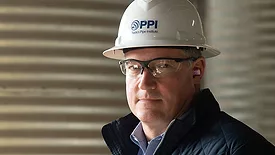
Report outlines how a $6 billion infrastructure challenge can become a pathway to widespread economic growth if funding is deployed intentionally.
The report warns that without intentional workforce training strategies, the people and places with the greatest exposure to lead service lines are unlikely to benefit from the employment opportunities presented by this massive infrastructure investment.
The program features a variety of Sloan’s carbon neutral products.
Sloan calculates each product’s carbon footprint with Environmental Product Declarations (EPDs), then offsets these emissions through partnerships with Climate Vault.
In Southern California, rate increases ranging from 20 to 60 percent have hit customers depending on their district. Managers are looking for every opportunity to cut consumption and cut costs.
A February 2026 survey by Waterless Co., Inc. asked building managers across Southern California and Arizona why they chose no-flush urinals for their facilities. The key reasons were saving water and cutting costs.
The webinar will explore how flow intelligence helps facilities teams improve both risk management and sustainability performance for smarter and safer buildings.
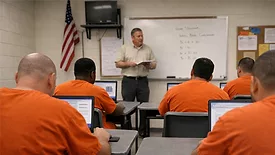
This initiative comes as part of a wider “TOWER” program (Transitioning Opportunities for Work, Education and Reality), a career-help initiative organized by the Hamilton County Indiana Jail.
Adapted from PHCC Academy’s online curriculum, the HVAC and plumbing pre-apprenticeship courses could help address the state’s technician shortage where possible by equipping inmates with the necessary skills before they return to the community.
Concern that New York State's $250 million lead water line replacement program will not be open to all materials is growing.
According to the PPI, while New York State’s fund of $250 million for water infrastructure improvements should be applauded, not allowing an open procurement process would diminish results and not provide the most cost-effective solution.

 RSS
RSS