Watts to Host Backflow Educational Webinar in Recognition of National Backflow Prevention Day
Watts will host a live webinar, “Backflow 101: Understanding Risk, Protection, and Prevention,” on Friday, August 14 at 12 p.m. ET
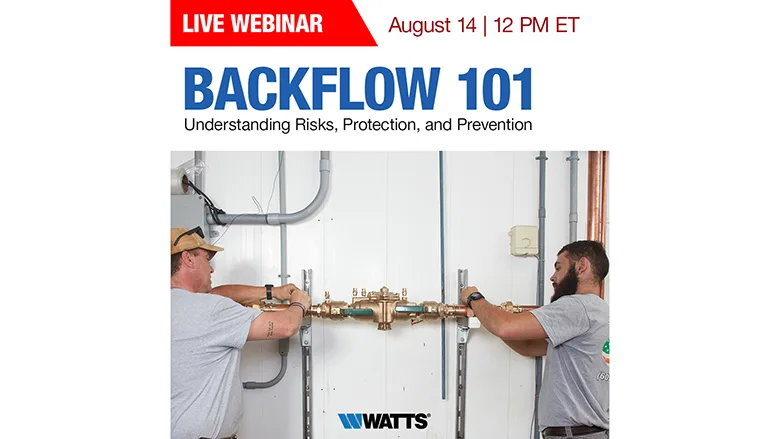
Watts will host a live webinar, “Backflow 101: Understanding Risk, Protection, and Prevention,” on Friday, August 14 at 12 p.m. ET in recognition of National Backflow Prevention Day. The webinar will help water quality professionals, contractors, facility managers, and other industry stakeholders better understand the risks associated with backflow and the critical role backflow prevention plays in protecting public health and potable water systems.
During the webinar, industry experts will discuss how contamination risks threaten potable water systems, explain the mechanisms behind cross-connections, backsiphonage, and backpressure, and review common backflow prevention assemblies and their applications. Attendees will also learn about testing and maintenance best practices that help prevent system failures, maintain compliance, and ensure long-term protection of water infrastructure.
The webinar is intended for backflow testers, cross-connection control professionals, public works officials, water utility personnel, wholesalers, contractors, maintenance teams, and facility managers who are responsible for maintaining safe and reliable water systems.
Participants who attend the live event will earn 1.0 Professional Development Hour (PDH) credit and will also be entered for a chance to win a Blackstone Griddle during the live webinar giveaway.
Registration is open now on Watts' website.
Frequently Asked Questions
What is backflow and why is it dangerous?
Backflow occurs when water flows in the opposite direction from its intended path, potentially allowing contaminants, chemicals, or pollutants to enter a potable water system. If left unprotected, backflow can pose serious risks to water quality and public health.
What causes backflow in a water system?
Backflow is typically caused by cross-connections, backsiphonage, or backpressure. These conditions can occur when changes in pressure allow contaminated water to flow into a clean water supply.
What are common types of backflow prevention devices?
Common backflow prevention assemblies are designed to stop contaminated water from reversing direction and entering potable water systems. Different assemblies are used depending on the level of hazard and application requirements.
Why are backflow prevention testing and maintenance important?
Regular testing and maintenance help ensure backflow prevention devices function properly, remain compliant with local regulations, and continue protecting water systems from contamination and system failures.
Looking for a reprint of this article?
From high-res PDFs to custom plaques, order your copy today!