Guard on Compliance | Misty Guard
New Mexico's Final PFAS Rule Lightens the Label — Not the Timeline
The New Mexico Environmental Improvement Board took industry's simplification requests on labeling seriously — and held the line on almost everything else.

PFAS have become a growing concern for homeowners and building owners.
In my April 2026 column, I walked through the chiller-plant scenario: you finalize the master spec, confirm the venting clearances, and typically don't think about the chemistry of the O-rings or the thread sealant. New Mexico's then-proposed rule, titled Per- and Poly-Fluoroalkyl Substances in Consumer Products, also known as 20.13.2. NMAC (New Mexico Administrative Code), was about to make you think about it anyway. The New Mexico Environmental Improvement Board (NM EIB) has now done what regulators rarely do — taken stakeholder feedback seriously enough to rewrite the labeling section while holding firm on the calendar.
NM EIB finalized the rule on April 17, 2026, after evidentiary hearings in Santa Fe, New Mexico, in late February 2026 and two days of deliberations in March 2026. The rule took effect July 1, 2026. The phase-out calendar outlined in my April 2026 column held: cookware, food packaging, dental floss, juvenile products, and firefighting foam on January 1, 2027; nine more consumer-product categories on January 1, 2028; and the broad catch-all on January 1, 2032, unless the NM EIB approves a Currently Unavoidable Use (CUU) designation.
For background on per- and polyfluoroalkyl substances, known as PFAS and "Forever Chemicals," I invite you to revisit my prior columns: PFAS: A Growing Concern, Forever Chemicals in the News, Understanding United States (U.S.) State-Level PFAS Legislation, PFAS In the EU: A Look At the EU's Transparent Regulatory Process, Revisiting "forever chemicals": EPA updates TSCA PFAS reporting rules, and New Mexico's PFAS regulations signal a new regulatory era. For tailored guidance on how the final rule affects your product line, call us at Regulosity.
What the Label Might Look Like Now
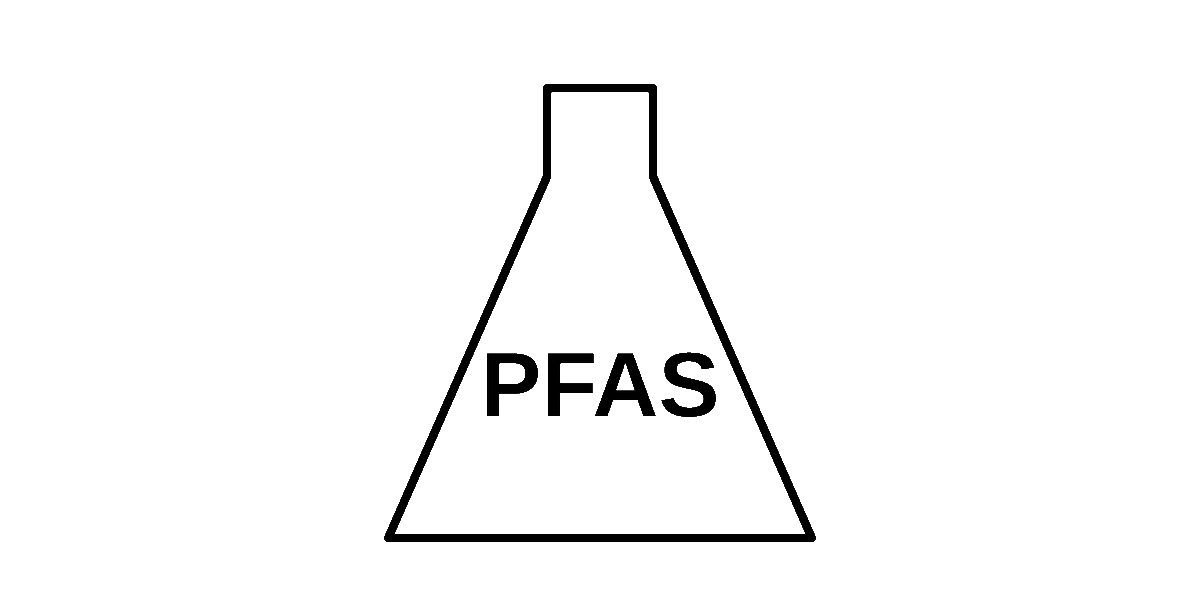 The most consequential change for plumbing and mechanical manufacturers happened in Section 20.13.2.13. The proposed rule labeling requirements included the Erlenmeyer flask symbol, explanatory text, and a department website address. The final rule strips it down to just a symbol with text — an outline of an Erlenmeyer flask with the word PFAS inside. No URL. No supplementary statement. No phased disclosures.
For complex durable goods — a defined term meaning a product with 100 or more components and an intended useful life of five or more years — the simplification goes further. The proposed rule would have required the operation and maintenance manual to carry a complete list of internal components containing intentionally added PFAS, with sufficient detail to locate them inside the equipment. The final rule deletes that. A complex durable good now satisfies the final rule by placing the Erlenmeyer flask with text on the consumer-facing product specification sheet and the consumer-facing operation and maintenance manual, at 10-point font or larger. No parts list. No location map.
The NM EIB also dropped the proposed rule requirement that physical product labels be permanent for the useful life of the product. The "useful life of a product" labeling mandate is gone.
What Didn't Change
Industry's other big asks did not survive. Industry pushed to extend the labeling start date from January 1, 2027, to January 1, 2028, citing supply-chain lead times, processes, and inventory. The motion failed on a roll-call vote of two in favor, three against. The NM EIB's reasoning: because the labeling content had been simplified, the deadline could be met.
Industry also proposed adding all Section 20.13.2.10 exempt products to the labeling exemption list, which would have pulled labeling off EPA's Significant New Alternatives Policy (SNAP) program-compliant HVAC and refrigeration equipment, solid fluoropolymer products, motor vehicles, watercraft, and the other statutorily exempt categories. The motion failed unanimously. The NM EIB noted that the federal-preemption catchall in the exemption section already covers preempted products.
Fee reductions failed, too. Industry proposed cutting the CUU initial application fee from $5,000 to $2,500 and the renewal fee from $2,500 to $500. The NM EIB rejected both, citing that the New Mexico legislature provided no recurring general-fund revenue, so the program has to run on fees.
Where That Leaves Manufacturers and Specifiers
If you build, specify, or install equipment that statutorily escapes the phase-out — packaged HVAC and refrigeration with SNAP-listed refrigerants, products built around solid fluoropolymers like PTFE gaskets and thread sealant, motor vehicle equipment, watercraft — you are not facing a sales ban. The Erlenmeyer flask, however, still has to appear on the spec sheet and operation and maintenance manual for any complex durable good with intentionally added PFAS, unless the manufacturer obtains a label waiver.
The waiver pathway in Subsection F of Section 20.13.2.13 is narrow. The product must be exempt under Section 20.13.2.10, and none of the PFAS-containing material can "ever come into direct contact with a consumer while the product is being used as intended during the useful life of the product." Fees are $2,000 per individual product and $5,000 per product class. Approved waivers expire three years after approval.
One last note from the March 6, 2026 deliberations: the NM EIB explicitly discussed whether to regulate PFAS as a class rather than chemical-by-chemical, and the majority supported the class approach. That posture, combined with New Mexico's place in the cohort alongside Maine and Minnesota, signals where this is heading. The Erlenmeyer flask with PFAS text or a completely new symbol may start showing up in more state regulations—sooner than you think.
Looking for a reprint of this article?
From high-res PDFs to custom plaques, order your copy today!