
Heating Perceptions | Scott Secor
A Second Look at a Two-Pipe Steam System
A boiler room walkthrough uncovers high operating pressure, aging equipment and a misaligned replacement plan
Last week, we were asked to examine a two-pipe steam heating system at a six-story apartment building. The management team reached out to us, as they heard we work on these types of systems. Another contractor recently told them they needed a new condensate station and a new pump for the boiler feed station. Management wanted a second opinion.
When I arrived, Vinny came outside to meet me. Vinny is the head of maintenance. I learned that Vinny used to be a NYC ironworker who retired.
After retiring, Vinny mentioned he got bored sitting at home watching television. As we began the basement tour, I explained what my eyes were seeing. Vinny paid close attention, and asked questions along the way. He had been working at this building for ten years, and no one ever explained how things were supposed to work. I found this puzzling. Why would someone not at least show Vinny the basics? How about the guy that showed him the ropes, how about the professional steam men that visited the site? I have found that if you help the maintenance staff, they will often return the favor. In many cases, we have found the maintenance staff will go out of their way to help us.
For example, this past winter we had a large base mounted pump delivered to a job on a Tuesday morning. Instead of meeting the delivery driver at 8am as planned, we got stuck on an emergency job. Thankfully, the maintenance staff was able to take the delivery for us and placed the pump in the mechanical room. Around lunchtime, we arrived at the site and thanked the staff for their help. We bought the staff members lunch that day; they certainly deserved it.
Back to the boiler room at the six-story apartment building. We noticed the main condensate station was fitted with vacuum pumps and controls. We see condensate/vacuum systems at schools and other buildings with very long steam mains and condensate returns. For this building, there are two steam mains; the longer main is about two hundred feet long, and the shorter one is about a hundred feet long. The condensate returns are about the same length as the steam mains. There is a one-year-old condensate station at the end of the short main, but there was no condensate station at the end of the long main.
1
2
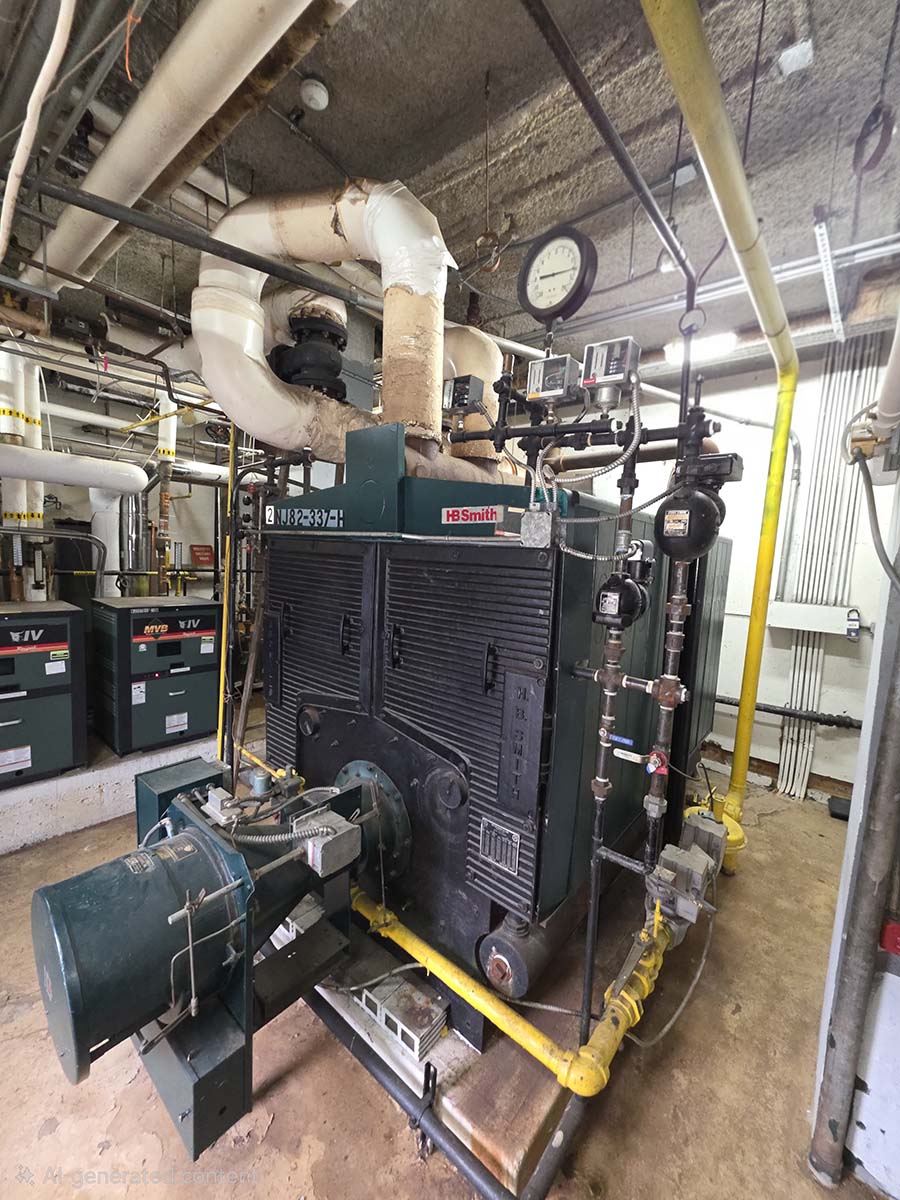
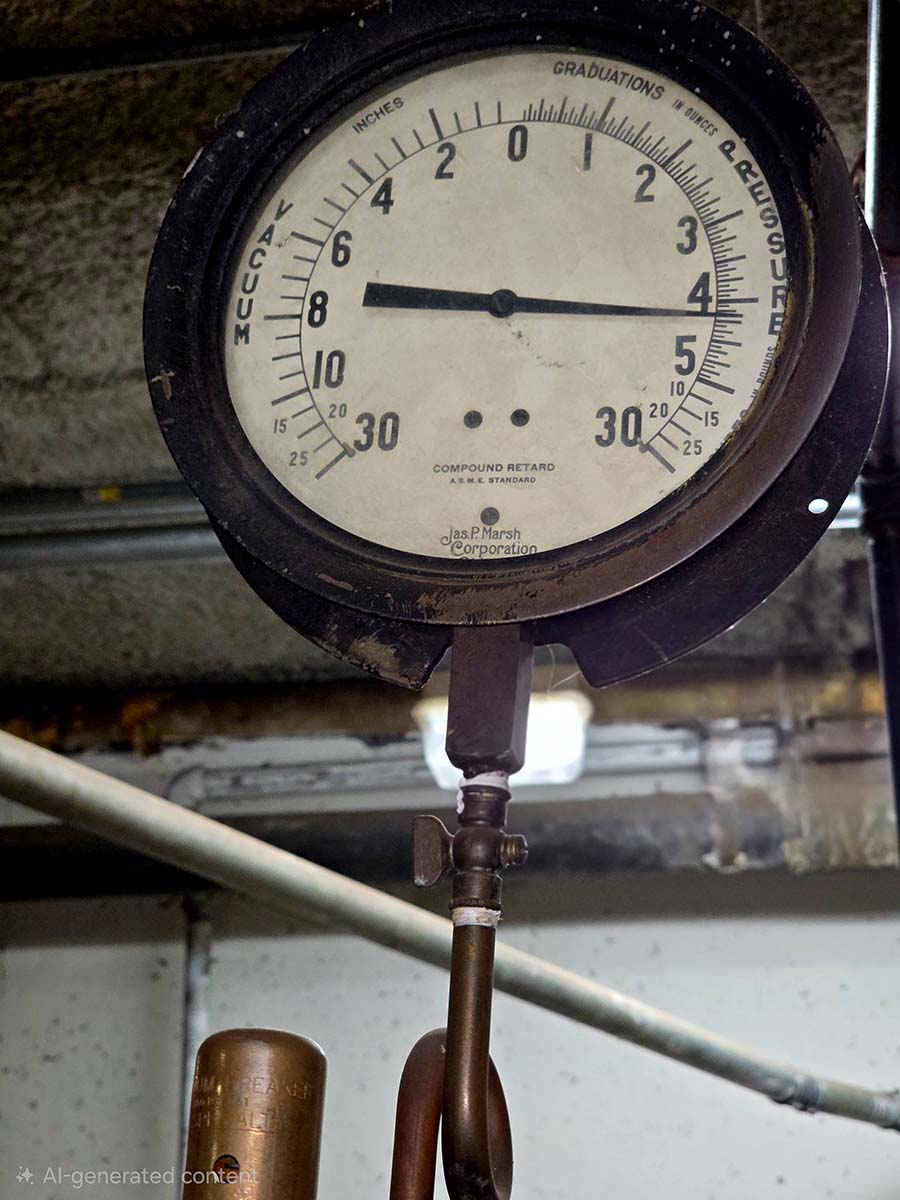
The HB Smith 450 Mills series boiler, installed in 1981, still in operation (1 & 2). Images courtesy of Scott Secor, click to enlarge.
When we entered the boiler room, I noticed the burner was firing and the boiler was hot. There were two pressure gauges on the boiler. One of the gauges was likely the age of the
building, about seventy years. The second gauge was about five years old. The antique gauge read six psi; the modern gauge read ten psi. As most of you know, one or two psi would be more than adequate for this type of heating system. Regardless of which gauge read correctly, at six or nine psi they are wasting a lot of fuel, wreaking havoc on the condensate stations, and eating up vacuum pumps on a regular basis.
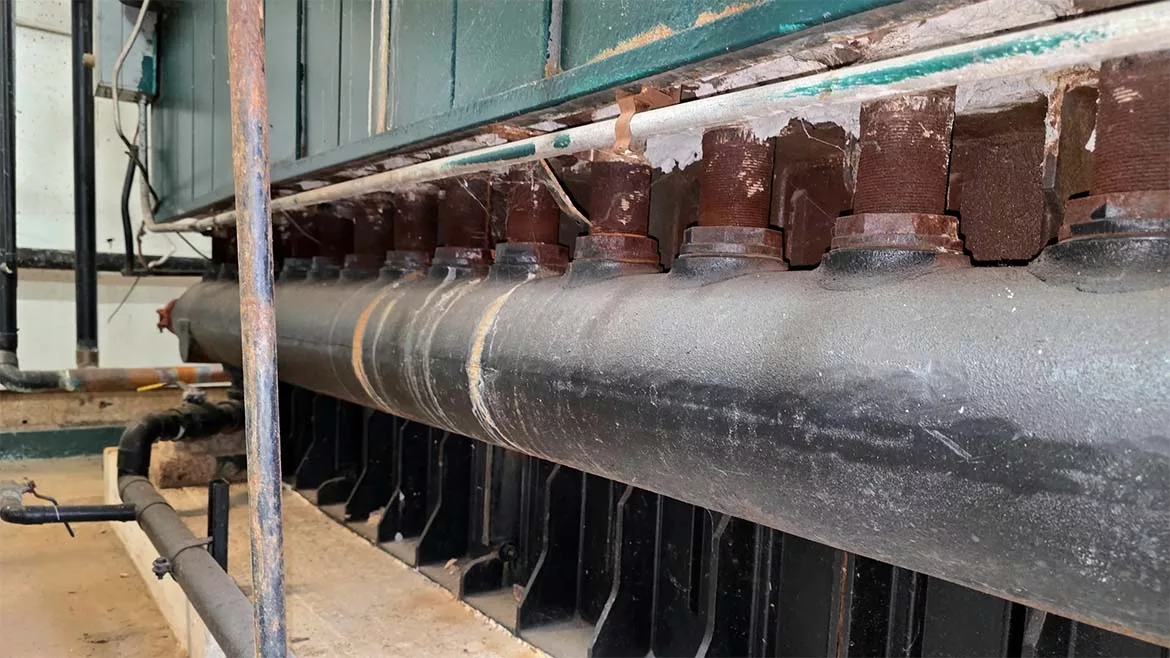
The boiler was a HB Smith 450 Mills series from 1981. Many years ago, we had the pleasure of replacing a few sections on two of these style boilers. They were likely the toughest sectional replacement jobs we have ever done. We also have four overall; I think these Mills series boilers were a great unique design. However, I personally disliked having to repair them. I am pretty sure we never made money when we had to do major repairs on these boilers.
The Industrial Combustion MG series burner was also original, installed in 1981. It appears the burner was completely original; this includes the gas valves, pressure switches, modulating motor, programmer, etc. I was amazed at the condition of the burner.
The controls on the boiler also appeared to be original. This includes the low water cutoff/feed control, and the manual reset low water cutoff. The manual reset pressure control, the operating control and the modulating control were also original.
How is it that this boiler, burner, controls and nearby boiler piping were all trouble-free for forty-five years? From what I saw, there has been very little maintenance done in the last thirty years. There is a reservoir about a mile from this site. I have heard that this reservoir water is pristine (well, at least for New Jersey). Perhaps the boiler water is that good that many things last much longer than normal? What about the burner?
I learned that the other contractor was going to install a “regular” condensate station. No vacuum, no gauges, no control panel and single phase instead of three phases. When I gave the management team my proposal, I suspected their jaws dropped. Hopefully, they also read the three-page report I included, and understood the difference in what we proposed. I plan on reaching out to them tomorrow to find out what the status is. Hopefully, they understood the reasons for the differences in quotes.
Looking for a reprint of this article?
From high-res PDFs to custom plaques, order your copy today!


