Data centers: Why prefab fits
Speed, repeatability, and redundancy are redefining how plumbing and mechanical systems are delivered in high-uptime digital infrastructure.
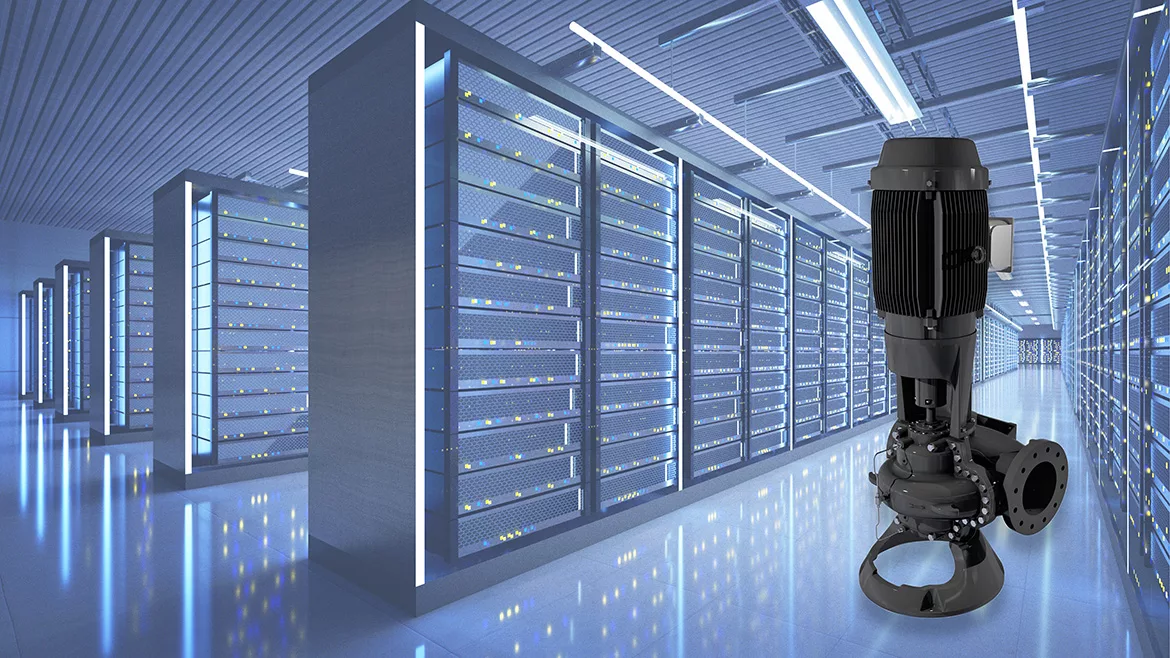
Prefabrication shifts complexity away from the jobsite and into more controlled production environments.
In data centers, up-time is everything. Downtime is simply unacceptable, and speed matters just as much as reliability. With AI usage and hyperscale cloud growth -- to name a few -- continuing to drive demand, data center projects are moving faster than ever.
As such, owners are often opting to build in phases, and add capacity continuously. That pace puts pressure on every part of the construction process; especially when it comes to mechanical and plumbing systems that often rely on large crews and complex sequencing.
That’s where prefabrication comes in. Factory-built systems can bring control to a process that, historically, has been unpredictable. Rather than assembling complex systems piece by piece in the field, contractors can install pre-engineered, pre-tested modules that are designed to perform the same way every time. The result? Faster installs and fewer surprises.
To put it simply, prefab fits data centers because it mirrors how they operate: modular, scalable, repeatable and resilient. In environments where seconds of downtime matter and expansion never truly stops, prefabricated plumbing and mechanical systems are the new normal.
Why data centers are structurally suited to prefab
Data centers are moving faster than ever, and prefabrication is helping them keep up. According to Global Senior Sales Developer at Grundfos, Ashley Dirou, "Modular data centers and prefabricated plumbing systems are factory-built, pre-tested, and shipped ready for installation, dramatically reducing onsite construction timelines. What previously required years can now be completed in months, an essential advantage in the age of AI acceleration, large-scale cloud adoption, and the need for rapid edge deployment."
By building modules, projects can overlap schedules instead of waiting on sequential steps. "Prefabricated cooling modules are built, tested and certified in a controlled factory environment while the data center foundation is still being poured, allowing true parallel construction," Dirou noted. That overlap, "significantly compresses project timelines, with modular procurement strategies often cutting deployment schedules nearly in half.
Ben Wirick, vice president of Facilities Resource Group, highlighted the impact on labor and installation: "Less labor is needed for installation on site … contractors need fewer, time- and expense-wasting trips to the local supply house." He continued, "Factory startup and commissioning means less time on site for a contractor’s highly skilled technicians." These efficiencies translate directly into faster project completion, and smoother handoffs.
Repeatability and standardization are also major components in prefabrication’s popularity in the data center sector. Consistency is critical, and prefab ensures every module behaves the same way across buildings. Dirou told me, "Data center operators increasingly replicate the same buildings, blocks and pods across multiple sites or even across a multi-building campus to achieve predictable performance and streamlined expansion. Prefabrication is a direct enabler of this repeatability, ensuring each deployment delivers consistent behavior in performance, quality, installation and scalability."
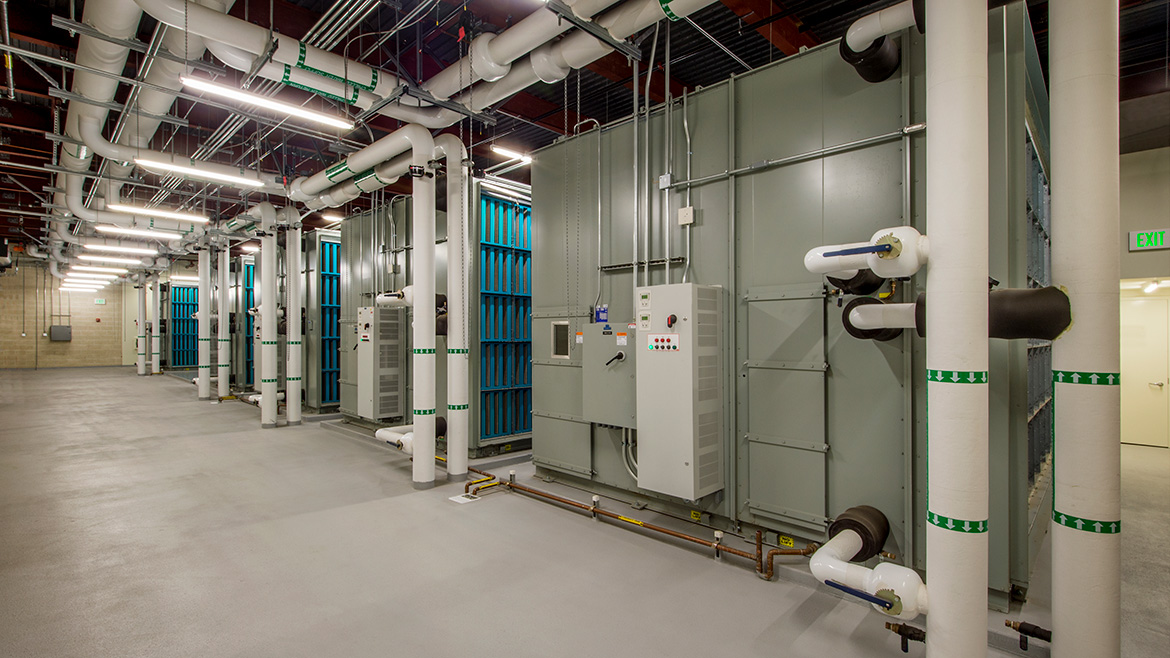
As data centers refine and normalize prefab delivery models, they are effectively establishing a blueprint for mission-critical construction. Image source: alacatr / iStock / Getty Images Plus
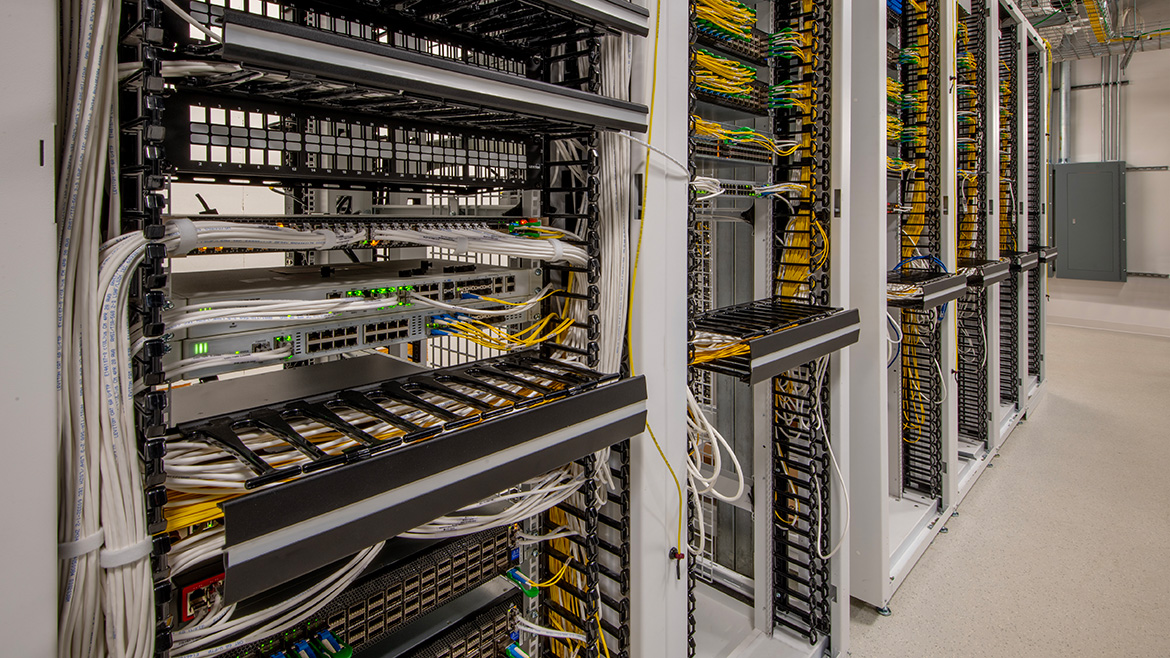
Image source: alacatr / iStock / Getty Images Plus
That consistency starts at the very beginning: in the factory. "Because prefabricated solutions are pre-engineered, factory-assempled and validated before arriving onsite, organizations can adopt a standardized, site-integrated approach for every project. Quality control is significantly higher in a controlled manufacturing environment than on a construction site, reducing variability and minimizing risks."
"Whether deploying a single building or scaling to 20 across a campus, every expansion leverages the same validated design, accelerating growth while ensuring technical and operational consistency." Prefabrication, then, doesn’t just speed up installation; it guarantees that every deployment behaves predictably, building a foundation for uptime and efficiency.
Finally, redundancy. Downtime in data centers is costly. Prefabrication, however, ensures that redundancy is built into every system from the very start. This, according to Dirou, creates "a far more robust and predictable data center architecture. Prefabricated modules can be delivered with N+1, N+2 or 2N pump configurations, redundant cooling loops (glycol or chilled water), pre-configured emergency shutdown and failover logic, and integrated cooling strategies such as hot aisle/cold aisle separation or rear-door heat exchangers."
Because prefab assemblies are factory-built, redundancy is both consistent and reliable: factors whose importance can’t be overstated. "Because prefabricated systems are not assembled ad hoc in the field, redundancy becomes part of the module’s core design rather than an improvised onsite adoption." This ensures that every module behaves as intended, even when scaled across a campus or multiple sites.
By embedding redundancy in the factory, operators reduce the risk of human error or installation inconsistencies that can compromise uptime. Prefabrication gives operators confidence that critical systems will perform when and where they’re needed most.
The workforce problem
Data centers and other mission-critical fasciitis face an unfortunate reality: skilled labor is harder to find than ever. Wirick noted, "Many skilled plumbing techs left the industry during the Covid years, while other tradespeople were simply aging out. Meanwhile, fewer young people have been pursuing careers in the trades."
Prefab helps address these challenges directly by reducing onsite complexity.
Dirou noted the following benefits of prefabrication: "Reduced training burden, especially as the workforce gap widens…higher quality assurance through precision manufacturing…fewer onsite errors and faster installation times." By standardizing systems and moving assembly into factory environments, modular approaches make it possible to deploy complex infrastructure with fewer specialized field workers while still maintaining consistency across campuses and builds.
Now, data center projects are able to scale without proportionally scaling labor demands.
Risk management
In data center construction, risk shows up in many different ways. There’s schedule risk, quality risk, safety risk and uptime risk. Even seconds of downtime carries financial and operational consequences. Traditional field-built constructions models can introduce too many variables for facilities that demand predictability at every single level, from their very conception.
Prefabrication, however, restructures that risk by shifting complexity away from the jobsite, and into more controlled production environments. Instead of relying on field conditions and coordination, systems are created completely under standardized conditions.
That controlled environment enables something important: quality assurance.
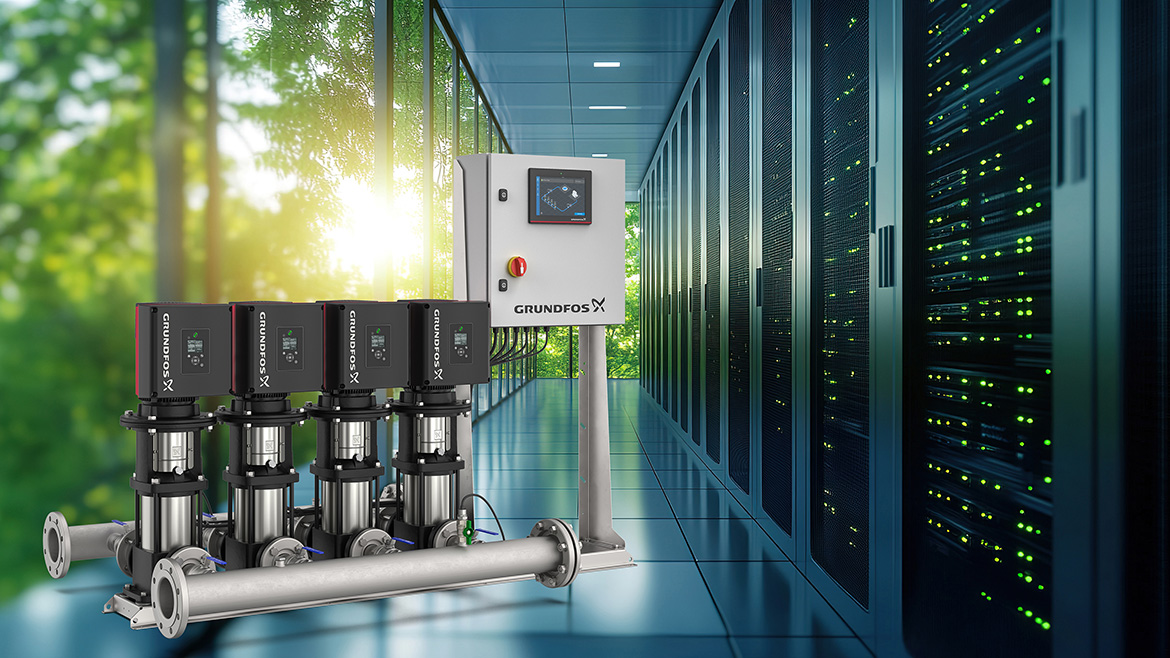
Dirou explained, "Unlike traditional field-built hydronic rooms, solutions like the Grundfos DELTA HCU Modular systems undergo complete Factory Acceptance Testing (FAT) prior to shipment," ensuring that "each system is assembled, function-tested, and certified within a controlled environment, eliminating site-to-site variability and ensuring predictable, repeatable performance once deployed." In practice, this shifts failure discovery from commissioning to production, where problems are often cheaper and safer to resolve.
Redundancy further strengthens the risk model when it is engineered rather than improvised. Dirou noted that "redundancy is inherently more reliable when the entire assembly is built, wired, pressure-tested, and function-tested as one unit in a controlled factory environment, rather than pieced together by multiple subcontractors onsite." This approach "reduces variability, ensures consistent quality, and eliminates the risk of mismatched components or incomplete redundancy paths," which are common failure points in complex, field-assembled systems.
Plumbing systems follow the same logic. Wirick points to "pre-engineered systems," "more consistent installations," and "better code compliance through more consistent and correct piping, meeting manufacturer requirements," along with "fewer leaks because of fewer pipe and fittings to be installed on-site."
Prefabrication also stabilizes the project delivery model itself. Dirou emphasized that prefabrication enables "early alignment among all stakeholders," and produces "faster deployment, higher quality, and a far more predictable construction outcome." For data centers that expand continuously and deploy repeatedly, that predictability is a strategic asset.
By embedding redundancy in the factory, operators reduce the risk of human error or installation inconsistencies that can compromise uptime. Prefabrication gives operators confidence that critical systems will perform when and where they’re needed most.
The model for other mission-critical sectors
The modular, prefabricated strategies now defining data center construction aren’t staying confined to digital infrastructure. They are increasingly shaping how other mission-critical facilities approach mechanical and plumbing systems; particularly in sectors where uptime, reliability and risk control are just as essential as they are in data centers.
Healthcare is an excellent example. Complex building systems and zero-tolerance-for-failure operations create similar pressure for consistency and predictability.
Dirou draws a direct connection: "Healthcare presents some of the closest parallels to data centers: high-stakes uptime, facility complexity, and strict compliance requirements." Prefabrication is already reshaping healthcare delivery models, as it is "increasingly being used for system-critical spaces such as exam rooms, patient rooms, isolation rooms and utility corridors."
Standardization and repeatability — core principles in data center construction — are also healthcare priorities. "HCA Healthcare uses standardized modular designs to eliminate redesigns, accelerate schedules, and ensure consistent clinical quality across campuses," while "prefab healthcare components undergo independent inspection and testing protocols that promote superior quality."
During the pandemic, the speed and reliability of modular delivery were demonstrated at scale: "Prefabricated negative-pressure isolation rooms, modular ICUs, and entire temporary hospitals were deployed rapidly during COVID-19 using prefabrication."
Beyond healthcare, industrial and manufacturing sectors are following similar paths. Viega North America's Manager of Engineering Services, Brett Austin noted growing adoption across heavy-duty applications, with "industrial and hydronic applications leading the way." He explained that press technology is widely used in "hydronic heating, cooling and compressed air," and growing adoption across "manufacturing and oil and gas sectors." The same drivers that shape data center construction — speed, safety, consistency, and labor efficiency — are pushing prefabrication deeper into industrial environments.
At the same time, risk remains a defining factor. Wirick highlighted that engineers remain cautious in high-risk applications, especially where failure carries severe consequences: "Engineers…are becoming more comfortable specifying press as they have seen 10 to 20 years of field history with the technology," but, "engineers remain cautious in certain high-risk applications like medical gas applications, where safety concerns demand extensive historical performance data before specifications will shift."
This mirrors the data center mindset, where adoption is driven by proven performance and documented reliability.
Across sectors — from healthcare and advanced manufacturing to pharmaceuticals, logistics, and cold storage — the same structural logic applies. These facilities share "high-stakes uptime," "facility complexity," and "strict compliance requirements," and operate under risk profiles that demand predictability rather than flexibility. Modular, prefabricated systems offer a common solution: standardized production, factory testing, repeatable performance and scalable deployment.
As data centers refine and normalize prefab delivery models, they are effectively establishing a blueprint for mission-critical construction. The same modular advantage that defines digital infrastructure is now shaping how other mission-critical sectors design and operate their facilities.
Grundfos and its KPVS pumps have become the cornerstone for a hyperscale Data Center company’s cooling systems. Image courtesy of Grundfos
Case study: hyperscale data center partnership
A hyperscale data center is, as one might expect, a larger-than-normal data center. For these complex environments, cooling infrastructure is a critical part of everyday operations. Reliability, efficiency and serviceability directly determine uptime and long-term performance. That reality defines the relationship between one global hyperscale data center operator and Grundfos, which has evolved over more than a decade.
The hyperscale operator had sourced cooling water pumps through modular contractors for more than 10 years, with competitor equipment initially serving as the basis of design. Grundfos KPVS vertical split-case pumps were first introduced as approved alternates, rather than primary selections.
However, the operational requirements of hyperscale environments exposed the limitations of traditional sourcing models. Cooling systems had to support continuous operation, high-density server loads and expanding campuses while maintaining consistent performance across multiple sites. Reliability, engineering support, delivery certainty and service responsiveness were operational necessities. Any failure in those areas would directly affect uptime and efficiency.
Grundfos transitioned from alternate supplier to primary pump partner, driven by a coordinated modular and operational support strategy rather than product substitution alone.
This transition was built on six integrated performance pillars:
- Reliable deliveries
- Grundfos worked directly with the owner’s procurement team and modular contractors to forecast system demand, ensuring stocked components, supply chain alignment and predictable delivery schedules.
- Engineering integration
- Grundfos collaborated directly with internal engineering teams and external consultants to design optimized pumping solutions for both new builds and retrofits, focusing on system efficiency, power draw and application-specific performance. This engineering partnership ensured pump systems were compliant with design intent and optimized for hyperscale operating conditions.
- Service responsiveness
- Rapid response capability became part of the value model, with technicians deployed across multiple data center locations, supported by simulated testing and coordinated service operations. This ensured failures could be addressed without compromising on uptime.
- Spare parts management
- Direct coordination streamlined service logistics and parts distribution, eliminating previous delays and mismatches that can create operational vulnerabilities in distributed infrastructure models.
- Project management
- Each order was managed by dedicated project teams, ensuring alignment with project schedules, modular sequencing and stakeholder coordination.
- Performance
- Audits confirmed the robustness of Grundfos manufacturing facilities and the reliability of KPVS systems in real-world data center operation, validating long-term performance consistency.
The operational and engineering shift produced these measurable performance gains:
Energy efficiency
KPVS pumps delivered:
- 5% higher efficiency in chilled water applications
- 4% higher efficiency in condenser water applications compared to specified competitor solutions
Power reduction
Lower power demand translated directly into operational savings:
- Primary chilled water pump required 13 hp less
- Condenser water pump required 8 hp less
These reductions compound rapidly in 24/7 data center operations, where continuous loads magnify energy impacts over time.
Reliability engineering
The KPVS design incorporates:
- Double suction configuration to reduce axial forces
- Double volute design to reduce radial loads, internal recirculation and turbulence
These design features extend equipment lifespan and stabilize long-term performance — essential in nonstop operating environments.
Serviceability and uptime protection
The split-coupled KPVS design allows:
- Motor removal without disturbing pipework
- Internal pump servicing (e.g., shaft seals) without motor removal
Prefab works in data centers because it replaces variability with repeatability. It replaces field uncertainty with factory control.
Compact mechanical footprint
The vertical frame configuration delivers a smaller flange-to-flange footprint than comparable vertical inline pumps, supporting mechanical room space optimization — a growing priority in dense data center layouts.
By meeting these operational standards and addressing systemic challenges in reliability, efficiency, serviceability and supply chain coordination, Grundfos and its KPVS pump systems have become "foundational components" of the operator’s cooling infrastructure strategy. The relationship has evolved from product supply to infrastructure partnership, supporting performance across national data center assets.
As Ian MacHugh, regional manager, Data Centers, Grundfos USA & Canada, explained, "We've been fortunate to establish a close partnership with this key hyperscaler in the data center market. The relationship helped us understand and adapt to the challenges of supporting an owner with aggressive engineering and supply chain needs. It also led us to refine our offering – we modified the original KPV pump model into today’s KPVS, which has turned into the perfect match for what the industry needs in terms of reliability, serviceability and efficiency. These experiences over the past decade has given the Grundfos Data Center Team a deep understanding of this industry’s unique demands; setting us up to successfully deliver on all levels of data center projects – from long term supply agreements to one-off builds."
This case study illustrates the core argument of prefab and modular delivery in mission-critical environments: data centers don’t just need equipment to run smoothly; they need systems that scale with reliability.
Data centers don’t tolerate friction. They don’t tolerate variability. And, increasingly, they don’t tolerate construction models that introduce uncertainty into systems that are expected to run and scale continuously, and perform predictably across multiple sites and phases of development.
What emerges clearly across every aspect of this discussion — from workforce constraints and risk management to modular delivery and hyperscale case performance — is that prefabrication is becoming a structural operating model for mission-critical infrastructure.
This is not because it is faster alone, or because it is cheaper alone. It aligns with how data centers actually function: modular, standardized, phased, scalable and uptime-driven.
Prefab works in data centers because it replaces variability with repeatability. It replaces field uncertainty with factory control, and it turns mechanical and plumbing infrastructure into engineered platforms, rather than project-specific assemblies. In an environment where expansion never really stops and capacity is always being added, that distinction really matters.
Data centers are defining the future of prefab, and establishing a model that other mission-critical sectors are already beginning to follow.
Looking for a reprint of this article?
From high-res PDFs to custom plaques, order your copy today!