
The next frontier for heat pumps
Heat pumps are redefining what’s possible in commercial and industrial efficiency.
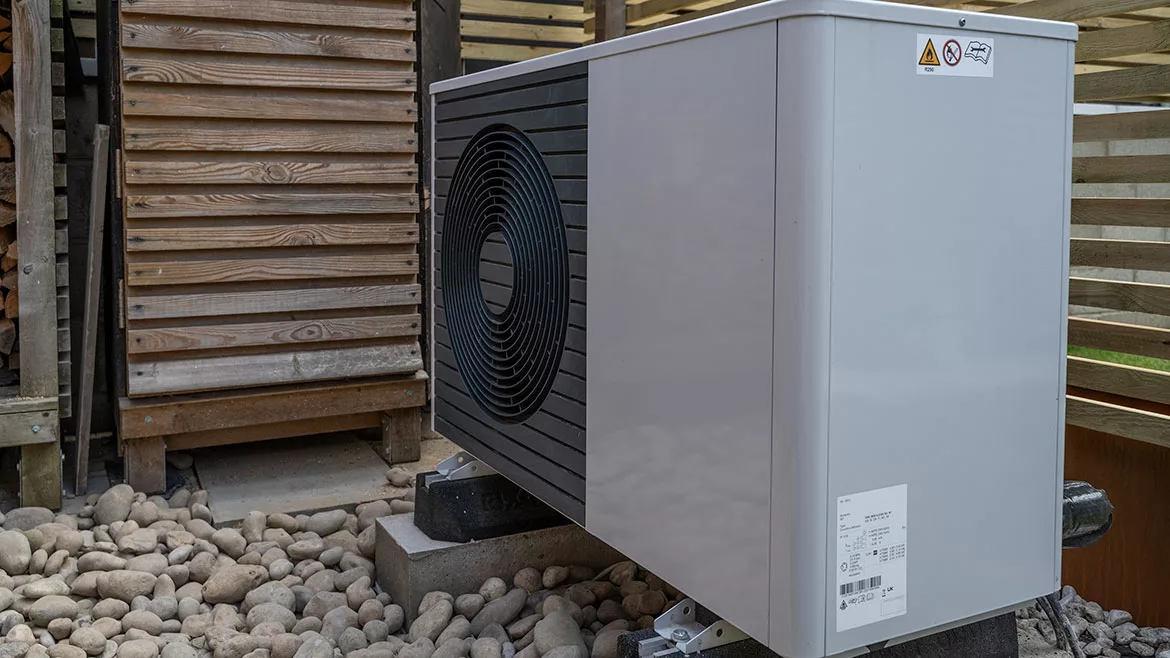
As heat pumps evolve beyond traditional HVAC roles, residential systems like these demonstrate the potential of electrified heating and cooling.
Not long ago, heat pumps were seen as a niche solution — reliable for space heating and cooling, but rarely considered for the demanding commercial or industrial applications.
However, that perception is rapidly changing. In buildings where efficiency, decarbonization and flexibility are top priorities, heat pumps are stepping into new territory: producing high-temperature hot water, capturing and reusing waste heat, and even supporting district energy systems.
Driven by advancements in refrigerants, controls and system design, modern heat pumps are taking on applications once thought beyond their reach — from food service and healthcare to district energy and industrial processes. This evolution is creating new opportunities for engineers, facility owners and contractors to rethink how buildings are heated, cooled and powered.
A brief history
The concept behind heat pumps dates back nearly two centuries. In the 1850s, Scottish physicist William Thomson (better known as Lord Kelvin) first described the thermodynamic principles that make heat pumps possible — transferring heat from one place to another rather than generating it through combustion. While he did not invent the heat pump, his work on the second law of thermodynamics provided the scientific basis for technologies that move heat rather than generate it through combustion.
The first practical heat pump system was built in 1856 by Austrian engineer Peter von Rittinger, who used it for drying salt brine. But, it wasn’t until the mid-20th century that heat pumps gained traction in residential and commercial buildings. Post–World War II advances in refrigeration and compressor design led to the first electric air-source heat pumps, which began appearing in homes by the 1950s and ’60s.
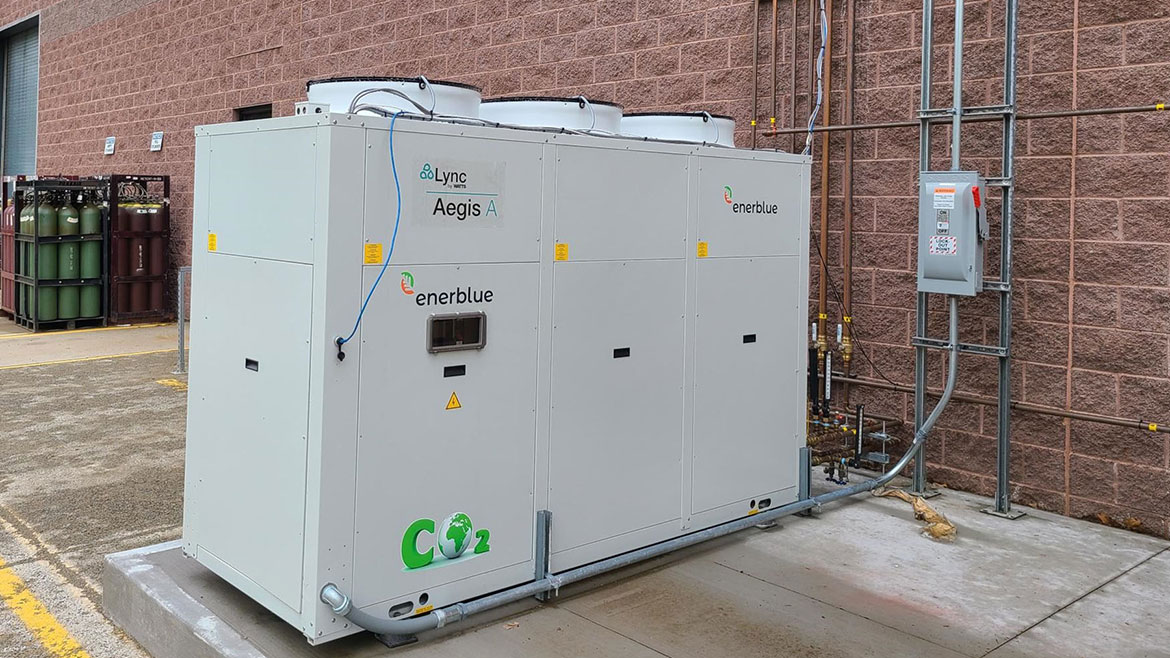
The Aegis system reflects a growing trend in commercial HVAC — using electrified, high-efficiency technology to reduce emissions and operating costs. Photo courtesy of Lync
As always in our industry, we must create workarounds in times of struggle. Interest surged again in the 1970s during the energy crisis, as engineers sought alternatives to fossil fuel–based heating. From there, the technology steadily improved, with the introduction of variable-speed compressors, inverter-driven systems, and geothermal (ground-source) designs in the 1980s and ’90s.
In recent years, climate policy and decarbonization goals have driven a new wave of innovation. Modern heat pumps now leverage low-GWP refrigerants, advanced controls and hybrid system integration to deliver reliable heating, cooling and hot water, even in cold climates. Today’s CO₂-based heat pumps can achieve water temperatures up to 170°F, expanding their role beyond comfort conditioning into commercial water heating and industrial process applications.
The shift
Heat pumps are no longer confined to residential comfort; they are becoming key players in commercial and industrial energy strategies. This evolution is being ushered in by several policy mandates, technological advancements and economic incentives aimed at reducing carbon footprints and enhancing energy efficiency.
Governments worldwide have recognized the potential of heat pumps in achieving climate goals. In the United States, the Inflation Reduction Act (IRA) has been instrumental, offering tax credits and rebates for high-efficiency electrified systems. For instance, the federal 25C tax credit provides up to $2,000 for qualifying heat pump installations, while state programs like New York's NYSERDA and California's TECH Clean California offer rebates that can exceed $10,000 per system.
These incentives have catalyzed a surge in heat pump adoption. According to the Air-Conditioning, Heating, and Refrigeration Institute (AHRI), heat pumps outsold gas and oil furnaces by 30% in 2024, reflecting a significant shift in consumer preference towards electrified heating solutions.
Jake Bucklin, product manager at Lync, Watts Water Technologies, notes that, “As more facilities focus on electrification, hot water production is quickly becoming one of the most impactful areas for reducing carbon emissions and operating costs.” Modern CO₂-based heat pumps can consistently produce water up to 170°F (as mentioned earlier), enabling applications from food service and laundry to healthcare sterilization and industrial washdown — even in cold climates where older technologies struggled.
Technical innovations are driving this shift. Bucklin explains, “The biggest breakthrough has been the move to natural refrigerants like CO₂ (R744). Control advancements make integrating into hybrid configurations easy. By combining heat pumps with gas or electric solutions, these systems can be retrofitted to existing systems and deliver significant energy savings.” The result is higher-temperature, reliable systems capable of supporting broader electrification goals.
Similarly, Rob Tanner, marketing director at Applied Equipment, Johnson Controls, emphasizes that commercial heat pump chillers are increasingly being used in industrial waste heat recovery. “The Department of Energy estimates 20-50% of industrial energy is lost to waste heat,” Tanner says. Historically, absorption chillers required heat sources of around 300°F, leaving many low-temperature waste streams untapped. Today’s heat pump chillers can capture energy from sources as low as 40°F and raise it to 140°F, supplying heat for space heating, water heating, boiler feedwater preheating and district energy systems.
Government incentives and energy programs are also accelerating adoption. As mentioned earlier, many states and utilities offer rebates for high-efficiency electrified systems, helping to narrow the upfront cost gap.
Bucklin stressed that, “Success is contingent on good system design and coordination early on. Once engineers and owners see the benefits over the lifecycle, adoption tends to follow naturally.”
Technical innovations driving adoption
Advances in refrigerants, controls, and system design are opening new possibilities for higher-temperature and hybrid heat pump systems. Jake Bucklin emphasized the impact of natural refrigerants like CO₂ (R744): “R744 is non-toxic, non-flammable, and has a Global Warming Potential of just 1 — yet it can still deliver very high water temperatures efficiently.”
This makes it an ideal solution for commercial and industrial applications where both performance and sustainability are critical. Modern CO₂ heat pumps, such as Lync’s Aegis systems, benefit from advancements in reciprocating compressors that handle higher operating pressures, enabling consistent hot water production up to 170°F — a temperature range previously difficult to achieve with traditional electric or air-source heat pumps.
Controls technology has also matured, allowing heat pumps to operate in hybrid configurations alongside gas or electric backup systems. These smart integrations enable facilities to optimize energy use dynamically, switching between energy sources based on demand, cost or carbon intensity. Remote monitoring and building automation integration provide operators with real-time performance data, allowing for predictive maintenance and ensuring the systems maintain peak efficiency over time.
Rob Tanner highlighted how innovations in compressor design and drive technology have expanded the operational capabilities of heat pump chillers. Variable volume index (VI) screw compressors and variable speed drive (VSD) systems allow chillers to precisely match temperature output to varying process demands while maintaining optimal efficiency.
The YORK YVWH Water-to-Water Variable Speed Dual Screw Heat Pump, for instance, can simultaneously deliver hot water up to 180°F and chilled water at 40°F. This wide operating range enables it to serve diverse industrial processes, from space heating and humidity control to water heating and boiler feedwater preheating, all while minimizing energy waste.
Looking ahead, AI and predictive algorithms are adding another layer of sophistication. Bucklin noted that modern systems are increasingly capable of analyzing weather patterns, occupancy schedules and grid signals to adjust operation proactively. “The use of AI and predictive algorithms to optimize performance based on weather, occupancy, and grid signals is transforming how thermal systems interact with building operations.” For Lync, that means: “investing in modular, scalable system architectures that simplify integration into complex facilities and allow for future expansion. “
These intelligent controls can anticipate demand fluctuations, optimize energy consumption, and further reduce operating costs while ensuring consistent system performance. Combined with modular and scalable system architectures, these advances are transforming heat pumps into fully integrated, high-efficiency infrastructure for both commercial and industrial facilities.
Together, innovations in refrigerants, compressors, drives, and AI-enabled controls are shifting heat pumps from single-purpose HVAC units to versatile, high-performance solutions that reduce emissions, lower costs, and expand operational flexibility across a wide range of applications.
Driven by advancements in refrigerants, controls and system design, modern heat pumps are taking on applications once thought beyond their reach — from food service and healthcare to district energy and industrial processes.
Challenges and adoption strategies
While modern heat pumps offer unprecedented flexibility and efficiency, broader adoption in commercial and industrial markets is not without its hurdles. One of the main challenges, as Bucklin notes, is infrastructure and education.
“Many commercial buildings were designed around gas systems, so retrofitting can require rethinking of plant design, temperature setpoints and control strategies. Upfront costs can also be higher, though that gap is narrowing, as incentives and operating savings improve the total cost of ownership.” Upfront costs can also be higher, though incentives and long-term operational savings increasingly make the investment worthwhile.
Tanner points out that industrial facilities face similar obstacles when implementing waste heat recovery systems. “Today’s industrial leaders are in a constant state of transformation as they strive to make their plants more efficient and more competitive,” he says. He emphasized that scaling integration through pilot programs — starting with a single facility or division of a plant — can provide measurable proof points for efficiency gains and return on investment. These smaller-scale successes can help justify broader adoption across a campus or enterprise.
Financial incentives also play an important role in overcoming initial cost barriers. Federal, state and utility programs for high-efficiency equipment can offset installation costs and shorten payback periods.
For instance, Johnson Controls’ OpenBlue intelligent building ecosystem has demonstrated that energy savings, reduced maintenance costs and informed spatial utilization data can deliver an ROI of up to 155% over three years, with an average payback period of just eight months. Programs like these underscore how efficiency, electrification and digitalization can work together to accelerate heat pump adoption.
Contractor education and system commissioning are also critical. Even the most technically advanced heat pump can underperform if not installed and maintained properly. Bucklin noted the importance of thorough training, startup support and building automation monitoring to ensure systems run at peak efficiency. For facilities looking to integrate hybrid configurations or connect to district energy networks, early coordination with engineers, contractors, and manufacturers is key to realizing the full potential of these technologies.
Ultimately, addressing these challenges requires a combination of planning, education, and strategic financial support. As more building owners, engineers and contractors become familiar with the capabilities and operational advantages of heat pumps, adoption is expected to accelerate; helping facilities achieve both energy efficiency and decarbonization goals.
Looking ahead
As heat pump technology continues to evolve, the focus is increasingly on higher output temperatures, smarter controls and integration at scale. Beyond temperature capability, Bucklin noted that AI and predictive algorithms are transforming how heat pumps interact with building operations, optimizing performance based on weather, occupancy, and grid signals. Modular and scalable system architectures are also emerging, simplifying integration into complex facilities and allowing for future expansion.
Tanner pointed to the broader trend of digitalization. “Digitalization is transforming both equipment and building operations. Intelligent platforms like OpenBlue can process a million data points per minute, unlocking unprecedented levels of insight and then putting that data to work to reduce costs, drive uptime, maximize reliability and streamline workflows.”
Governments worldwide have recognized the potential of heat pumps in achieving climate goals.
Intelligent platforms, such as Johnson Controls’ OpenBlue ecosystem, can process millions of data points per minute, translating real-time insights into actionable operational improvements. This allows facilities to reduce energy costs, maximize uptime and streamline maintenance workflows — all while supporting decarbonization initiatives.
Looking forward, these advancements position heat pumps not merely as HVAC equipment, but as versatile infrastructure capable of powering all-electric buildings, industrial processes, and district energy systems. As efficiencies continue to rise and integration with renewables, waste heat, and smart controls improves, heat pumps are poised to become a central tool in achieving energy resilience and sustainability across commercial and industrial sectors.
The evolution of heat pump technology represents so much more than an equipment upgrade. It marks a fundamental shift in how buildings generate, use and manage thermal energy. What began as a solution for space conditioning has grown into a powerful driver of decarbonization, energy recovery and system-wide efficiency.
As electrification policies, energy codes and decarbonization targets continue to take hold, the demand for flexible, high-performance systems will only increase. Modern heat pumps (supported by innovations in refrigerants, controls and connectivity) are no longer niche tools, but core components of tomorrow’s energy infrastructure.
For contractors, engineers and facility owners, this moment offers both challenge and opportunity. Success will depend on collaboration across the supply chain — from manufacturers and specifiers to installers and maintenance teams — to ensure systems are designed, commissioned and operated for peak performance.
In that sense, the rise of heat pumps isn’t just a technological story; it’s a story of transformation. One that redefines what’s possible for energy efficiency, resiliency and sustainability across the built environment.
Looking for a reprint of this article?
From high-res PDFs to custom plaques, order your copy today!


