
Contractor's Corner | Dave Yates
Death waits for no one: A lesson in confined spaces
In 1972, as a first month apprentice, we were installing new sanitary sewers in an old trailer park. My boss Raymond owned an old Ford backhoe, dump truck, and low-boy trailer. No CDL required at that time, so I often drove to the job sites, unloaded the backhoe, and began the excavations. Ray showed up pretty much when he felt like being present. Otherwise, I was left to my own devices. This day, the lateral connection was not where the local sewer municipality had provided measurements. Ray arrived and instructed me to reposition the backhoe and dig across the marked lateral parallel to the road, thinking surely we would locate the lateral. No dice. Ray handed me a flashlight and told me to enter the manhole some 90-feet away and belly crawl down the sewer main while dragging the end of a ball of twine so we could get a fix on the lateral’s location.
Although a new branch sewer main was installed, many of the mobile homes were already connected and I can still hear the telltale noises of rushing sewage from toilets being flushed. Confined space protocols? Hell, I didn’t even know OSHA existed and blindly did as I was told. I’m lucky to have survived that spelunking adventure. I did locate the lateral.
Fast forward to becoming certified by NEWWA (New England Water Works Association) during the first class per York Water Company newly required mandate for continuing testing backflow preventers. I chose license #003 with numbers 1 and 2 being assigned to York Water Company officials. We continued performing tests and more than a few included confined space entry.
I’d like to say we understood the potential dangers, but no one was OSHA certified and there was no requirement for anyone to be compliant. It wasn’t until one of our employees noted he had felt faint while testing multiple backflow preventers in a large volume below grade pit that I realized there was a potential danger. My right-hand-man was also the Deputy Chief of our local hazmat team and was familiar with testing for air quality.
Turn to the experts
OSHA confined space training was next. From that training, we knew what equipment was needed, including a 4-gas meter to test air quality within the pits we would need to enter. The first pit we tested, was the one where our employee had said he felt affected by poor air quality. The initial testing indicated everything was good, but when I walked the intake snorkel around the confines of the large underground pit, we would occasionally hear an alarm indicating two things: ventilation would be required, and a no-go condition until adequately ventilated.
We discovered that the majority of below grade pits with backflow preventers were safe to enter, but also more than a few that needed ventilation before they could be safe for entry, and several that registered 0% oxygen! We marked them down as widow-makers.
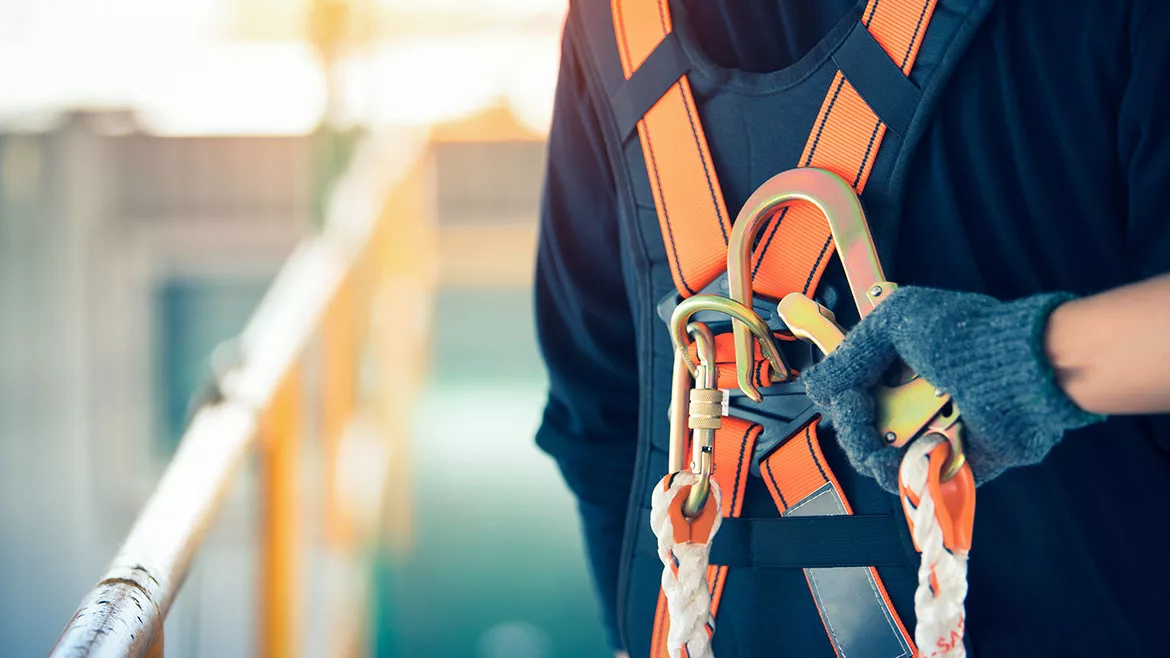
Aside from our OSHA-compliant safety gear, 4-gas tester, and ventilation equipment (12-volt to 115-volt inverter to run the fan where power was unavailable), we had a written protocol, which included emergency contact numbers and one very sobering mandate: in the event a topside observer employee witnesses an employee pass out in a confined space and cannot retrieve the individual via the hoist for whatever reason, the topside employee is to call the emergency number(s)but under no circumstances are they to enter the confined space in an effort to rescue the unconscious entrant. Anyone who thinks they can hold their breath, descend a ladder into a pit, lift a dead-weight body, and ascend the ladder to safety simply has not attempted doing so in real life. As tough as it might be, you cannot save their life and will end up dead too.
If you’re on a job site where other trades are also working, your topside confined space attendant is in charge of the surrounding area and the site superintendent must be on board, acknowledging your authority.
Once again today, I read the account of three workers in Trinity County, Texas - John Nelson Sr, 52, Bradley Wrightsman, 46, and Brad Hutton, 47 - who died after entering a manhole for a sewage lift station and were exposed to H2S (Hydrogen Sulfide). From the accounts I read, one worker entered the 20-foot deep pit to attempt repair of a cracked sewage line but was overcome by the hydrogen sulfide and passed out. A second worker entered the pit in an attempt to rescue his fellow worker and passed out. Then the third worker followed in yet another rescue attempt and was also overcome by H2S. It would be more than two hours before rescue teams would retrieve the bodies. This is why we always tested air quality before entering a confined space and then continually monitored air so long as anyone was in the pit.
Engulfment is yet another hazard when testing backflow preventers. RPZ (Reduced Pressure Zone) back flows incorporate a relief valve that opens if the downstream pressure exceeds inlet pressure by two pounds. In theory, just the relief zone contents are dumped. However, more than a few documented cases exist where the pit was flooded due to a defective check and, as you can imagine, having a large RPZ suddenly cut loose spewing a torrent of hundreds of gallons a minute would catch you off guard with the potential to violently toss you around in the raging current.
If you’re on a job site where other trades are also working, your topside confined space attendant is in charge of the surrounding area and the site superintendent must be on board, acknowledging your authority. Things like an idling vehicle nearby constitute a CO hazard, and it’s the topside employee who must have the authority to have the vehicle moved or its engine turned off.
Four gas meters, with a pump, are not very expensive, ranging from under $200 to more than $1,000.00. Testing for CO (carbon monoxide), O2 (oxygen), H2S (hydrogen sulfide), and EX-LEL (explosive gases/vapors) is always warranted when entering confined spaces. We all deserve to return home after a hard day’s work.
Looking for a reprint of this article?
From high-res PDFs to custom plaques, order your copy today!


