Things are changing: What contractors need to know about the A2L transition
When we first learned about the transition from HCFC (hydrochlorofluorocarbon) to HFC (Hydrofluorocarbon) refrigerants (R22 to R410a), I studied the requirements, purchased new compliant equipment, and hustled all of our employees off to school to add onto our existing refrigerant handling licenses. Then, we waited for the R410a train to roll into town via our wholesalers, and nothing happened! No 410a equipment was being stocked, and I had already invested thousands for us to be educated and ready. I started ordering new R410a equipment, and still no one was stocking anything.
One mini split manufacturer jumped in with both feet and transitioned their entire line to R410a and, get this, at the same price point but with higher efficiencies. We switched brands and never looked back. Then came the great coil debacle, lasting almost three years, where coils for all brands began leaking within the first few “still-under-warranty-years” after new installations. Lots of blame to go around: it was the higher pressures, contaminates in the air, faulty installations and no one willingly providing a labor allowance. The culprit, according to a consortium of manufacturers (who paid for the study), was formicary corrosion: tiny, microscopic tunnels through the copper tubing walls that, under a microscope, looked like ant colony tunnels. Lower pressure R22 coils fared much better.
In a here-we-go-again move, we must now transition from HFC to A2L mildly flammable refrigerants. The good news is the operating pressures are virtually the same and this time, the refrigerant oil is the same. Let’s dispel one common myth: there is no propane (R-290) in any A2L refrigerant, and that includes R454B, the primary refrigerant we will be dealing with moving forward.
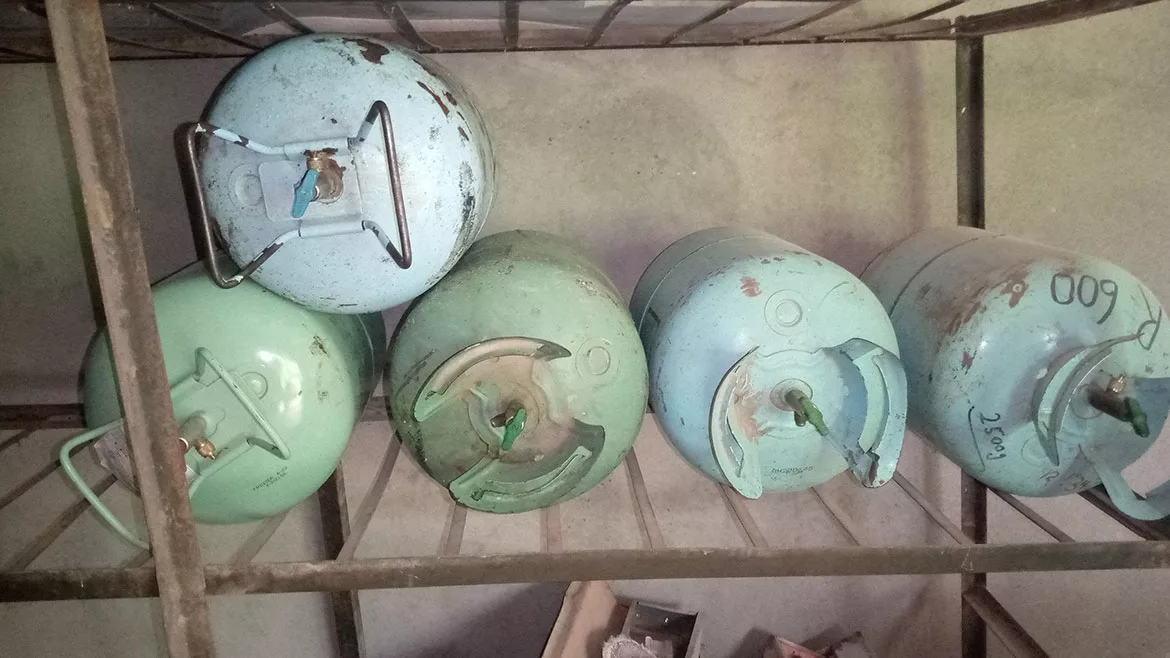
What’s up with the shortage of R454B? It’s not for a lack of refrigerant by the manufacturers: it’s the shortage of new 20-Lb bottles (no more 30 pounders) that now must incorporate an actual relief valve instead of a blow-out plug, a red band and left-handed threads. All tanks are now the same gray color with labeling to identify which type refrigerant it holds. FYI: rule change - you can now lay R454B bottles on their side in your service vehicles - in compliance with International Code Council (ICC) guidelines.
GWP and thee. Global warming potential (GWP) is a measure of how much heat a greenhouse gas traps in the atmosphere over a specific time, relative to carbon dioxide (CO2). R-22 has a GWP of 1,810, R-410a is 2,088, and R-454B is 466. CO2 is also a refrigerant (R744) and there were several displays at AHRI showcasing HVAC equipment utilizing CO2, which has a GWP of just 1. However, CO2 operates at much higher pressures and requires more robust components. Looking into my crystal ball, I see R744 (CO2) in our not-too-distant future.
- PPE (personal protective equipment) like gloves to help avoid frostbite and getting refrigerant oil on everything you touch with bare hands, work boots, long pants (yes, even in the heat of summer), safety glasses and a hard hat where required.
- A2L compliant equipment and tools. Check with the manufacturer to find out if your recovery machine, vacuum pump, and digital equipment is A2L certified.
- https://trutechtools.com/a2l-compatible-tools.html?srsltid=AfmBOoqOvtfwC_3kv3Z6M9U4LpmQ2jTz2-LPhjzwhXzoYTSwecaM1tMQ
- A2L leak detector should be included.
- Engulfment potential for the numerous cramped and confined spaces we work within. Ventilate as needed to ensure you and/or your employees are breathing air free from contaminates.
- Evacuation procedures for A2L refrigerants are somewhat different than what best practices were for R410a. You still need to purge and evacuate to 500 microns with process nitrogen, but now you are required to purge a second time for a full five minutes to ensure all A2L refrigerant has been eliminated and evacuate to 500 microns once more before cutting into or brazing. As before, purge with nitrogen while brazing, leak test by pressurizing with nitrogen, evacuate to 500 microns and test the system for leaks. We always did that by first pressurizing and holding for five minutes and then by evacuating to 500 microns and holding for five minutes. If no leaks were present, then we always repeated the purge/vacuum twice more before charging the system. An ounce of prevention is always worth a pound of cure!
- Charging procedures for all A2L refrigerants MUST be done in the liquid state by inverting the bottle. All TXV systems must be charged using sub-cooling if, and only if, ambient indoor and outdoor air temperatures are between 70 to 100F outdoors and 70 - 80F indoors. Otherwise, weigh in the charge and return to verify sub cooling when ambient air conditions are favorable.
- Replacement parts and coils will remain available for R410a equipment, as will refrigerants.
- Ignition sources for A2L refrigerants: hot wire, safety matches, lighter flame, candle, torch (soldering) and oxygen/acetylene torch (brazing).
- Contactors must be A2L certified.
- If using analog gauges, you can purchase new gauges; however, it is strongly recommended you have an A2L-only gauge set and hoses. Hoses can be purchased with a left-handed thread, or you can purchase the adapter separately (easy to lose, so best have a spare). Digital gauges can often be upgraded remotely and will calculate sub cooling and superheat plus upload the information (some models) to create permanent records.
- You can reuse line sets because the same oil is utilized and for burnouts. Some manufacturers will void their A2L equipment warranty if you utilize a flush to clean the line set.
- Refrigerant recovery must be a certified A2L cylinder, which will also have a red band and left-handed threads. As always, do not mix refrigerants and maintain accurate recovery records. Tanks must be stored upright and a 20-foot separation from any other flammable liquids in storage is mandatory.
- No placarding or ventilation required for your service vehicles, unless they carry in excess of 440-Lbs of A2L refrigerants. Keep a written record of inventory in each service vehicle.
- When brazing a system that contains an A2L refrigerant, you are required to have a Class B fire extinguisher on site and placing an NFPA 704 placard to alert others nearby is best practice. All powered hand tools and fans must be spark-proof.
- Push-fit and press fittings rated for refrigerants are permitted. Filter dryers, receivers, and TXV valves now incorporate a longer stub-out to accommodate the use of these fittings.
- File this under things to know: all electronic air filters or purifiers must now have an air prove switch to prevent them operating without adequate airflow.
- You will be installing R-454B (any A2L refrigerant) leakage sensor(s) and a dissipation/mitigation module to disable heating/cooling operation while bringing on the system blower fan and, in some cases, you will need to set/program the minimum CFM airflow. Depending on the orientation of the new A2L coil, you may need to relocate the sensor. A2L refrigerants are heavier than air, so the sensor will always be located in the lowest possible area per manufacturer’s guidelines. Wiring is simple and straightforward: essentially, you are placing the module between the thermostat and system to interrupt the Y (contactor) and W (heating) while energizing G (blower). Activated when the sensor detects 40% concentration of the LFL (lower flame limit) per UL (Underwriter Laboratory) requirements.
Here we are, conscripted foot soldiers in the battle against global warming and killing it! Charge accordingly and prosper my friends.
Looking for a reprint of this article?
From high-res PDFs to custom plaques, order your copy today!