Codes Corner | Tom Roberts
Modernizing pipe sizing
A collaborative approach for the 21st Century.

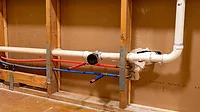
Image courtesy of alacatr / E+ / Getty Images
System designs, along with the products that are utilized for plumbing systems, have changed dramatically since the 1940s, but modern systems are still frequently designed using research that’s more than 80 years old.
This has resulted in new pipe sizing challenges that have worsened following the COVID-19 pandemic, with more people now working from home and placing additional strain on plumbing systems.
The need for change goes beyond how, when, and where people work. Today’s buildings have been constructed with a multitude of advancements that increase energy and water efficiency and improve the overall user experience. Despite this, the approach to pipe sizing has remained largely the same. It’s a global issue that requires a global solution.
Developing a new standard to address pipe sizing
The International Code Council is on a mission to modernize pipe sizing requirements and recently formed the ICC 815 Sizing Water Distribution, Sanitary Drainage and Vent Piping Systems (IS-SWDDV) Standard Consensus Committee. The Code Council is also actively partnering with industry representatives from Australia, New Zealand, the United States, Saudi Arabia, the United Kingdom, the Netherlands, Germany, Belgium and many other countries across Europe and beyond to address pipe sizing. The Code Council is also committed to undertaking an academic-led approach to develop a solution. We’ve partnered with the University of Miami to lead this response and are collaborating with many other academic institutions around the world who are leaders in different aspects of plumbing service design.
Open discussion and collaboration are essential to the development of a pipe-sizing solution – everyone is welcome and encouraged to participate in this collaboration as we move forward.
How bathrooms affect pipe sizing
The current (but severely outdated) pipe-sizing standards were developed at a time when the average house only included one bathroom. This made it easier to predict the probability of fixture usage, which remained steady under these terms. But with only one bathroom available at home, its overall usage remained high because occupants had no other option.
Modern designs frequently include at least two or three bathrooms per home, irrespective of the number of occupants. Thus, the same number of people could be living in a household, but with more bathrooms to choose from, the usage frequency of each bathroom changes (as does the change in likelihood of simultaneous use).
The same is true for bathroom usage in a world where remote and hybrid working arrangements have become more common. Before the COVID-19 pandemic, it was easy to map out fixture use at home in the morning and at work during the peak 9-to-5 hours. Occupant behavior was more standardized: wake up, use the bathroom, shower and head to work. But in a world where offices are replaced by homes, coffee shops and other locations, fixture use has shifted accordingly.
These are just some of the changes we’re looking at. We want as many designers, contractors, academia and other industry experts as possible to have a voice in these changes to make sure they are informed about the research we’re conducting and the ways plumbing systems may evolve as we bring pipe sizing into the 21st century.
Modern pipe sizing methodology
As the way we work and live evolves, you might wonder if pipe sizing should remain the same to accommodate future changes we cannot yet predict. That’s a fair question — as a growing number of businesses require their employees to return to the office, it’s clear that not everyone will work remotely forever.
Before COVID, pipe sizing did not properly match the water usage found in modern buildings. In many countries, there has been a significant reduction in water use from many plumbing fixtures. However, as flush volumes and water usage have been progressively reduced, the pipes servicing these fixtures have remained unchanged.
At a minimum, this adds to the costs that builders and property owners incur because they are paying for pipes that are larger than needed for both the water and sanitary requirements of a building.
Even if the cost of water wasn’t an issue, consider the problems that may arise when using pipes that are larger than necessary. Heated water can take much longer to travel from the heater to the tap, wasting a significant amount of water.
Oversized water supply pipes can also increase water age. This can result in biofilm growth due to slower velocities and the eventual dissipation of disinfection over time, which leads to the harboring of opportunistic pathogens that can cause disease and illness.
Today’s buildings have been constructed with a multitude of advancements that increase energy and water efficiency and improve the overall user experience. Despite this, the approach to pipe sizing has remained largely the same. It’s a global issue that requires a global solution.
Through this work, we are considering the risks associated with reducing pipe sizes, increasing water velocities and the possible impact that this will have on biofilm, and other potential unintended consequences. The Code Council is committed to ensuring that the modern pipe sizing method produced through this project does not solve one problem and cause another.
Get involved
The IS-SWDDV Standard Consensus Committee held its first public meeting in March 2023 and has continued to hold public meetings since. Our goal is to be transparent throughout the process and involve as many experts as possible to ensure that the final product is valuable for the global plumbing community.
We invite you to sign up for the Code Council’s PMG Newsletter, a bimonthly newsletter to keep updated on this project and the latest news in plumbing, mechanical, fuel gas, swimming pools & spas, and more in the U.S. and abroad. For all Code Council PMG related activities, click here.
Looking for a reprint of this article?
From high-res PDFs to custom plaques, order your copy today!