
Contractor's Corner | Dave Yates
Propane as a renewable energy source could offer many potential benefits
Renewable energy

Image Source: WendellandCarolyn / iStock / Getty Images Plus
What’s the first thing that pops into your mind when you think about renewable energy? Solar, of course. Both PV (Photovoltaic) to generate electricity and thermal to generate heated water? Hydroelectric and hydro-mechanical, too. Anything else?
I had my eyes opened to another renewable energy source — one I had never imagined possible. A renewable energy product that will indirectly impact all mechanical contractors in the very near future. So quietly will this enter the marketplace, that we may not even be aware it has become integrated into our mechanical heating and hot water products we sell and service. Unless that is, you happen to be a savvy contractor who decides to use this renewable energy product to enhance your sales by appealing to your customers who wish to lower their carbon footprint and/or help the environment along with the global warming issues.
One thing the propane industry enjoys, at the moment, is moisture-free product, so rust inside tanks, piping, fittings, etc., has not been an issue. Renewable propane does, however, have a trace amount of moisture — less than 1% — so PERC (and others) are carefully monitoring that issue during the phase-in of blending renewable propane into existing tank-stocks, as is present at Ruby’s Inn, where propane is the primary energy source. Without propane, Ruby’s Inn would cease to exist, or be greatly diminished.
We ran out of time, but I wanted to follow up and learn more. PERC put me in touch with Bryan Cordill, director residential and commercial business development at PERC, who responded to several questions:
What is renewable propane?
Cordill: Renewable propane is made from various renewable feedstocks, including camelina plant oil vegetable oils, animal fats or used cooking oil. It offers the same benefits as conventional propane — reliability, portability and power — but with the added benefit of significantly reduced emissions compared with other energy sources.
How is renewable propane produced?
Cordill: Renewable propane is produced in biodiesel refineries using a hydrotreated vegetable oil (HVO) process, also known as hydro-processed esters and fatty acids (HEFA). This method is the primary source for commercial-scale renewable propane production, typically using feedstocks such as fat, oil and grease. To better understand the production process, refer to the infographic below. For more detailed information on the production and chemistry of camelina, a common feedstock, visit susoils.com.
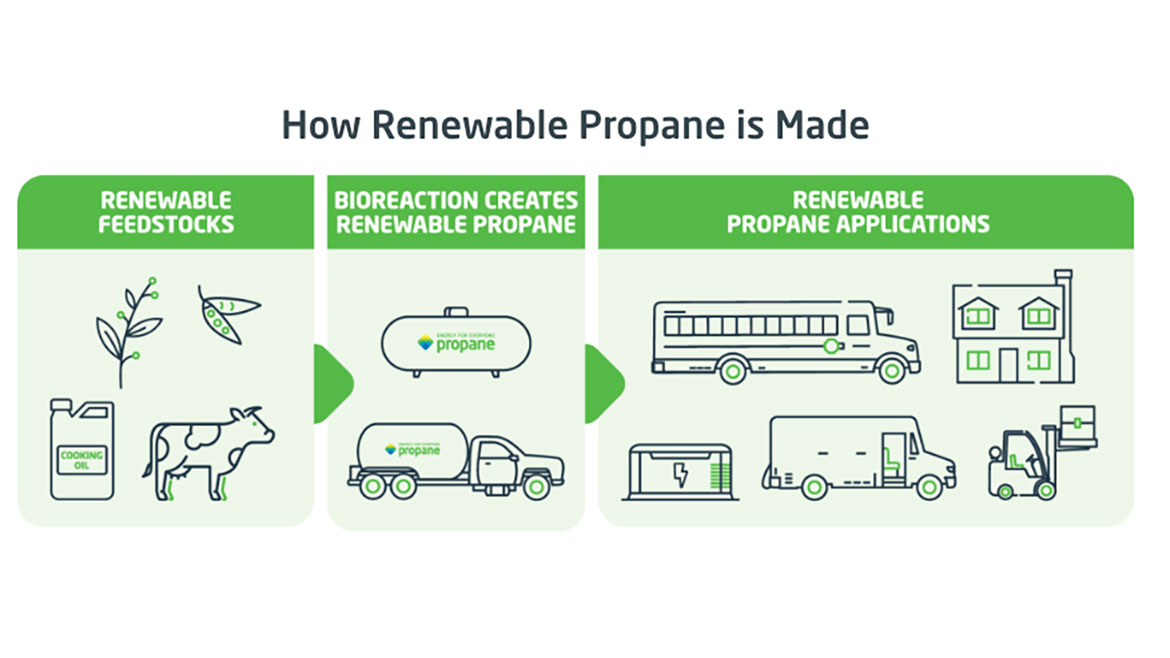
Image courtesy of Dave Yates
Yates: Drill baby drill? Maybe not! Visiting susoils.com, you find they produce a direct drop-in replacement for diesel fuel! Keep on trucking. Of course, we will need to get back to being an energy-independent country, as we were a few years ago, given that we have more energy beneath our feet than any other country in the world. That said, renewable propane and diesel (think fuels for heating homes and hot water, too) hold great potential as “green” energy sources.
How does renewable propane differ from liquefied petroleum gas (LPG)? How is its chemical makeup different?
Cordill: In short — they don’t differ. Renewable propane is chemically identical to conventional propane and can be used in the same applications. Although a gas at normal atmospheric pressure, propane is stored as a liquid under pressure. For example, many people use propane tanks for grilling that are filled with liquid propane. The liquid boils off to its gaseous form and that vapor is what we consume. For this reason, propane is often referred to as LPG.
Renewable propane is made from various renewable feedstocks, while LPG is a byproduct of domestic natural gas and crude oil processing.
Yates: Propane is made up of three carbon and eight hydrogen molecules.
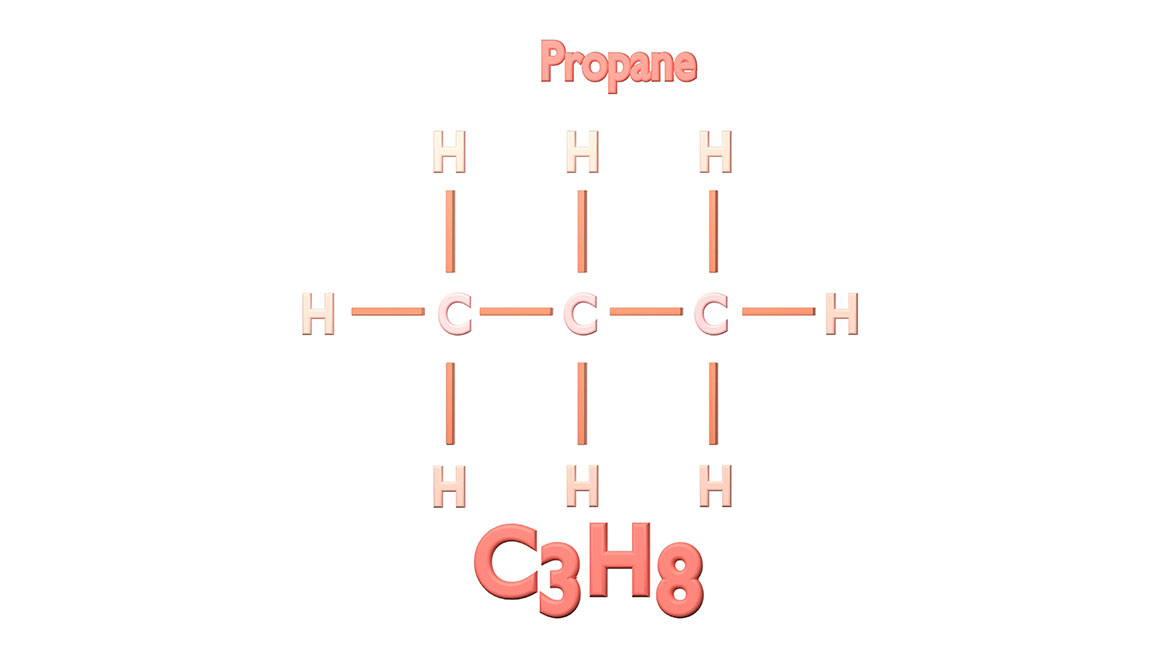
Image courtesy of Dave Yates
What do mechanical contractors need to know about renewable propane vs. liquefied petroleum gas?
Cordill: Mechanical contractors must understand that they are working with identical fuels when comparing renewable propane to traditional LPG. However, renewable propane offers a pathway to cleaner energy since its carbon intensity score ranges from 7 to 43.5. The average U.S. electric grid score is 130.
You don’t need equipment changes or upgrades when transitioning from traditional propane to renewable propane. Existing propane equipment is already compatible with renewable propane. Renewable propane works in tandem with conventional propane when blended, without the need for equipment or infrastructure changes. Meaning, mechanical contractors can be confident knowing their propane-powered equipment will continue to work efficiently today, and as the fuel continues to evolve. It’s a very streamlined process.
Additionally, propane-powered equipment tends to outlast those using other energy sources. For example, propane-fueled tankless water heaters have a life expectancy of about 20 years, which is longer than most other conventional storage water heaters.
For consumers using liquefied petroleum gas, what can they do to incorporate renewable propane?
Cordill: The great thing about renewable propane is that you can instantly start using it with your applications or combine it with LPG in innovative blends.
Yates: Think about customers and businesses with propane-fired generators. I contacted my niece who, together with her husband and son Jack, manages a 300-acre organic farm in California. They were without power for multiple days and had to rely on their propane-fired generator so they could keep foods refrigerated, the lights on (as necessary), and keep the farm operating. As soon as I mentioned renewable propane, they incorporated that into their future plans.
Here, on the East Coast, I hold a board position on The Horn Farm. With more than 120 tillable acres of prime farmland, we will explore the possibility of adding renewable energy crops and we are incorporating PV solar into the reconstruction of the lightning-damaged farmhouse.
Of course, we will need to get back to being an energy-independent country, as we were a few years ago, given that we have more energy beneath our feet than any other country in the world. That said, renewable propane and diesel (think fuels for heating homes and hot water, too) hold great potential as “green” energy sources.
In areas where gas is being banned for cooking and inside new construction, is there an exception for renewable propane?
Cordill: As we understand the decision, the 9th Circuit Courts of Appeal have held that there are no constitutional gas bans. Propane is an approved alternative fuel under the Clean Air Act of 1990 and is eligible for alternative fuel rebates.
Is that accurate today and what incentives, credits, or offsets are currently available? Where can readers obtain that information?
Cordill: PERC does not influence or set market pricing. Those decisions are made between the local market and its providers and customers. Readers can learn more on the NREL site, starting on page 11.
Is there a move to incorporate renewable propane into refrigerants to help lower their carbon footprint?
Cordill: The Intergovernmental Panel on Climate Change (IPCC) released its Climate Change 2021 – The Physical Science Basis report, which includes official global warming potential (GWP) figures for hydrocarbons for the first time. The report states that popular natural refrigerant propane (R290) has a 20-year GWP of 0.072 and a 100-year GWP of 0.02
This means that R290 is already advantageous due to its low global warming potential. Unlike some other substances, R290 does not release carbon intensity into the atmosphere because it is not consumed during its use. Instead, it remains within the compressor, making it an environmentally favorable option for refrigeration applications without adding an additional renewable component.
Learn more about renewable propane here.
So go hug a tree, then cut it down, grind it up — leaves and all, and turn it into renewable propane or diesel fuel! The times they be a-changing.
Looking for a reprint of this article?
From high-res PDFs to custom plaques, order your copy today!


