
search
cart
facebook instagram twitter linkedin youtube
  • Sign In
  • Create Account
  • Sign Out
  • My Account
  • NEWS
  • PRODUCTS
    • FEATURED PRODUCTS
  • CONTRACTORS
    • BATH & KITCHEN PRO
    • BUSINESS MANAGEMENT
    • HIGH EFFICIENCY HOMES
    • TECHNOLOGY
    • WATER TREATMENT
    • PMC COLUMNS
      • Dave Yates: Contractor’s Corner
      • John Siegenthaler: Hydronics Workshop
      • Kenny Chapman: The Blue Collar Coach
      • Matt Michel: Service Plumbing Pros
      • Scott Secor: Heating Perceptions
  • ENGINEERS
    • CONTINUING EDUCATION
    • DECARBONIZATION | ELECTRIFICATION
    • FIRE PROTECTION
    • GEOTHERMAL | SOLAR THERMAL
    • PIPING | PLUMBING | PVF
    • PME COLUMNS
      • Christoph Lohr: Strategic Plumbing Insights
      • David Dexter: Plumbing Talking Points
      • James Dipping: Engineer Viewpoints
      • John Seigenthaler: Renewable Heating Design
      • Lowell Manalo: Plumbing Essentials
      • Misty Guard: Guard on Compliance
  • RADIANT & HYDRONICS
    • RADIANT COMFORT REPORT
    • THE GLITCH & THE FIX
  • INSIGHTS
    • CODES
    • GREEN PLUMBING & MECHANICAL
    • PROJECT PROFILES
    • COLUMNS
      • Codes Corner
      • Natalie Forster: Editorial Opinion
      • Guest Editorial
  • MEDIA
    • EBOOKS
    • PODCASTS
    • VIDEOS
    • WEBINARS
  • RESOURCES
    • INDUSTRY CALENDAR
    • DIRECTORIES
    • PM BOOKSTORE
    • CE CENTER
    • MARKET RESEARCH
    • CLASSIFIEDS
  • EMAGAZINE
    • EMAGAZINE
    • ARCHIVE ISSUES
    • CONTACT
    • ADVERTISE
    • PME EMAGAZINE ARCHIVES
  • SIGN UP!
Plumbing & Mechanical Engineer Lowell Manalo: Plumbing Essentials

Lowell Manalo: The importance of group collaboration in plumbing systems’ design

Designimus, Defendimus

By Lowell Manalo
PME 0723 Lowell Manalo slide 1

Vladimir Kononok/iStock/Getty Images Plus via Getty Images

July 6, 2023
✕
Image in modal.

An individual person’s idea is good — the team’s idea is better!

Plumbing systems engineering and design are better with group collaboration. I was in the U.S. Navy, and the Seabee’s motto is, "Construimus, Batuimus," which means "We Build, We Fight." We are trained to fight and defend what we build.

Keeping true to my background and passion, I used this motto as a baseline for creating my own. Applying it to the plumbing engineering design industry, "Designimus, Defendimus," which means "We design, we defend." We design, and, at times, defend our designs. By using individual experience, expertise and code knowledge as a collective resource, we put in place a powerful tool in the defense of our designs.

Another way to elevate your design is by using your previous experience in life. These experiences can come from old work experiences, hobbies and other interests. Find a way to incorporate this into your design. While standards and codes define minimum requirements, if you couple these with your passion, knowledge from previous work and personal experience, you can take your designs further.

For example, I was part of the design team for a lab building in California a few years ago. Due to site limitations, a basement was needed to support all the program spaces. Unfortunately, the same site has a high-water table which requires a dewatering system. Knowing the importance of the product stored in the basement, I got excited and asked, "What can I do better? How can we improve this for the client and community it serves?" At that point a drum starts beating in my head, driving my passion for design excellence. Using my background in the U.S. Navy, the concept for the dewatering system used techniques in designing compartmentalization for a naval ship for flood mitigation. The dewatering system has two zones (refer to Figure 1). The pipe routing and cleanouts are strategically placed with the ability to add sensors to identify where the water is coming from. Each zone is then connected to a basin with duplex sump pumps. The interconnection provides for continuous operation even if one sump is being serviced.
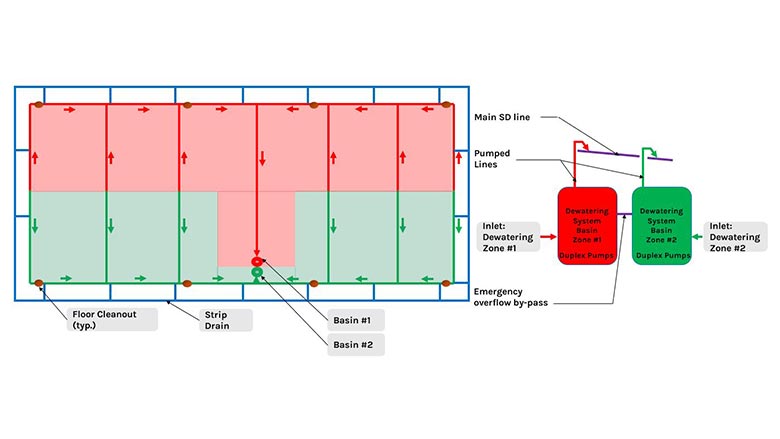

PME 0723 Lowell Manalo Figure, slide 2

Figure 1: Water dewatering system. Image courtesy of SmithGroup


This concept is then extended to the rest of the team to provide feedback. It doesn’t matter if you are new to the industry, an intern or a well-seasoned engineer or designer — you will have an equal "seat at the table." As a team, we threw multiple darts at the idea, challenging the concept's validity, feasibility and constructability. This process is what we call the "stress test." This also includes soliciting feedback and review from other design disciplines, manufacturers and contractors. A good idea from one individual becomes excellent when combined with your peers’ views and opinions. In the process of explaining concepts to others, preconceived assumptions may be challenged leading to more discovery.

One challenge that plumbing engineers and designers often face is the limited time and/or opportunity to present their ideas to clients. We need better storytellers as it relates to drawings, documentation and presentations. Know your audience! While most people do not understand all the nuances of plumbing system design, it is possible to describe systems in such a way that the regular person understands the reasons why the systems operate or are configured in such a way. As we don’t usually get many opportunities to present to clients, when you do, make every second count!

Project pursuits often limit our narratives and ability to explain the systems due to space constraints. Over my 20-plus years in our industry, I observed that plumbing presents less information than other disciplines. Why is that, and how can we convey more information with limited space?

To continue elevating the plumbing design community, we must speak up and be our champions. Recently, we were pursuing a high-profile laboratory project. The same question came to my mind — "What can we do better" to help the team?

Knowing the limitations of our narratives and only being allowed to have one sketch per discipline, we knew we needed to make this count. We started creating multiple iterations of a sketch and then presented it to the team for comments and collaboration. The result was a product that clearly conveyed both the systems and distribution planned for the facility. And the cherry on top — we won the project!
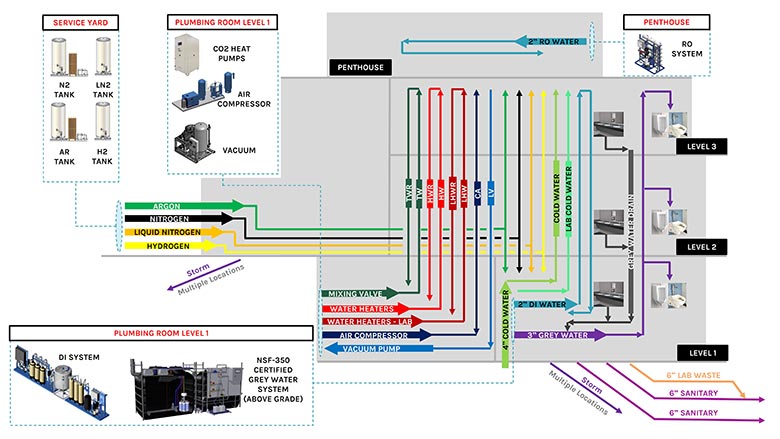

PME 0723 Lowell Manalo Figure 2, slide 3

Figure 2: Plumbing system diagram. Image courtesy of SmithGroup


As I pass by buildings that we designed, it brings a smile to my face and motivates me more knowing that long after I am gone, these buildings will continue to serve people in our community. A significant part of what made this happen is the team collaboration — "Designamus, Defendimus."

Happy Fourth, everyone!

KEYWORDS: engineers plumbing engineers

Share This Story

Looking for a reprint of this article?
From high-res PDFs to custom plaques, order your copy today!

Lowell manalo headshot

Lowell Manalo is the plumbing discipline leader and principal at SmithGroup. He is a member of ASPE and has more than 20 years of experience designing plumbing systems for various building types.

Recommended Content

JOIN TODAY
to unlock your recommendations.

Already have an account? Sign In

  • 2025 Next Gen ALL-STARS hero 1440

    2025 Next Gen All Stars: Top 20 Under 40 Plumbing Professionals

    This year’s group of NextGen All-Stars is full of young...
    Plumbing & Mechanical Engineer
    By: Kristen R. Bayles
  • Worker using the Milwaukee Tool SWITCH PACK drain cleaner

    Pipeline profits: Drain cleaning, pipe inspection create opportunities

    Drain cleaning and inspection services offer lucrative...
    Green Plumbing and Mechanical
    By: Nicole Krawcke
  • Uponor employee, Arturo Moreno

    The reinvestment in American manufacturing and training

    Plumbing & Mechanical Chief Editor Nicole Krawcke and...
    Plumbing News
    By: Nicole Krawcke and Natalie Forster
Manage My Account
  • eNewsletters
  • Online Registration
  • Subscription Customer Service
  • eMagazine
  • Manage My Preferences

More Videos

Popular Stories

Hot water pipes

Campus shutdown at Oakland University exposes hidden risks of aging hot-water infrastructure

Floor heating manifold cabinet with flowmeter and PEX pipe.

Elegance extended: How to use the homerun system of connecting heat emitters

Industrial pressure gauge on a tank.

From cutting edge to classic: How to modernize outdated pneumatic control systems

Poll

Will business be up or down in 2025?

Do you anticipate business in 2025 to be up or down in comparison to 2024?
View Results Poll Archive

Products

The Water Came To A Stop

The Water Came To A Stop

See More Products
eBook | 2025 Radiant & Hydronics All Stars

Related Articles

  • Renovation project in a kitchen with plumbing and electrical wires in a wall.

    Out of sight, out of mind — pulling back the curtain on plumbing systems design

    See More
  • PME 1223 Lowell Manalo Column illustration of torch passed from mentor to next generation

    Lighting the path of the next generation of plumbing engineers and designers

    See More
  • 01 PME 0923 CLMN Lowell Manalo feature

    Plumbing systems for lab? What is so special about it?

    See More

Related Products

See More Products
  • Greening Steam: How to Bring 19th-Century Heating Systems into the 21st Century (and save lots of green!)

  • Plumbing Technology, Design & Installation

  • what hydronics taught holohan.jpg

    What Hydronics Taught Holohan: A Memoir of Life in the Heating Industry

See More Products

Events

View AllSubmit An Event
  • September 11, 2025

    Optimized Plumbing Design for the 21st Century: Smarter Systems for Health, Affordability, and Sustainability

    On Demand The session highlights how modernized plumbing design can accelerate hot water delivery, reduce stagnation, and mitigate health risks, while supporting affordability, energy efficiency, and sustainability.  Earn: 0.1 IAPMO CEU; 0.1 ASPE CEU; 0.1 ICC CEU; 1 PDH; 1 AIA LU/HSW
  • August 26, 2014

    Free Webinar: Low Temperature Heat Emitter Options in Hydronic Systems

    With proper design, you can create systems that require supply water temperatures no higher than 120° F under design load conditions.
View AllSubmit An Event
×

Keep your content unclogged with our newsletters!

Stay in the know on the latest plumbing & piping industry trends.

JOIN TODAY!
  • RESOURCES
    • Advertise
    • Contact Us
    • Directories
    • Store
    • Want More
    • Supply House Times
  • SIGN UP TODAY
    • Create Account
    • eMagazine
    • eNewsletter
    • Customer Service
    • Manage Preferences
  • SERVICES
    • Marketing Services
    • Reprints
    • Market Research
    • List Rental
    • Survey/Respondent Access
  • STAY CONNECTED
    • LinkedIn
    • Facebook
    • Instagram
    • YouTube
    • X (Twitter)
  • PRIVACY
    • PRIVACY POLICY
    • TERMS & CONDITIONS
    • DO NOT SELL MY PERSONAL INFORMATION
    • PRIVACY REQUEST
    • ACCESSIBILITY

Copyright ©2025. All Rights Reserved BNP Media.

Design, CMS, Hosting & Web Development :: ePublishing