search
cart
facebook instagram twitter linkedin youtube
  • Sign In
  • Create Account
  • Sign Out
  • My Account
  • NEWS
  • PRODUCTS
    • FEATURED PRODUCTS
  • CONTRACTORS
    • BATH & KITCHEN PRO
    • BUSINESS MANAGEMENT
    • HIGH EFFICIENCY HOMES
    • TECHNOLOGY
    • WATER TREATMENT
    • PMC COLUMNS
      • Dave Yates: Contractor’s Corner
      • John Siegenthaler: Hydronics Workshop
      • Kenny Chapman: The Blue Collar Coach
      • Matt Michel: Service Plumbing Pros
      • Scott Secor: Heating Perceptions
  • ENGINEERS
    • CONTINUING EDUCATION
    • DECARBONIZATION | ELECTRIFICATION
    • FIRE PROTECTION
    • GEOTHERMAL | SOLAR THERMAL
    • PIPING | PLUMBING | PVF
    • PME COLUMNS
      • Christoph Lohr: Strategic Plumbing Insights
      • David Dexter: Plumbing Talking Points
      • James Dipping: Engineer Viewpoints
      • John Seigenthaler: Renewable Heating Design
      • Lowell Manalo: Plumbing Essentials
      • Misty Guard: Guard on Compliance
  • RADIANT & HYDRONICS
    • RADIANT COMFORT REPORT
    • THE GLITCH & THE FIX
  • INSIGHTS
    • CODES
    • GREEN PLUMBING & MECHANICAL
    • PROJECT PROFILES
    • COLUMNS
      • Codes Corner
      • Natalie Forster: Editorial Opinion
      • Guest Editorial
  • MEDIA
    • EBOOKS
    • PODCASTS
    • VIDEOS
    • WEBINARS
  • RESOURCES
    • INDUSTRY CALENDAR
    • DIRECTORIES
    • PM BOOKSTORE
    • CE CENTER
    • MARKET RESEARCH
    • CLASSIFIEDS
  • EMAGAZINE
    • EMAGAZINE
    • ARCHIVE ISSUES
    • CONTACT
    • ADVERTISE
    • PME EMAGAZINE ARCHIVES
  • SIGN UP!
Plumbing & Mechanical ContractorRadiant & HydronicsThe Glitch & The Fix

The Glitch & The Fix

Concrete slab over radiant tubing — who takes the blame?
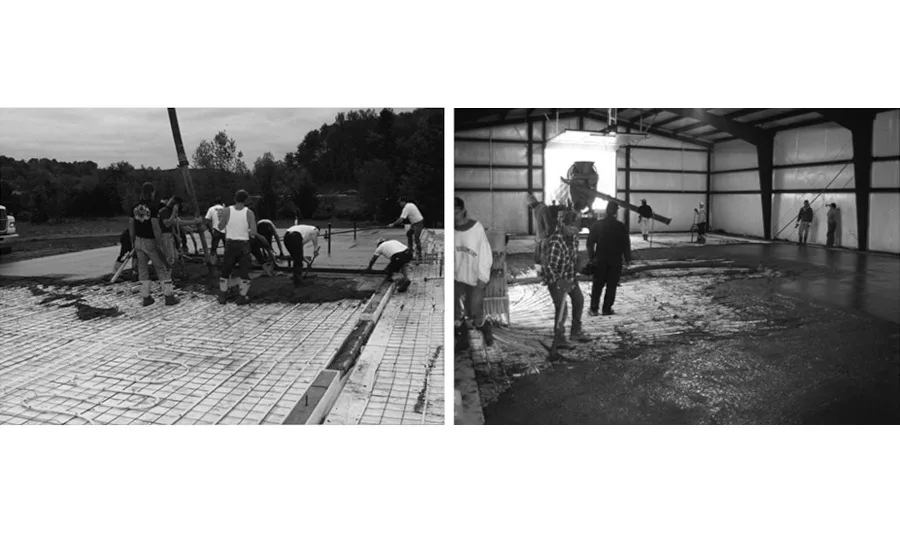
The Glitch and The Fix black and white feature image concrete slab with PEX tubing placement

Images courtesy of John Siegenthaler.

April 24, 2024
✕
Image in modal.

The Glitch:

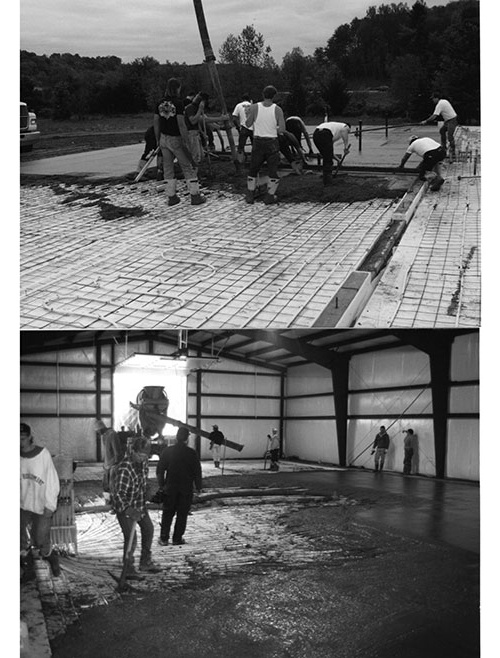
Take a look at the two photos in Figure 1. They both show the placement of a 6-inch thick concrete slab containing 5/8” PEX tubing at 12-inch spacing. The tubing is fastened to 6x6 welded wire reinforcing.   Do you see any installation practices that might compromise the eventual structural or thermal performance of this slab?

FIGURE 1

Figure 1 Placement of concrete slab with PEX tubing

The Fix:

In both of these projects, the masons are dumping and leveling the concrete on top of the tubing and welded wire reinforcing (WWR), but making no attempt to lift the WWR or attached tubing above the bottom of the slab.

Perhaps they think that the WWR is only there to hold the tubing in place during the pour. That’s what a contractor actually told me on a project I designed several years ago. It makes me wonder what they do when pouring a slab that doesn’t contain tubing. Do they understand what the WWR is for and where it should be within the slab? I suspect the answer is: “I sorta know, but really don’t care.”

The guideline specifications from the Wire Reinforcing Institute call for a single layer of welded wire reinforcing (WWR) to be installed between 1/3 and 1/2 the depth of the slab, measured down from the slab surface. Leaving the (WWR) at the bottom of the slab does not allow proper “engagement” with the concrete, and provides little, if any, resistance to shrinkage cracking, which is usually the intended function of (WWR). Thus, even in non-heated slabs, the WWR should be lifted or otherwise supported so that it is embedded at the proper depth within the slab.

Beyond structural performance are the heat transfer implications. Figure 2 shows the variation in upward heat output from a 4” thick bare concrete slab based on tubing spaced 12” apart, installed at two depths, and operating at an average water temperature of 100° F.

FIGURE 2
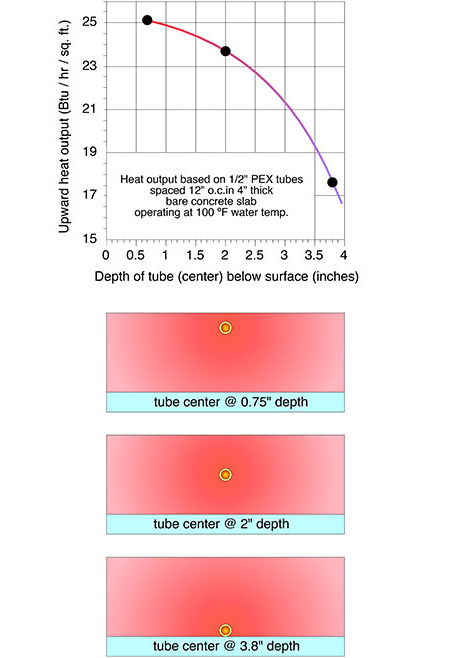
Figure 2: Graph showing variation in upward heat output

In theory, there’s a 26% drop in heat output for tubing installed at the bottom, rather than the mid-height of the slab — when both are operated at the same water temperature.

If the slab needs to release heat at a rate of 15 Btu/h/ft2, the average circuit water temperature needs to increase about 7° F if the tubing is left at the bottom of the slab rather than placed approximately at mid-slab thickness.

If the slab needs to release heat at 30 Btu/h/ft2, the average circuit water temperature needs to increase 15° F. These temperature increases will lower the thermal efficiency of modern heat sources such as condensing boilers and especially heat pumps.

Leaving tubing at the bottom of the slab also increases downward heat loss, and significantly lengthens the slab’s response time to changes in water temperature. The latter can lead to pronounced temperature overshoot, especially if there are significant and unpredictable internal heat gains from the sun, people, or equipment.

The bottom line is simple: The depth of the tubing within a heated slab does make a significant difference in performance. When the tubing is tied to WWR, both the WWR and tubing should be placed at approximately half slab depth.

Why compromise the structure and thermal performance of a heated slab based on careless workmanship? Make sure your written specifications and construction drawings show and describe how to do it right.

If the masons or the GC disagree, perhaps you can show them Figure 2. If they still disagree, perhaps they would be willing to sign a release stating that they, not you, are now responsible for the performance of the slab.

What do you think the chances of that are?

Are you an ace troubleshooter?

PM’s Hydronics Editor John Siegenthaler, P.E., will pose a question to you, our readers, to review a system’s schematic layout and discover its faults, flaws and defects. Good luck! Read More The Glitch & The Fix⮞

KEYWORDS: concrete slab hydronics plumbers and pipefitters radiant systems radiant tubing troubleshooting

Share This Story

Looking for a reprint of this article?
From high-res PDFs to custom plaques, order your copy today!

Recommended Content

JOIN TODAY
to unlock your recommendations.

Already have an account? Sign In

  • 2025 Next Gen ALL-STARS hero 1440

    2025 Next Gen All Stars: Top 20 Under 40 Plumbing Professionals

    This year’s group of NextGen All-Stars is full of young...
    Plumbing & Mechanical Engineer
    By: Kristen R. Bayles
  • Worker using the Milwaukee Tool SWITCH PACK drain cleaner

    Pipeline profits: Drain cleaning, pipe inspection create opportunities

    Drain cleaning and inspection services offer lucrative...
    Plumbing News
    By: Nicole Krawcke
  • Uponor employee, Arturo Moreno

    The reinvestment in American manufacturing and training

    Plumbing & Mechanical Chief Editor Nicole Krawcke and...
    Plumbing News
    By: Nicole Krawcke and Natalie Forster
Manage My Account
  • eNewsletters
  • Online Registration
  • Subscription Customer Service
  • eMagazine
  • Manage My Preferences

More Videos

Popular Stories

Hot water pipes

Campus shutdown at Oakland University exposes hidden risks of aging hot-water infrastructure

Floor heating manifold cabinet with flowmeter and PEX pipe.

Elegance extended: How to use the homerun system of connecting heat emitters

Industrial pressure gauge on a tank.

From cutting edge to classic: How to modernize outdated pneumatic control systems

Poll

Will business be up or down in 2025?

Do you anticipate business in 2025 to be up or down in comparison to 2024?
View Results Poll Archive

Products

The Water Came To A Stop

The Water Came To A Stop

See More Products
eBook | 2025 Radiant & Hydronics All Stars

Related Articles

  • Main Level

    Radiant heating system solves comfort problems twice over

    See More
  • John Siegenthaler: Renewable Heating Design

    John Siegenthaler: Be explicit on tubing depth in a slab

    See More
  • Mast Takes Over Gorton

    See More

Related Products

See More Products
  • 51CHeeKvw4L._SX322_BO1,204,203,200_.jpg

    Hydronic Radiant Heating: A Practical Guide for the Nonengineer Installer

  • Classic Hydronics - How To Get The Most From Those Older Hot-Water Heating Systems

  • what hydronics taught holohan.jpg

    What Hydronics Taught Holohan: A Memoir of Life in the Heating Industry

See More Products

Events

View AllSubmit An Event
  • June 13, 2016

    Advanced Radiant Design with Mark Eatherton

    This course drills deep into the engineering aspects of tube length, tube center density, tube size and other factors affecting hydronic radiant heating systems.
View AllSubmit An Event
×

Keep your content unclogged with our newsletters!

Stay in the know on the latest plumbing & piping industry trends.

JOIN TODAY!
  • RESOURCES
    • Advertise
    • Contact Us
    • Directories
    • Store
    • Want More
    • Supply House Times
  • SIGN UP TODAY
    • Create Account
    • eMagazine
    • eNewsletter
    • Customer Service
    • Manage Preferences
  • SERVICES
    • Marketing Services
    • Reprints
    • Market Research
    • List Rental
    • Survey/Respondent Access
  • STAY CONNECTED
    • LinkedIn
    • Facebook
    • Instagram
    • YouTube
    • X (Twitter)
  • PRIVACY
    • PRIVACY POLICY
    • TERMS & CONDITIONS
    • DO NOT SELL MY PERSONAL INFORMATION
    • PRIVACY REQUEST
    • ACCESSIBILITY

Copyright ©2025. All Rights Reserved BNP Media.

Design, CMS, Hosting & Web Development :: ePublishing