search
cart
facebook instagram twitter linkedin youtube
  • Sign In
  • Create Account
  • Sign Out
  • My Account
  • NEWS
  • PRODUCTS
    • FEATURED PRODUCTS
  • CONTRACTORS
    • BATH & KITCHEN PRO
    • BUSINESS MANAGEMENT
    • HIGH EFFICIENCY HOMES
    • TECHNOLOGY
    • WATER TREATMENT
    • PMC COLUMNS
      • Dave Yates: Contractor’s Corner
      • John Siegenthaler: Hydronics Workshop
      • Kenny Chapman: The Blue Collar Coach
      • Matt Michel: Service Plumbing Pros
      • Scott Secor: Heating Perceptions
  • ENGINEERS
    • CONTINUING EDUCATION
    • DECARBONIZATION | ELECTRIFICATION
    • FIRE PROTECTION
    • GEOTHERMAL | SOLAR THERMAL
    • PIPING | PLUMBING | PVF
    • PME COLUMNS
      • Christoph Lohr: Strategic Plumbing Insights
      • David Dexter: Plumbing Talking Points
      • James Dipping: Engineer Viewpoints
      • John Seigenthaler: Renewable Heating Design
      • Lowell Manalo: Plumbing Essentials
      • Misty Guard: Guard on Compliance
  • RADIANT & HYDRONICS
    • RADIANT COMFORT REPORT
    • THE GLITCH & THE FIX
  • INSIGHTS
    • CODES
    • GREEN PLUMBING & MECHANICAL
    • PROJECT PROFILES
    • COLUMNS
      • Codes Corner
      • Natalie Forster: Editorial Opinion
      • Guest Editorial
  • MEDIA
    • EBOOKS
    • PODCASTS
    • VIDEOS
    • WEBINARS
  • RESOURCES
    • INDUSTRY CALENDAR
    • DIRECTORIES
    • PM BOOKSTORE
    • CE CENTER
    • MARKET RESEARCH
    • CLASSIFIEDS
  • EMAGAZINE
    • EMAGAZINE
    • ARCHIVE ISSUES
    • CONTACT
    • ADVERTISE
    • PME EMAGAZINE ARCHIVES
  • SIGN UP!
Plumbing NewsPlumbing & Mechanical Contractor

The state of pipelining today

Decisions on DWV pipe rehabilitation.
By Tom Bowman
piping system

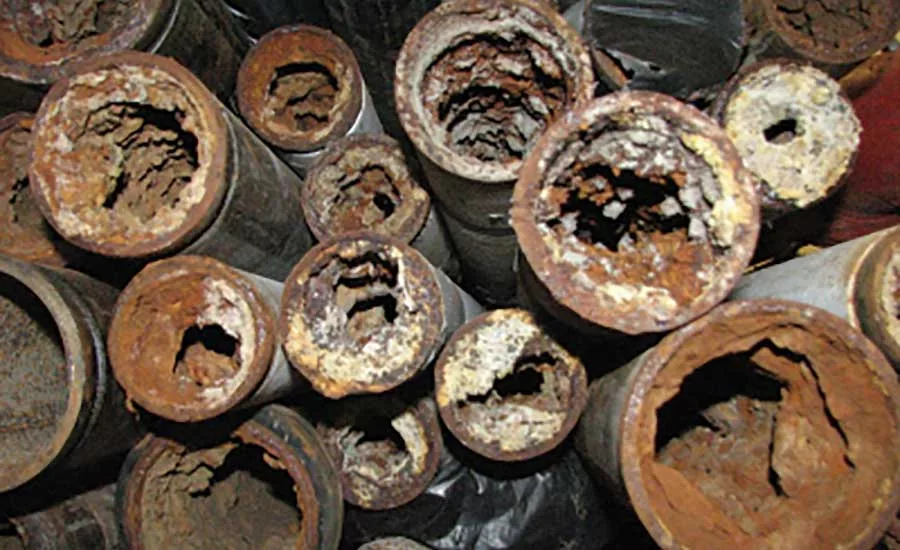
Today, there are technologies for almost every type of piping system — pressurized and non-pressurized, plumbing and mechanical — utilized in homes and businesses, commercial and industrial facilities and even cruise ships and navy vessels.

Photo Courtesy of Tom Bowman
April 11, 2019

Pipelining, as it is known today, is the process of reconditioning the inside of a pipeline with an internal coating or casting to extend the remaining useful life of the piping asset. Pipe coating has been utilized in pressurized pipelines for more than 60 years.

Cured-in-place pipelining technology was first implemented in Europe in 1971, and it was used to rehabilitate storm drains in an aged building to stop rainwater from leaking into the building. The process works this way: A resin-saturated fabric is pulled through an existing pipeline, and then an internal bladder or calibration tube is inflated to press the fabric against the host pipe. The fabric is left to harden and cure before the bladder is deflated and extracted from the rehabilitated new pipe inside the old pipe. It is known as insitu form, the Latin for “formed in place.” Eric Wood, the man who pioneered this technology, used the shorthand for the name of his own company, Insituform Technologies.

The first American patent for this technology was issued to Wood in 1977. It had grown into a rehabilitative technology for large diameter sanitary and storm mains, which are used to collect effluent from properties and deliver the waste to be processed to treatment plants.

Application of the new process for larger pipes had to be altered from the original pull-in-place design. Instead, a process was developed by which the resin saturated material was pulled or inverted into the pipeline via a head of water or air pressure, followed by the internal insertion of a calibration tube into the material by means of either method. The general name for this process was deemed “inversion.”

By the time the process had made it over to the U.S., many different resins and fabrics, as well as combinations thereof, were being used to perform this type of rehabilitation. Shortly after the entry into the North American market, the American Society of Testing and Material began issuing standards of practice for the utilization of cured-in-place pipelining in the rehabilitation of pipelines.

As a result, there are now standards that govern the use of this type of technology, in addition to the underlying math and science that guides the application of this technology. All these are needed to maintain the minimum requirements necessary to support conditions in the existing host pipe. These standards have been developed to take into consideration whether a pipe is fully or partially deteriorated. In turn, the grade of deterioration determines whether or not spot repair is required for portions of a piping system that are obstructed and cannot be removed by pipe cleaning tools.

These standards have specific design calculations which include strength, leakage and flexural properties that are supported by design life criteria. These also determine the type of resin/host CIPP material that should be employed in the process. This type of rehabilitation has certain benefits compared to other methods: It is safer and less destructive, requires less reconstruction post rehabilitation, it is less time consuming, and most importantly, more economical.

Today, there are technologies for almost every type of piping system — pressurized and non-pressurized, plumbing and mechanical — utilized in homes and businesses, commercial and industrial facilities and even cruise ships and navy vessels. The need to remediate piping infrastructure worldwide grows only stronger as piping systems all around continue to age and deteriorate.

KEYWORDS: pipe piping systems plumbers and pipefitters

Share This Story

Looking for a reprint of this article?
From high-res PDFs to custom plaques, order your copy today!

Tom Bowman has been a licensed plumber for nearly 20 years. His career in the pipelining industry started as an appren-tice plumber under the Illinois Department of Public Health – Plumbing Program to establish cured-in-place pipe lining as an approved alternative to conventional replacement. He is currently the director of technology for Nu Flow Technologies (2000) a position he has held for more than 6 years. Readers can reach Bowman at tbowman@nuflowtech.com.

Recommended Content

JOIN TODAY
to unlock your recommendations.

Already have an account? Sign In

  • 2025 Next Gen ALL-STARS hero 1440

    2025 Next Gen All Stars: Top 20 Under 40 Plumbing Professionals

    This year’s group of NextGen All-Stars is full of young...
    Plumbing & Mechanical Engineer
    By: Kristen R. Bayles
  • Worker using the Milwaukee Tool SWITCH PACK drain cleaner

    Pipeline profits: Drain cleaning, pipe inspection create opportunities

    Drain cleaning and inspection services offer lucrative...
    Green Plumbing and Mechanical
    By: Nicole Krawcke
  • Uponor employee, Arturo Moreno

    The reinvestment in American manufacturing and training

    Plumbing & Mechanical Chief Editor Nicole Krawcke and...
    Plumbing News
    By: Nicole Krawcke and Natalie Forster
Manage My Account
  • eNewsletters
  • Online Registration
  • Subscription Customer Service
  • eMagazine
  • Manage My Preferences

More Videos

Popular Stories

The Glitch & The Fix

Overlooped: Boiler swap gone wrong

Chicago Vintage Apartment Buildings in Portage Park

Invoices, inspections, and integrity: lessons from Leonard

The ribbon-cutting at the Condensing Center of Excellence in Lancaster.

U.S. Boiler Company unveils Condensing Center of Excellence expansion

Register for the November 13 PM Grundfos Webinar: Smart Pumping Strategies for HVAC: Unlock Efficiency with Grundfos E-Pumps and Systems

Poll

Will business be up or down in 2025?

Do you anticipate business in 2025 to be up or down in comparison to 2024?
View Results Poll Archive

Products

The Water Came To A Stop

The Water Came To A Stop

See More Products
eBook | 2025 Radiant & Hydronics All Stars

Related Articles

  • The growth of CIPP

    The state of pipelining today: Structural, cured-in-place pipelining

    See More
  • Sustainable Homes Of The Future…Built Today

    See More
  • Editorial: The History of Plumbing & Its Meaning Today

    See More

Related Products

See More Products
  • The ACCA Job Safety (1).jpg

    The ACCA On-The-Job Safety Handbook (Pack of 5)

  • Greening Steam: How to Bring 19th-Century Heating Systems into the 21st Century (and save lots of green!)

  • lost art steam heating.jpg

    The Lost Art of Steam Heating Revisited

See More Products
×

Keep your content unclogged with our newsletters!

Stay in the know on the latest plumbing & piping industry trends.

JOIN TODAY!
  • RESOURCES
    • Advertise
    • Contact Us
    • Directories
    • Store
    • Want More
    • Supply House Times
  • SIGN UP TODAY
    • Create Account
    • eMagazine
    • eNewsletter
    • Customer Service
    • Manage Preferences
  • SERVICES
    • Marketing Services
    • Reprints
    • Market Research
    • List Rental
    • Survey/Respondent Access
  • STAY CONNECTED
    • LinkedIn
    • Facebook
    • Instagram
    • YouTube
    • X (Twitter)
  • PRIVACY
    • PRIVACY POLICY
    • TERMS & CONDITIONS
    • DO NOT SELL MY PERSONAL INFORMATION
    • PRIVACY REQUEST
    • ACCESSIBILITY

Copyright ©2025. All Rights Reserved BNP Media.

Design, CMS, Hosting & Web Development :: ePublishing