Big drain, little drain
How big or small do you make the drain? How big or small do you make the water line?
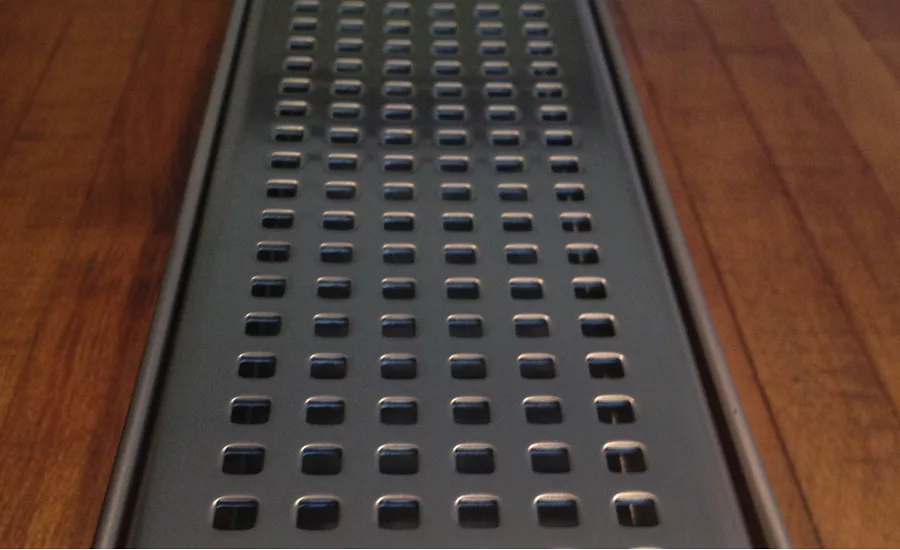
How big or small do you make the drain? How big or small do you make the water line? Those are the discussions and arguments I observed and participated in a few months ago.
You would think we finally figured everything out regarding pipe size. But something new always seems to creep into the discussion.
The drain size discussion took place during the Uniform Plumbing Code meeting on changes to the 2018 edition of the code. The plumbing engineers submitted two changes on drain pipe size, which started the whole debate. Their first proposal was to lower the shower drain size from 2 in. to 1 1/2 in.
If you are on the East Coast or in the Midwest, you may be saying, “What’s the big deal?”
If you are on the West Coast, you may be saying, “OMG!”
For more than 20 years, many plumbing codes have listed the minimum shower drain as 1 1/2 in. This was based on the lowering of the showerhead flow rate to 2.5 gal. per min. As the plumbing engineers pointed out, a 1 1/2 in. shower drain pitched 1/4 in. per ft., flowing half full, will accommodate 4.9 gpm with the roughest piping material, which happens to be cast iron. If you use PVC, the flow rate at half full flow increases to 8.3 gpm.
You might be asking, “What was the argument against the smaller drain size?” The answer — it is more difficult to snake the line. It is easier to snake a 2 in. drain than it is a 1 1/2 in. drain. The second part of that argument was shower drains are always stopping up, requiring drain cleaning.
The counter argument was that the reason they stop up is because the drain is too big and the flow velocity is less than 2 ft. per second. That means there is no scouring velocity in the shower drain and every plumbing contractor knows you need a scouring velocity. Furthermore, you can snake a 1 1/2 in. drain.
I thought back to that one job more than 40 years ago when my father sat me down and explained that a shower drain only needs to be 1 1/2 in. If you make it 2 in., you will constantly have stoppages. He knew long ago that little drains work better than big drains in some installations.
The second change was to add a requirement for nonwater urinals with a minimum trap arm size of 1 1/2 in. This was another OMG moment. How can you possibly make a drain for a urinal less than 2 in.?
Nonwater urinals, sometimes called waterless or water-free, are always a hot subject matter at plumbing code meetings. The thought of making the urinal drain 1 1/2 in. seemed to be heresy.
One of the main arguments against the drain pipe size was there would be an inadequate drain pipe behind the wall when the customer takes out the nonwater urinal and replaces it with a flush urinal. Everyone knows the customer will realize that he needs to change the urinal to a flush urinal.
Of course, that is the standard argument, that these nonwater urinals will definitely be replaced. However, there is no data to show that is the trend. Having used men’s rooms throughout the country, I would say the opposite is true. I have used more nonwater urinals this year than any time in the past. In other words, they are growing in popularity, not diminishing as some would have you believe.
Another interesting point is both nonwater and flushing urinals can have a 1 1/2 in. drain. We only pee 1 pint at the most. The most we flush is 1 gal. Hence, the total flush is 1.125 gal. of liquid. Remember the shower drain argument. A 1 1/2 in. drain can easily accommodate 4.9 gpm for cast iron and 8.3 gpm for PVC. While the flush typically occurs within 12 seconds, the flow levels out quickly in the drain. Hence, a 1 1/2 in. drain can easily handle any urinal.
If you are wondering what the results of the meeting were, the plumbing committee voted to recommend acceptance of the lower shower drain. However, for the nonwater urinal, the proposal went down in flames.
Before those of you on the West Coast get too excited, remember there is a year and a half before the code change process is complete. I can almost guarantee that both of these issues will be subject to additional discussions.
Oversized water distribution?
The discussion on pipe size continued when the subject changed to water distribution systems. Are we oversizing our water piping systems?
I learned from a very young age that you cannot oversize a water pipe, but you certainly can undersize it. The thought process is based on the premise that when a water pipe is oversized, the water just flows slower. But if you undersize the water pipe, you may not have enough water coming out of the fixture.
Additionally, we often have buildings where we rough-in water piping for future fixtures. If that occurs, don’t we want to size the water piping to accommodate the future fixtures?
Although the thought process of not being able to oversize the water piping may be wrong. Perhaps we cannot oversize water piping.
There is no doubt that, with lower-flowing fixtures, we can lower the size of our water distribution system. We are still using many sizing techniques based on fixtures using two to three times the water amount required for modern-day fixtures.
For example, when the showerhead flow rate reduced from 8 gpm to 2.5 gpm, do we still need the larger water line? A 1/2 in. to the hot and cold water line is not needed. You can install a 3/8 in. hot and cold water pipe and easily supply a shower valve.
That still doesn’t get into the subject of how big is too big for a water pipe. Some researchers believe that too slow a velocity in a water pipe leads to bacterial growth in it. This can result in sickness or death from the drinking water.
Are these claims valid? That is a subject for another column.
Looking for a reprint of this article?
From high-res PDFs to custom plaques, order your copy today!